Line Up Quietly + Math Practice = Easy!

This was an idea I learned from Miss S. who teaches younger grades:
When the kids are quiet,  I hold up 1 to 10 fingers over my head.  They have to hold up their fingers over their head to make a combination of 10.  For example, if I hold up 2 fingers, they hold up 8 fingers.  If I hold up 6 fingers, they hold up 4.  They cannot talk as we do this.  They are doing this as they are lining up.  In between problems, I say “erase.”  Sometimes I just hold up the fingers, and they start quietly lining up while doing the math combinations. This is a great way for them to learn combinations to 10 AND line up quietly at the same time!

Homework Coupons

One of my mistakes my first year was putting all the prizes in the treasure box in the beginning of the year. Then, once everything in there had gotten uninteresting to the students, I had already spent the little money I was given and couldn’t replenish it. These became one of the most popular items in my treasure box, because, let’s face it- kids just don’t like homework.

I made sure to write the student’s name on it and sign them when a student won a homework coupon because they weren’t valid without my signature. In addition, I would require my students to staple the coupon to the corner of the assignment when turning it in, so I couldn’t lose it (since it was 1/8 sheet) and it was clear to me which assignment the student wanted the coupon to count for. When I graded the assignment, I would only tear off half of the coupon, so the student would have “proof” that I had seen their coupon and there was no way for students to try to use it again. I chose bright color paper to run these off on, so I could always identify them easily in a pile. I made it clear to my students that I would not replace lost coupons. Since they had a student’s name on them written in my handwriting, there seemed to be no incentive to try to steal them, so that worked out nicely as well.

Just because I’m nice, I gave each student one coupon at the beginning of school, and because teachers have no money nowadays, this was their birthday present also. The kids seemed pretty excited to have the option to skip homework on their birthday.

Click to download the homework coupons.

Start of School Classroom Tour

When I was a brand new teacher, I was a bit overwhelmed with everything I had to cover in the first few days of school. There were tons of procedures, campus features (office, library, etc.) and expectations to go over. Here were a few notes (not an inclusive list by any means) I made to myself to help me remember some of what to cover:

Teacher’s space– 5 places off limits to students: teacher’s desk, any drawers (plastic or filing cabinets), behind the back table, front desk/podium storage on the back wall near the window. These are for storage and teacher use. Nothing interesting there anyway!
Line up– the line starts at the door, and ends by the computer desk. The line will only leave the room when the Line Monitor determines the class is ready to leave.
Turn in table– under the red sign labeled “when you’re finished”. Each turn in slot is labeled according to the type of thing that should go there. Make sure your papers have the correct heading before you turn them in or you will lose points.
Paper– lined paper, plain paper and scratch paper are in trays in 2 places in the room: 1) on the turn in table under the red sign labeled “when you’re finished”. 2) on the back shelf near the reading books
Computers and Library– Computers are only for use when directed by the teacher.  Classroom library books may not leave this room unless you talk to Miss W. first.  The librarian will ask for names of people wanting to check out books at the end of the day. Please be respectful with Miss W’s books. She purchased them with her own money.
Desks: Each desk has the same materials. Math book, 2 spirals (1 for math and one for writing), a clipboard and a set of classroom folders. Each student has 5 folders: 1 for each subject and 1 to take home and bring back each day. Only the Orange folder labeled “Take Home” should ever leave school.


Writing Submission Sheet

My students were notorious for turning in incomplete writing assignments. They would forget to include the rough draft or outline or something. So I created this easy page to run of on a colored sheet of paper and cut into fourths. My students were required to attach this submission sheet to the front of any writing assignment and fill it out. This helped in numerous ways:

  1. They were less likely to forget parts of the assignment
  2. It was easily identifiable in a stack of papers as a writing assignment
  3. I could easily write comments, scores, etc. on the submission sheet
  4. Everything in the assignment would be stapled together!!! Less loose pages flying around = victory!
Click here to download:
*These are Word documents, so you can easily modify them to fit your classroom. I used a cute font that you might not have installed on your computer, so make sure the format works on your computer before you print it.

Letter To Your Teacher

Teachers are responsible for so many aspects of a student’s life- not just the academics. It’s helpful to give students an opportunity periodically to tell you whatever is on their mind. However, some students will tell you they don’t have anything to say. So here’s my solution:

To get this poster, right click on it and select “save image as.”  Then you can save it to your computer and
resize it before you print it. I printed mine on a regular 8.5″ x 11″ sheet of card stalk.

I print this page up at the beginning of the year (to save time writing up the prompt multiple times), and put it on the board about 4 times a year as an in-class writing assignment. One year, I had a particularly social group of 6th grade girls and there always seemed to be some dramatic catastrophe going on between them {sigh}. I chose to do this writing assignment during one particularly dramatic episode and it turned out to be very helpful for me as their teacher to hear about what’s going on without “prying into their lives.”

Sending Home Papers & Getting Them Back: Boomerang Folders

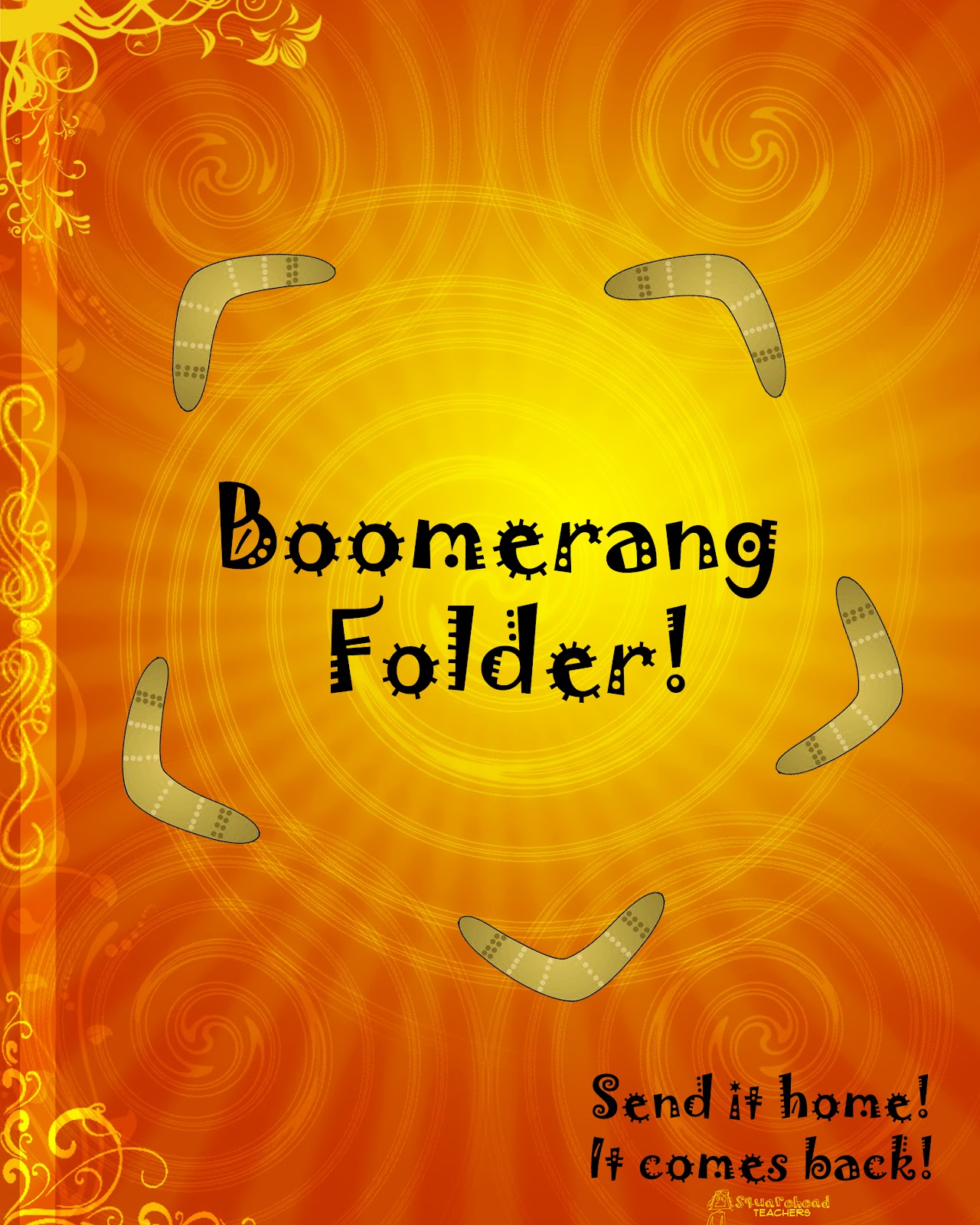
So you’ve heard of a boomerang, right? You throw it and it comes back to you. This is the basic idea of  Boomerang Folders. You choose one day (or two days) a week and let parents know that the Boomerang Folder will be coming home. STICK WITH THAT SAME DAY OF THE WEEK (unless you notify parents ahead of time). Put all the important papers in that folder and send it home. The expectation is for the folder to come back (with certain signed papers, with a signature on a tracking sheet or whatever your system is). In order for this to work, it’s helpful to teach your class about boomerangs at the start of the year. The best thing is for each kid to have a chance throwing a boomerang. This has been successful in my third grade and second grade classrooms, so I hope it helps you too!

Remember, right click the image below. Choose “save image as” and save it to your computer. Then you can choose the size to print it and glue (or laminate) it to the front of your take-home folders.

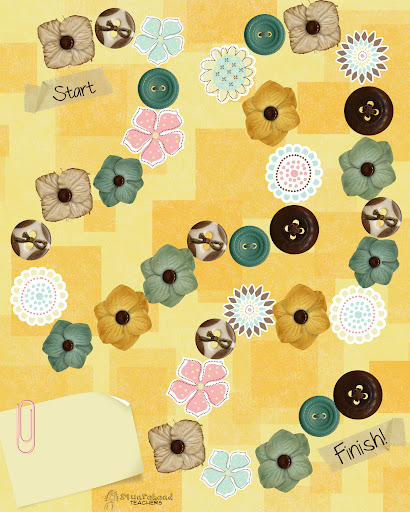
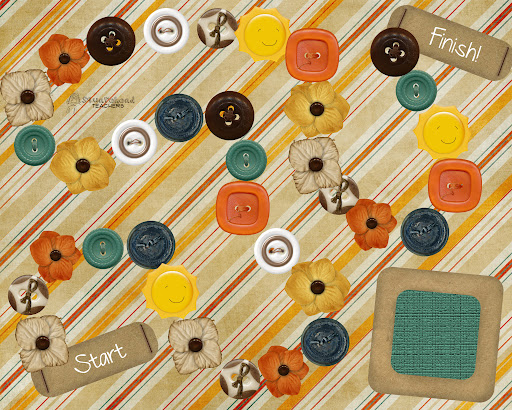
Game Boards: Sunshine!

Can you tell I’m into the color yellow today? Enjoy!

To get these game boards: right click on the picture, choose “save as” or “save image as” and save it to your computer. Then you’re free to resize it and print as desired. Enjoy!

I Heart Drama (in the Classroom)

TWENTY-ONE RED HOT PROCESS DRAMA TOOLS

 FOR MORE EFFECTIVE AND EXCITING TEACHING!
(Adapted from Patrice Baldwin’s The Drama Book)
Process drama is a specific form of drama particularly suited to engaging students deeply in whatever subject is being taught. The following tools can be used singly to make a lesson plan more meaningful or in various combinations to form a complete process drama exploration.
The following is a listing and explanation of several process drama tools and how they might be used in the classroom.
1.  Improvisation—unrehearsed scene co-written with partner (s) without pen or paper.
     (Example: A slave owner and an abolitionist meeting at a dinner party.)
2.  Teacher in role—Teacher takes on the role(s) of character(s) within a drama.
     (Example:
     Teacher takes on the role of a messenger coming to warn a group of people about a plague coming to their town. Later, he/she takes on the role of the Mayor, another townsperson, or another character within the drama.
3.  Still Image (Tableau)—The group takes up different poses to construct a picture describing what they want to say. (Example: A young boy during the Civil War saying good-bye  to his family as he goes off to war.  Students may use thought-tracking (see below) to extract meaning from the image.
4.  Freeze-Frame—A series of linked still images that can describe important moments within a drama, piece of literature, event in history, etc. (Example: Cinderella at home with her Stepmother and sisters, Cinderella wishing she could go to the ball, appearance of the Fairy Godmother, Cinderella with the Prince at the ball, the sisters trying on the glass slipper, Cinderella trying on the glass slipper, the Prince
     and Cinderella being married.)
5.  Mantle of the Expert—Students are asked to take on the role of people with specialized knowledge that is relevant to the situation of the drama.(Example: Scientist, President)
6.  Narration—Teacher narrates part of story or sequence of events to help it begin, move it on, to aid reflection, to create atmosphere, to give information, to maintain control.
7.  Thought-tracking—Individuals, in role, are asked to speak aloud their private thoughts and reactions to events. (Example: In the above example of a young boy going off to war, audience members may ask questions of the persons playing the boy, his father, mother, brothers and sisters. They may come from the audience, tap the person on the shoulder, and ask their questions.)
8.  Hot-seating—Students, as themselves, question the teacher in role or student in role to find out more information about the character and their situation. (Example: Teacher (or student) takes on the role of Eleanor Roosevelt. Students ask questions about her life. This is a great technique to use when students are giving reports about people or events.)
9.   Meetings—The students come together in a meeting (in role) to present information, plan action, suggest strategies, solve problems. (Example: The slaves on board the Amistad meet to determine how they will escape their captors.)
10. Collective role play—Several members of the class play the same part simultaneously to provide mutual support and present a range of ideas. (Example: Four students play the part of Abraham Lincoln.)
11.  Decision alley—Students line up in two lines facing each other. One side favors one side of an opinion, the other side another. A student walks down the “alley,” as each side tries to convince the person of the truth of their opinion. The person who has “walked the alley” tells the class what his opinion is or what he/she has decided after having this experience. (Example: One side of the alley tries to convince the
       person walking through the alley that marijuana should be legalized, the other side tries to convince the other that it should not be.)
12.  Role-On-The-Wall—Students outline the figure of a person on a long sheet of butcher paper. They then write on the paper feelings or thoughts they have about the person. (Example: The Mayor in the story of Rose Blanche who puts a little boy in a truck to be sent to the Extermination Camps.)
13.  Guided Imagery/Visualization—Teacher narrates part of the story while the students close their eyes and visualize sensory details. A writing assignment directly after would augment their sensory impressions. Soft music while visualizing can add depth to the experience.
14. Pantomime/Movement—Students act a part of the story using no voice. Music may add to the pantomime. Abstract movement can illustrate an emotion or sensory details of a story.
15. Soundscape—Students use voice to suggest the sounds of a certain setting within a story.
16.  Interview—Students act as newspaper reporters finding out information about a scene.
17.  Choral Speaking—Students repeat certain lines in unison or divided into various parts according to gender, pitch of voice, character, etc.
18. Speaking Objects—Objects in a scene speak about themevles in relation to a character or event as an eye-witness with a viewpoint.
19. Performance Carousel—Groups prepare scenes representing parts of the drama story, then arrange them in chronological order and perform them in sequence without interruption.
20.  Eavesdropping/Gossip—Groups or individuals overhear conversations and report them back to others.
21.  Forum Theatre—Students enact a scene. Audience can stop the drama, replace or introduce new characters to change the scene.