LOVE Drama (Lesson 3)

­­­­Six Drama/Theatre Lessons
Drama /Theatre Specialist
Fullerton School District
All the Arts for All the Kids
Storytelling:
This set of lessons explores dramatic work as one learns to express a story.  Since drama can be defined as “an actor with a conflict”  and, in most theatre, drama is contained and expressed through  story, story literature and character archetypes from six different cultures are explored.
The lessons are linked both to theatre arts standards and history/social science and language arts curriculum standards.
Emphasis is placed on expressional fluency, critical thinking, divergent thinking, cooperative learning, creating solutions to problems, and comparing and contrasting cultures and style. 
Students participate in acting exercises, games and playmaking.
April 2002

Lesson Three
Lesson Three:  Villains Try to Keep Heroes from Succeeding
Overview:
Villains in stories throw into sharp relief the goodness and strength of heroes.  Not only do villains represent humans who thwart noble hopes and dreams, but frequently villains represent natural and supernatural powers.  These powers are mysteriously at the villain’s beck and call.
A dramatic, colorfully drawn Villain character ensures the reader’s allegiance to the Hero and heightens the story’s conflict.  The vanquished Villain provides a satisfying climax to the story. 
A good story teller uses his/her body, voice and mind to make the story come to life.  And a few well chosen props don’t hurt either.
Objectives:
·        Students will compare and contrast heroes and villains.
·        Students will  participate in the sound and motion of the Villain story
·        Students will use their bodies, voices and minds to portray a villain’s encounter with a hero.
Materials needed:
·        Poster of Heroes from Lesson Two
·        Correlating pictures of Villains for all the fictional Heroes.
·        World map
·        bandanna or napkin
·        small towel
·        small comb
·        mortar and pestle (Cookware or import stores are a good source of a small inexpensive set)
·        Dog ornament
·        Cat ornament
·        White board and markers
·        “Baba Yaga, The Witch”, Usborne Stories From Around the World, retold by Heather Amery, Usborne Publishing Ltd., London, 2000;  or other Villain story, teacher’s choice.
·        Illustration of Baba Yaga
Vocabulary:
Villain, “bad guys”, antagonist,  Russia, mortar, pestle, loom, weave, Baba Yaga
Background:
If you are using the Storytelling Tree, review the previous lessons as prompted by the ornaments already hanging on the tree.  Note, but do not explain, the new ornaments (dog, cat, comb).   Tell students that these new ornaments are characters and items that will appear in today’s story.
Procedure:
1.    Present the poster from last week, along with the correlating pictures.  Invite the students to match the “bad guys” with the “good guys”.  Briefly review the concept that heroes overcome obstacles. Introduce the word antagonist, and use it throughout the lesson.
2.    Ask “If heroes overcome obstacles, what do villains do?”  After discussion, write the following on the white board:  Villains try to stop heroes.  Ask students to identify the ways the villains on the poster try to stop their correlating heroes.
3.    Hold up a picture of Baba Yaga.  Describe this fictional character as a character that exists in Russian stories.  (Refer to map.)  Detail the characteristics of this character, including her iron teeth, her house on chicken feet, her fence of bones,  her herd of skinny cows, and her manner  of traveling in a mortar and pestle. Use your mortar and pestle to describe the way Baba Yaga travels. (“Not like a Halloween witch on a broom.  The mortar sort of jumps and bumps, along as the witch rides inside, steering as if her pestle was an oar.”)
4.    Note:  At this point the students will be eager for the story and will be asking to see  the book.  Tell them today that you are going to share the story from your head. Remind them  not all stories are written down in books.  We also carry stories in our heads and in our  hearts
5.    Indicate  you will use a few things to help tell the story.  Get out the bandanna, towel and comb, and lay them ready to use as props.  Refer to them as your props. 
6.    Tell the story.  Be sure to use your voice and body to create the characters and dramatic tension   Add sound and motion as you see fit, inviting the students to participate, as you have in the past two lessons. 
7.    Additionally, use the bandanna to wrap an imaginary piece of cheese.  Indicate the dog and the cat ornaments, when you mention these characters in the story. 
     Use the comb and towel as they are called for in the story.
8.   Invite the students to find a space on the floor where they will be able to stand without touching anyone or anything.  Call upon them to use their common sense  not to stand near equipment, doors, walls and furniture. 
9.   Ask students to form themselves into a small ball on the floor.  Tell them no voices should be working at this point. (“Silence, please.”)
10.  Ask students to make a picture in their minds of Baba Yaga.  Describe the character vividly so that the student can create a clear picture. 
11. Instruct students that  when you start counting, they are to “grow” into Baba Yaga, to show you what the picture in their brains looks like.  Tell them they are to use their bodies and minds to create this villain.  Tell them to begin growing on“1” and to freeze on “10”, so that you can “get a good look at them.”
12. Begin counting.  If children exercise good creative effort and control, finish counting and say “Freeze.”  Look carefully, commenting on their good work.
13. If students flounder, return them to the small ball and begin again.  If students are excessively shy, ask them to keep their eyes shut until you say “10.”
14. Be sure to be encouraging, and not dictatorial as they create their witch characters   Ask “Do I see iron teeth?… oh, is she really old?…  Are your hands like Baba Yaga’s?… Your mouth?…  Your legs?”  Students will change as you point out various details.  That’s fine as long as they are creating their own work, and not copying someone else’s characterization.
15. Now, invite each witch to step into her mortar, pick up her pestle and “Bump, bump, bump,”  through the forest, chasing Misha.  Remind students that they may touch NO ONE  while traveling.  Be firm about this, or you will have kids behaving in an unsafe manner.
16. Invite students to “Freeze!”  Invite students to pretend they are almost ready to catch Misha when, suddenly,  Misha throws the comb.  “Oh, no!  The thorny forest is growing up between you and Misha.  Quick! Try and bite it down with your iron teeth!”  
17. “I wonder what Baba Yaga would yell at Misha?  Go ahead and tell Misha how mad you are at her!  Show with your face and your voice how frustrated you are that she got away!”  Encourage students to respond.
18. “Now Freeze!  In some stories the witch is destroyed when she melts.  When I say “go” you will silently melt into a big puddle, again, touching no one and nothing else but the floor.  Ready, go. And meeelllt, meeellllt,and…mellllllllllt.” 
19. Good.  Please, silently, take three quick breaths through your mouth, and one out your mouth….Again…Again.  You may sit up and go back to you seats.”
Assessment: 
·        Did students use their voices, minds, and bodies to create the Villain character?
·        Were students able to correlate villains with their heroes, and participate in a discussion of comparison and contrast?
Integration/Correlation/Extension/Modification
·        Have students Name as many fictional heroes as they can, (Think fairy tales, folk tales, comic books, animated television and movies, live action television and movies.)  then villains associated with them.  Encourage students to name the ways and means the villains try to stop the heroes.
·        While Baba Yaga stories are rather rare in the United States, in Eastern European literature, the Baba  Yaga character is ubiquitous.  Assign students to research other Baba Yaga tales.
·        Ask students to write an ending to the story that has Baba Yaga give up her evil ways. Discuss how students feel about the ending.  Is  it satisfying?  Will it be as fun to tell? 
·         Note:  Be sure to assure very young children that there is no such thing as Baba Yaga.  Make sure that in their dramatic play she is vanquished.  

LOVE Drama (Lesson 2)

Six Drama/Theatre Lessons
Drama /Theatre Specialist
Fullerton School District
All the Arts for All the Kids
Storytelling:
This set of lessons explores dramatic work as one learns to express a story.  Since drama can be defined as “an actor with a conflict”  and, in most theatre, drama is contained and expressed through  story, story literature and character archetypes from six different cultures are explored.
The lessons are linked both to theatre arts standards and history/social science and language arts curriculum standards.
Emphasis is placed on expressional fluency, critical thinking, divergent thinking, cooperative learning, creating solutions to problems, and comparing and contrasting cultures and style. 
Students participate in acting exercises, games and playmaking.
April 2002
Lesson Two
Title:  Heroes Overcome Obstacles
Overview:  Stories of “Good Guys” achieving success against great odds, achieving  definitive victory against those odds, seem to be particularly satisfying to the human soul.  Whether the hero is likely or unlikely, with supernatural powers or only deserved or blessed luck, he or she, at some point, must overcome an obstacle.  The obstacle must be overcome by strength and/or ingenuity.
This is the ongoing struggle that human beings, and perhaps especially children, face. A good Hero story inspires us to be valiant in overcoming our own obstacles.
Materials: 
·        Poster of heroes, real and fictional, some easily recognizable, others obscure.  Include a variety of ethnic and genders, current and historical heroes. Group the fictional heroes together and the nonfictional heroes together.  You will need the group of fictional heroes for Lesson Three.
·        Horton Hatches the Egg,by Dr. Suess, Random House, New York, 1968; or other “Hero”  story, teacher’s choice.
·        White board and markers
Vocabulary:  (as is appropriate for grade level)
fictional, real, hero, heroine, protagonist, main character, “good guy”
Objectives:
·        Students will differentiate between pictures of real and fictional heroes.
·        Students will participate in pantomime of large physical obstacle.
·        Students will generate  list of ways to overcome the pantomimed obstacle.
·        Students will participate in sound and motion during telling of the Hero story.
Background:
(If you are using the Story telling tree, use the wrapped gift ornament as a prompt for the students to remember that they are learning to share stories, and that sharing a story is like giving a present.]
Display the pictures of the various heroes.  Ask children to identify the characters.  Help them to determine which are fictional, and which are real life heroes.  Help the children identify those heroes with whom they are not familiar.  Share bits and pieces of their hero stories.
Procedure:
1.    Establish pantomime of an obstacle. For example, you might say “We’re going to pretend for a little while.  Loook!  Look at this huge rock that’s right in front of me.  It’s so tall I don’t know how I can get over it.  It’s so wide I don’t see how I can get around it.  What a problem! (Push and pull the obstacle)  I just can’t  seem to move this obstacle, this problem, at all.  Let’s call this big problem an obstacle.  Whew! I’m tired.  Can anyone think of a way I can get on the other side of this  obstacle?”
2.    Choose a student to describe his way of solving the problem.  Then invite the student up to demonstrate his idea.  Work with him as a partner in the pantomime.  For example, if a student’s solution is to use a ladder and climb over the top, volunteer to help him get the pantomimed ladder, and climb up, before or after the student.  Once you are both on the other side of the obstacle, thank the child profusely.  Ask him to “give me five”, or a similar victory  ritual.  Then say to the child “Hooray!”  You overcame the obstacle!  You’re my hero!”
3.    Repeat step #2 at least two more times, with alternate ways of overcoming the obstacle.
4.    Using the white board, write ”Good guys” .  Ask students if it is reasonable to  describe all the pictured heroes as “good guys”.  Write the word “hero” on the board.  Share with students the fact that this is another term to describe “good guys”.
5.    Write “Heroes overcome obstacles.”   Ask for an example from the poster of a hero who overcame an obstacle.  Keep equating “solving a big problem”, with “overcoming an obstacle.
6.     Also, write on the board the words heroine, and protagonist.  Tell students that these are also words to describe the main character in a story.  This character is someone who overcomes an obstacle. (Heroine describes a female hero.)
7.    Announce to students that you have a story to share about a hero.  Tell them there will be places during the story for the audience to help the story teller. (You may want to review the audience’s responsibility as described in Lesson One.)
8.      Share Hero story.  If it is Horton Hatches the Egg, potential places for the audience to join in the dramatic story telling, from their seats, could be as follows:
·        Invite the students to make the sound and motions of a storm during” It poured and it lightninged! It thundered!  It rumbled!”
·        “Soon it was Autumn.  The leaves blew away.”  Sound of wind, motion of leaves flying.
·        “…and said with a sneeze,”  Invite students to sneeze as Horton would sneeze.
·        “They taunted. They teased him.”   Invite students to make “Nyaaa, nyaaa, nyaaa, nyaa, nyaa”  or other playground teasing noises.
·        “He held his head high, and he threw out his chest…”  Invite students to do the same taking Horton’s stance.
·        “Rolling and tossing and splashed by the spray…”  Invite students to make the sounds and motion of the ocean.
·        Invite students to make the appropriate sounds during “A thumping!  A bumping!  A wild alive scratching!”
·        Invite students to make the appropriate sound after “…the egg burst apart!”
·        Invite students to repeat all the crowd says, such as “What’s this all about…?” And ”My goodness!  May gracious!”   and “My word!  It’s something brand new!  It’s an elephant-bird!”
·        “And they sent him home happy…”  allow students to provide “100%!”
9.    Review how this fictional character, Horton, was the hero of the story, by helping students to identify the obstacle Horton overcame.
10.If you are using the Story telling tree, ask a student to place the egg ornament on the tree.
Assessment: 
·        Were students able to identifyfictional and nonfictional heroes?
·        Did students participate in the dramatic play of the Obstacle pantomime, including offering ways in which to overcome the obstacle?
·        Did the students participate, as cued, using sound and motion during the Hero story?
Integration/Correlation/Extension/Modification
·        Invite students to write or draw a picture of a story in which they, themselves, are the heroes.  The obstacle the hero overcomes should be clearly identifiable.
·        Invite students to read Horton Hears a Who, also by Dr. Suess.  Encourage them to find places in which the audience could add sound and motion to aide the storyteller in the sharing of the story.
·        Ask students to think of more unlikely heroes in unusual situations.  (A lion protecting a lamb, a mouse helping a cat,  a fisherman helping a fish to escape, a kindergartner saving a sixth grader, etc.)
·        For older students:  Ask students to represent a nonfictional hero’s obstacle in a visual art medium.  (For example, a student might draw a picture of Jackie Robinson jumping over a hurdle representing racism.)  Discuss how the hero story, told in words, can be translated into visual art.
·        For older students:  The hero of a story  is most often the protagonist of a story.  However, sometimes he/she is not.  Challenge students to take a hero story, and, without changing the main details of the story, make another character the protagonist.  Tell the story from another character’s point of view.


LOVE Drama (Lesson 1)

Drama/Theatre Lesson
Drama /Theatre Specialist, Fullerton School District
All the Arts for All the Kids
Storytelling:
This set of lessons explores dramatic work as one learns to express a story.  Since drama can be defined as “an actor with a conflict”  and, in most theatre, drama is contained and expressed through  story, story literature and character archetypes from six different cultures are explored.
The lessons are linked both to theatre arts standards and history/social science and language arts curriculum standards.
Emphasis is placed on expressional fluency, critical thinking, divergent thinking, cooperative learning, creating solutions to problems, and comparing and contrasting cultures and style. 
Students participate in acting exercises, games and playmaking.

April 2002
Lesson One
Title:  The Storyteller’s Art
Overview:  Storytellers have existed throughout time, with the necessary consent and participation of  their audiences.  Storytellers’ audiences range from the nursery to political gatherings, religious disciples to  the farmers’ hearth,  the royal court, to the lecture hall.  Storytelling exists to teach, explain, demonstrate devotion, entertain or all of the above.
Storytellers learn to engage their audiences, with their  material and their manner of presenting the material.  Unless an audience listens, the story stops and the goals of the storyteller fail.  Audiences learn to support the story teller through social and cultural mores. (For example, some cultures listen in respectful silence.  Some cultures respond verbally to cues, becoming integral to the performance.)
Objectives: 
1.    Children will participate in sound and motion stories, responding to appropriate cues.
2.    Children will, through their participation, demonstrate the concept that as a storyteller cooperates with an audience, the audience cooperates with the storyteller.
Materials Needed:
(Note:  In this lesson, as in subsequent lessons, stories and books will be suggested.  However, other stories and books can be substituted depending on teacher choice.
The teacher can choose a different Hero, Villain or Fool story.  There are plenty of these stories  in every country and culture.  It is important that the teacher be excited about the story, and prepare to tell the story in as an exciting and engaging manner as possible.  The storyteller’s art is one of the dramatic arts!  So, in looking for substitute stories,  chose a story you really enjoy telling.
Picture Books
·        How I Spent my Summer Vacation, by Mark Teague, Dragonfly Books, published by Crown Inc., a division of Random House, 1995;
·        Tasty Baby Belly Buttons, by Judy Sierra, Illustrated by Meilo So, a Borzoi Book, Albert Knopf,  publisher, 1999.
·        White board and markers (or prepared word strips “The storyteller’s job is to make the story interesting.”, The audience’s job is to have Open Ears, Open Minds, and Open Hearts.”, “ Stories Teach, Warn and Entertain.”
·        World map
Optional: (To be used in every lesson, if desired.)
·        A potted live or silk plant or tree, large enough to support “ornaments.”  Use these ornaments to represent various characters and items in the various stories.  The ornaments can be placed on the “Storytelling Tree”  as a review tool, or as items to pique interest about the story the students will hear during the lesson.
The following are a list of items I have used.  These “ornaments” will be noted in the following lessons as optional materials, and the teacher can make his/her own choice as to which items to use, if any.  Also, naturally, as the choice of stories and books will vary depending on teacher choice, so will the ornaments. That said, here is a list of ornaments and their corresponding story.
·        small wrapped gift box (“a story is like a present…”)
·        Dog, bird, monkey:  Tasty Baby Belly Buttons
·        Egg:  Horton Hatches an Egg
·        Mortar and pestle, dog, cat, comb:  “Baba Yaga”
·        Artificial mini lettuce head:  “Magic Field”
·        Miniature broom:  Everyone Knows What a Dragon Looks Like
Vocabulary:  (as grade appropriate) Note:  Vocabulary listed will match with the suggested stories.  If the teacher makes other choices, substituting a different story, the vocabulary will, obviously be different. 
 
stampede, cattle, wrangler, matador, buckaroo, oni, millet, dumplings, pheasant, minuscule, storyteller, cooperation, cue
Background:
Have a short discussion with the students regarding their last vacation, or school break.  Ask them to shut their eyes and make a “remember picture” in their mind of the best thing they did during that vacation or break.  Remind children of various activities they might have experienced.  (“Did you spend time at your grandma’s home… did you go someplace fun with your family… did you stay at home and read a million books… did you play outside with your  neighbor…?” etc.)  Ask students to share with you their memory, or “remember picture.”
Choose a few students and listen to their stories.  Draw students out, asking for details, being delighted that they will share with you.  Thank each student for telling you his or her story.  Use and emphasize the words story and storyteller.
Tell the students you liked their stories so much you might go share their stories with someone you know.  (“  At dinner tonight I might say to my daughter that  there was this child in my class today, and he had such a great time when he went to the mountains with his Dad and Mom,” etc.)  Honor the fact that the students shared with you.  Demonstrate that you were a good listener.  Repeat specific details of the stories as you speak, so that the students will notice how closely you paid attention.
Tell the students that you feel as if you received a gift, a present, today, when they told you their stories.  Tell them you are going to pass the present along when you share their story with someone else.  (“A story is like a present.  You give someone a gift when you share a story.”)
Procedure: 
1.  Invite students to listen to a story about a boy and what he did on his summer vacation
2.  Present How I Spent My Summer Vacation, by Mark Teague.
3.   Help the children discover all the storytellers involved.  Discuss the fact that Wallace Bleff shared his story with his class.  Also, a man named Mark Teague made up the story and pictures of the book.  Then point out that you (the teacher) were a storyteller also, because you told the story to your students. 
4.   (“In the next few drama lessons we have we’re all going to learn about stories and how to express stories—share stories ,  with other people.)
5.   Using prepared word strips, or writing on the white board, discuss the following concepts in light of the story you just read.  Refer to illustrations as examples of these concepts.
·         Stories Teach, Warn and Entertain (“Did Wallace’s story warn us of anything?” etc)
·        The Storyteller’s job is to make the story interesting. (“How did Wallace make the story interesting?”)
·        The Audience’s job is to have Open Ears, Open Minds, Open Hearts.  (“What does it mean to have open ears?” etc.)  Students will have many ideas regarding these concepts.  You may want to note that open ears can mean listening well,  and open mind may mean using one’s imagination.  It can also mean not deciding before you hear a story whether or not you’ll like it.  Having an open   heart can  mean letting oneself be touched emotionally by a story.(“So if the story is supposed to be funny, go ahead and laugh.  And if the story is supposed to be a little scary, go ahead and feel a little afraid. And if the story is a little sad, go ahead and …that’s right, feel a bit sad.)
5.   Prepare to presentTasty Baby Belly Buttons, by Judy Sierra. Tell students that in Japan(refer to map) the audience is invited to help tell the story.  Tell students that when you give them a signal, or cue,  students are invited to follow what you do and or say.  Review vocabulary students may need to know to understand the story. (dumplings, millet, oni, pheasant, etc.) 
6.   Each term noted in italics in the text  can be accompanied by a motion as you say them.  Share the story as described. (”One morning , as the old woman was washing clothes in the river, a melon came floating along, tsunbara, tsunbara”  Using your hand, imitate a melon floating down the river, and say “tsunbara, tsunbara, tsunbara,”  inviting and indicating the students to do the same. You might even say, “This is your part!” if students don’t join in right away.
7.   Other opportunities for sound and motion, for yourself and students:
·         “Zushin, zushin!” Sway back and forth as if you are a monster marching.
·        Chant “Belly buttons, belly buttons, Tasty baby belly buttons!”  in a monstrous voice. (Make sure students chant with you.)
·        Walk your fingers in your palm as you say “Tontoko, tontoko.”
·        Use a high pitched voice for the pheasant as you say “Ken, ken, ken, ken, I smell millet dumplings!”
·        Use a goofy monkey voice as you say “Kya, kya, ,kya, kya, I smell millet dumplings.”
·        Use your hand to toss the dumplings to the pheasant and monkey.
·        Knock on the castle door, using a deep voice, “Don, Don, Don!”
·        Cry like a baby, rubbing your eyes for “Boro,boro,boro,boro!”
·        Pretend to get your toes nipped, knees knocked, and head bopped as the animals attack the monsters.
·        Use a swift sword motion and sound to cut the rope tying the babies.
8.   Praise the students for their work.  Discuss how they did their job as an audience.  Thank them for their help in making your job easier as a story teller, by helping to make the story interesting.  Ask, did the story teach us? How?  Warn us?  How?  Entertain us? How? 
9.   If you are using the Storytelling Tree, invite students to put representative items on it.  Include the present to remind everyone that sharing a story is a wonderful gift. Tnank the children again for their stories with you.
Assessment:
·        Did the students participate in sounds and motions?
·        Did the students demonstrate their responsibilities as audience members demonstrating open ears, open minds, and open hearts– criteria you discussed and decided together?
Integration/Correlation/Extension/Modification:
·        With young children, bring in some millet (pet stores have it) and pass it around.  Bring pictures or actual dumplings.  Discuss how many different cultures have a special type of “dumpling” in their cooking.
·        Set a movement pneumonic for Open Ears, Open Minds, Open Hearts.  (For example, point to ears, brain and heart, each time you mention the Audiences’ job.)
·        Ask students to draw or write a version of their own summer vacation.  However, they must have an open mind, and extend their thinking and add some fun exciting new fictional details to their stories.  Have the students read or tell their stories to classmates.  Classmates may  guess what is “real” and what is fictional.
·        Sing some story songs: “The Cat Came Back”, “The Ship Titanic”, “On Top of Spaghetti”, “Found a Peanut”, etc. 

I Heart Drama (in the Classroom)

TWENTY-ONE RED HOT PROCESS DRAMA TOOLS

 FOR MORE EFFECTIVE AND EXCITING TEACHING!
(Adapted from Patrice Baldwin’s The Drama Book)
Process drama is a specific form of drama particularly suited to engaging students deeply in whatever subject is being taught. The following tools can be used singly to make a lesson plan more meaningful or in various combinations to form a complete process drama exploration.
The following is a listing and explanation of several process drama tools and how they might be used in the classroom.
1.  Improvisation—unrehearsed scene co-written with partner (s) without pen or paper.
     (Example: A slave owner and an abolitionist meeting at a dinner party.)
2.  Teacher in role—Teacher takes on the role(s) of character(s) within a drama.
     (Example:
     Teacher takes on the role of a messenger coming to warn a group of people about a plague coming to their town. Later, he/she takes on the role of the Mayor, another townsperson, or another character within the drama.
3.  Still Image (Tableau)—The group takes up different poses to construct a picture describing what they want to say. (Example: A young boy during the Civil War saying good-bye  to his family as he goes off to war.  Students may use thought-tracking (see below) to extract meaning from the image.
4.  Freeze-Frame—A series of linked still images that can describe important moments within a drama, piece of literature, event in history, etc. (Example: Cinderella at home with her Stepmother and sisters, Cinderella wishing she could go to the ball, appearance of the Fairy Godmother, Cinderella with the Prince at the ball, the sisters trying on the glass slipper, Cinderella trying on the glass slipper, the Prince
     and Cinderella being married.)
5.  Mantle of the Expert—Students are asked to take on the role of people with specialized knowledge that is relevant to the situation of the drama.(Example: Scientist, President)
6.  Narration—Teacher narrates part of story or sequence of events to help it begin, move it on, to aid reflection, to create atmosphere, to give information, to maintain control.
7.  Thought-tracking—Individuals, in role, are asked to speak aloud their private thoughts and reactions to events. (Example: In the above example of a young boy going off to war, audience members may ask questions of the persons playing the boy, his father, mother, brothers and sisters. They may come from the audience, tap the person on the shoulder, and ask their questions.)
8.  Hot-seating—Students, as themselves, question the teacher in role or student in role to find out more information about the character and their situation. (Example: Teacher (or student) takes on the role of Eleanor Roosevelt. Students ask questions about her life. This is a great technique to use when students are giving reports about people or events.)
9.   Meetings—The students come together in a meeting (in role) to present information, plan action, suggest strategies, solve problems. (Example: The slaves on board the Amistad meet to determine how they will escape their captors.)
10. Collective role play—Several members of the class play the same part simultaneously to provide mutual support and present a range of ideas. (Example: Four students play the part of Abraham Lincoln.)
11.  Decision alley—Students line up in two lines facing each other. One side favors one side of an opinion, the other side another. A student walks down the “alley,” as each side tries to convince the person of the truth of their opinion. The person who has “walked the alley” tells the class what his opinion is or what he/she has decided after having this experience. (Example: One side of the alley tries to convince the
       person walking through the alley that marijuana should be legalized, the other side tries to convince the other that it should not be.)
12.  Role-On-The-Wall—Students outline the figure of a person on a long sheet of butcher paper. They then write on the paper feelings or thoughts they have about the person. (Example: The Mayor in the story of Rose Blanche who puts a little boy in a truck to be sent to the Extermination Camps.)
13.  Guided Imagery/Visualization—Teacher narrates part of the story while the students close their eyes and visualize sensory details. A writing assignment directly after would augment their sensory impressions. Soft music while visualizing can add depth to the experience.
14. Pantomime/Movement—Students act a part of the story using no voice. Music may add to the pantomime. Abstract movement can illustrate an emotion or sensory details of a story.
15. Soundscape—Students use voice to suggest the sounds of a certain setting within a story.
16.  Interview—Students act as newspaper reporters finding out information about a scene.
17.  Choral Speaking—Students repeat certain lines in unison or divided into various parts according to gender, pitch of voice, character, etc.
18. Speaking Objects—Objects in a scene speak about themevles in relation to a character or event as an eye-witness with a viewpoint.
19. Performance Carousel—Groups prepare scenes representing parts of the drama story, then arrange them in chronological order and perform them in sequence without interruption.
20.  Eavesdropping/Gossip—Groups or individuals overhear conversations and report them back to others.
21.  Forum Theatre—Students enact a scene. Audience can stop the drama, replace or introduce new characters to change the scene.

Game Board: Vine Spiral

This classic game board can be used in pretty much any content area. Click here for review game ideas I love to use in my classroom to review any content area.

Click here for the free printable PDF: Vines Gameboard PDF

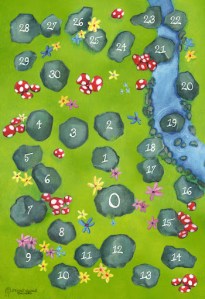
Game Board: Stepping Stones

Game Board: Stripes

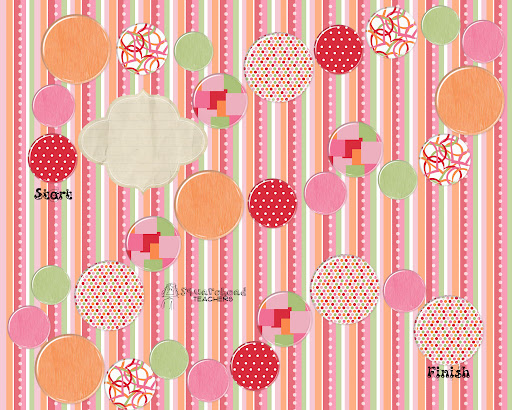
If you wanted to add some more pizzaz to this game board, you could assign a specific space (red with white dots) an extra special property. Maybe landing on the space means you can roll again, etc.

 To get this game board, just right-click, “save as” and save this image to your computer. Resize the image to fit the paper you’re printing it on. Ta-da!

Game Board: Snow Swirl

Maybe you want to change things up for the winter. Throw this new game board into the mix and get some last minute review in before the holiday break!

To get this game board, just right-click, “save as” and save this image to your computer. Resize the image to fit the paper you’re printing it on. Ta-da!