Holiday Math Hopscotch

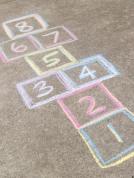
Here’s a great idea I saw at a family fun night: Holiday math hopscotch.  This one was around Halloween, but you could easily adapt the game for Christmas, Valentine’s day… pretty much anything. The kids had to throw a cloth spider on a hopscotch square.  Then they had to tell the teacher a problem that the number in the square was an answer to.  Then they could hop to it and pick it up.  (Make your hopscotch as long as you want to provide the kids more numbers to work with.) Kids loved it! 

Submitted by an awesome teacher in AZ. Thanks!

The Ultimate Teacher Organization

Every teacher faces the problem of keeping organized for the upcoming week. Teachers use files, folders, trays and magazine boxes. I’ve tried to stay organizes, but it wasn’t until I saw this that I felt like I’d stuck gold!

This teacher has a stack of 4 trays for each day. She has trays for math, literacy, science and social studies. She puts misc. papers on top of each stack for the day. She uses this system to stay ahead, since she has a place where she can store materials for a project in a few days. Her classroom doesn’t have tons of counter space, so this is a good fix. In addition, she has an organized place where she can put papers to send home, copies of a homework page to hand out in a few days etc. In addition, she can store papers she uses on a certain day of the week (like the spelling list for Friday’s test). I’m all about being organized, so I’m totally jealous!!


Motivating Kids to Do Things Quickly!

Sometimes kids just want to shuffle around and it feels like when you ask them to turn in papers quickly, they’re moving in slow motion! Here’s one way I found to fix that:

I was teaching 6th grade when I developed this idea. Each student had a number according to ABC order by last name. I timed my kids to see how fast they could turn in their papers in order and reverse order (so the order matched the order in my grade book). I would write their time record on the board and rewarded the entire class each time they broke their record. In the beginning, this meant giving lots of rewards, but by the middle to end of the year when they were really coordinated, it was really hard for them to break their record and knowing I would give them a reward was motivating. This saved me TONS of time (turning in papers and shuffling through papers and my grade book). Try it!


Management System: Colors

I saw this system used successfully in a kindergarten classroom. It worked well because it was so simple. Each kid had a magnet with their number and started in the middle of the chart each week. Depending on behavior, the kids could move up or down the chart.

Keeping Track of Important Student Paperwork

Every year, there are tons of papers students need to take home and bring back. It can be an overwhelming task to keep track of who has brought back what… especially if you don’t have a system. I’ll post all the ideas I see on this topic here:

One teacher used an extra pocket chart. She assigned each student a pocket and made a bunch of colored laminated cards for each pocket. She would assign a colored card (she could write on it multiple times) to each form that needed returned so she could see who needed to bring something back.


.


Mystery Noun Of The Week

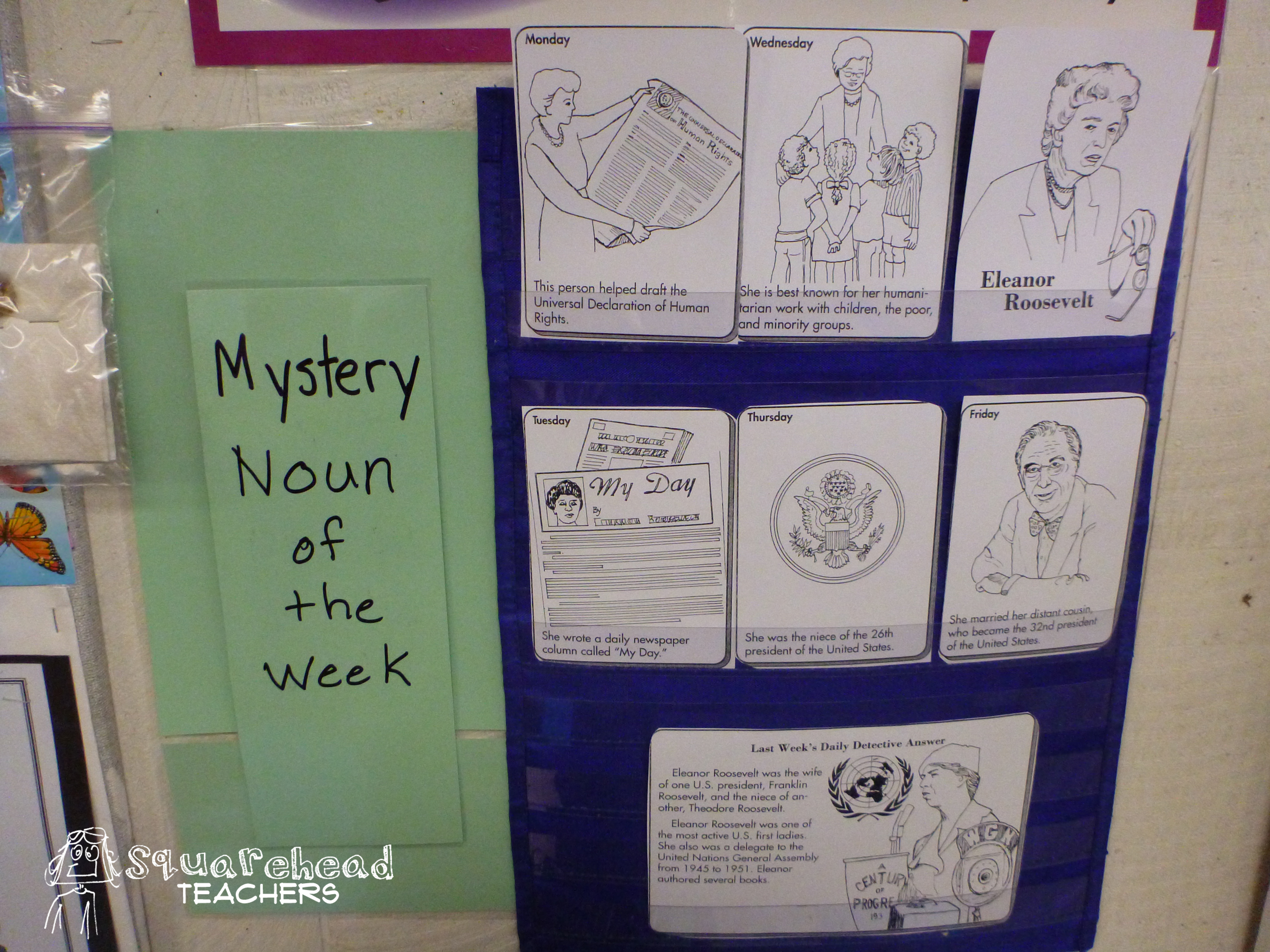
I saw this cool idea and had to blog about it! Each morning, the teacher posts a clue to a the mystery noun and reveals the noun on Friday. Participation is voluntary, but most kids are pretty motivated by the mystery aspect if this activity. The teacher uses a book from the Daily Detectives series by Daryl Vriesenga.  It would also be pretty easy to make your own clues to introduce an important noun in a lesson the following week or clues that describe something your class learned a few months ago as a review. I liked this idea because it reinforces what nouns are in a painless way.

When You Finish Early…

Every student takes a different amount of time to finish an assignment. The tricky part for teachers is to maintain a learning environment for the students who are still finishing. Many teachers have a box/tote of activities for students to do while they wait for other students to finish. Here are some examples:

I used to have a “Dessert Box.” I had a box of fun, yet educational puzzles, worksheets, that focused on problem solving skills. The students knew they could do a page to earn a ticket (part of my classroom management system).

During the literacy block

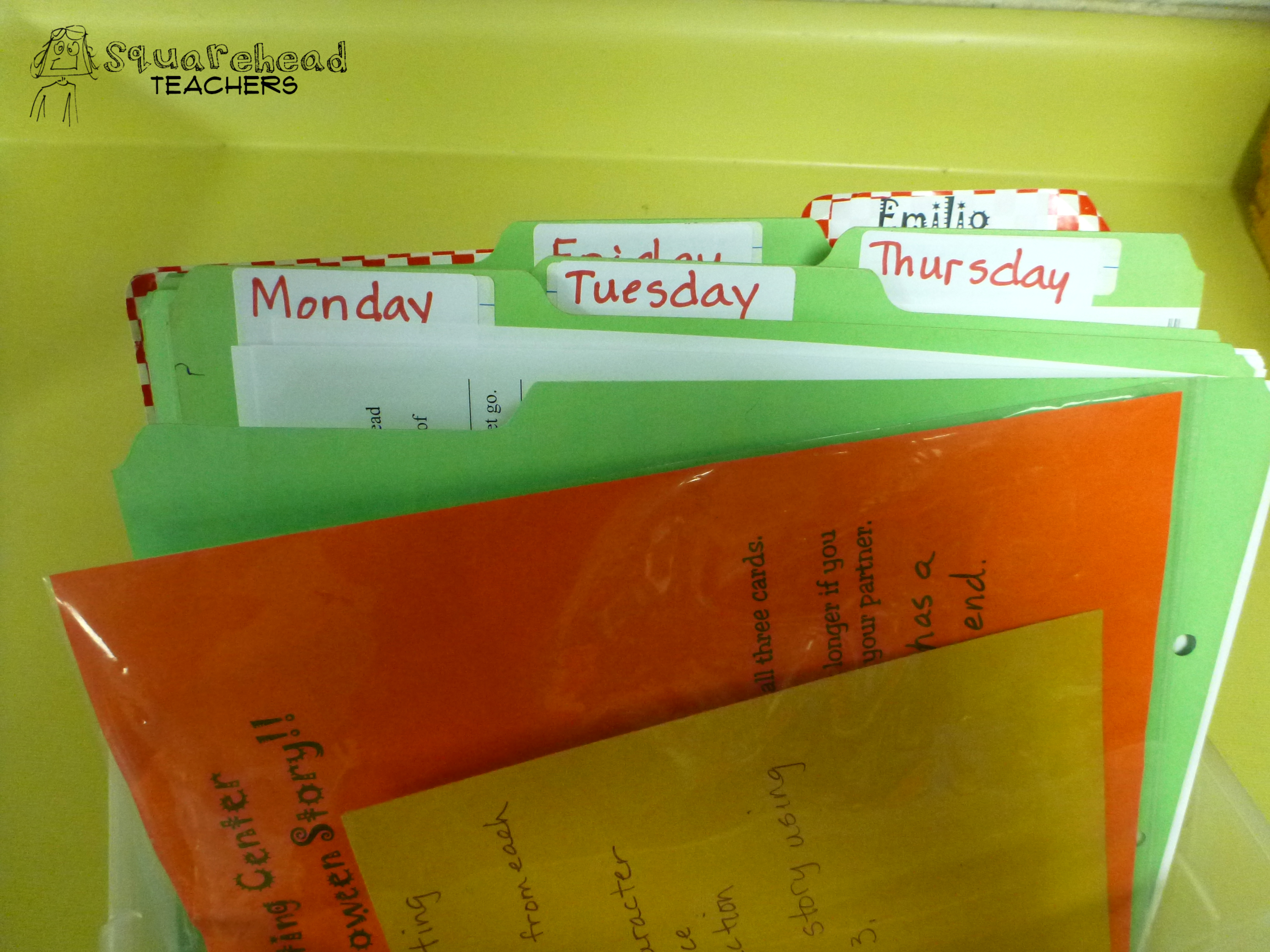
She puts a few copies of a fun (yet literacy based) worksheet in a folder for each day of the week. Certain students (high achievers or low students) have their own folders. This helps the kids who finish early to know what to do, and keeps them focusing on literacy skills during the literacy block. She also includes holiday games or other seasonal literacy activities during the weeks of holidays. So Smart!

Send photos of your “done early” activities to squareheadteachers at gmail dot com.

Quiet Signals

Here are some quiet signals I’ve heard over the years:

Practice Map Directions.  Teacher: “Point North” (students point). “Point East” (students point)… in different orders so the students learn the directions needed for using maps.

Eyes On Me. Teacher: “1 2 3 eyes on me.” Students: “1 2 eyes on you”

Counting Down. Teacher starts counting backwards from 5, getting quieter and quieter with each number.

Do This. Teacher does simple actions such as touching nose, folding arms, etc. while quietly saying “do this” with each action. Soon students are looking around for the source of the directions their friends are following and it gives the kids something to do until everyone is ready.

Claps. Teacher claps out a rhythm and students must copy. Some students have a specific rhythm they use (teacher claps the first part and students finish the rhythm).

What signal do you use? Please share your ideas by commenting!