Wrinkled Hearts: Bully Prevention Lesson

Citizenship is crucial to the success of our society. But it’s not part of any standardized test, so sometimes it’s easy to skip over it. I absolutely loved this lesson plan by Character Education Partnership. This lesson, called “Wrinkle on my Heart,” teaches about empathy, taking responsibility for mistakes when they happen and learning from them, and thinking before you speak/act. It’s very simple, but effective, especially when the teacher posts the wrinkled heart somewhere in the classroom as a reminder. Check it out:

Wrinkle on My Heart

Salt Brook Elementary School

Overview

Engage students in a discussion of the power of their words.

Lesson Objectives

Students will learn about empathy.
Students will learn to take responsibility for their mistakes when they happen and to learn from them.
Students will learn to think before they speak and act.

Materials Needed

Red construction paper heart
Black marker

Procedures

Sit with the children and tell them the red construction paper heart represents the heart of a 5th grader (or another grade level). Ask, “How does it look?” Tell them to notice that it is a nice, big, red, happy heart. Say,” When you’re in 5th grade, many things happen each day – some good, some not-so-good. These not-so-good things can really hurt our heart.” Ask the students what someone could say or do to hurt their hearts. As a child gives an example of what could hurt a heart, put one fold in the heart.

Hurtful answers may include: Tease them, call them names, hit them, gossip about them behind their back, ditch them, tell secrets about them

Continue until you have folded the heart up. Then ask the children, “What have our hurtful words and actions done to our classmate’s heart?” Answers typically include destroyed it and broken it. Ask how students think this person feels. Discuss.

Ask students, “Is there anything we can say or do to fix this heart?” As children give an answer unfold one crease in the heart.

Helpful answers may include: Apologize, say something nice, give a compliment, invite them over to play or eat lunch with you, listen to them, talk to them, be a friend to them.

After the heart has unfolded, ask the children, “How did we do? Did we fix this heart?” Usually you’ll hear a yes and then “Well, no, because it’s still kind of wrinkled.” Allow them to discuss this.
Ask how this person feels now. Lead their discussion to the idea that although we have repaired the heart, the scars are still there. Even when we say we’re sorry, people still remember the hurtful things we did. Ask, “Is it ok for people to do this?” Discuss with them that we all make mistakes and sometimes say or do something hurtful that we didn’t mean. Ask, “What can we do to try to prevent saying or doing something hurtful to someone else?” Lead the discussion to the idea that we can think before we speak.

Write on the heart: No one has the right to put a wrinkle on someone else’s heart. Hang the heart in the classroom, therapy room, or send home as a visual reminder to children.

Teachers can review the lesson with students as needed by prompting them to look at the heart displayed in the classroom.

Assessment

Teachers can assess the activity through application of character education principles.

Credit

Erika Ledder, School Counselor, Salt Brook Elementary School
– – – – – – – – – – – – – – – – – – – – – – – – – – – – – – – – – – –
Here are some ideas to help keep this lesson alive in your classroom:
Still looking for more ideas like this? Here’s another idea.

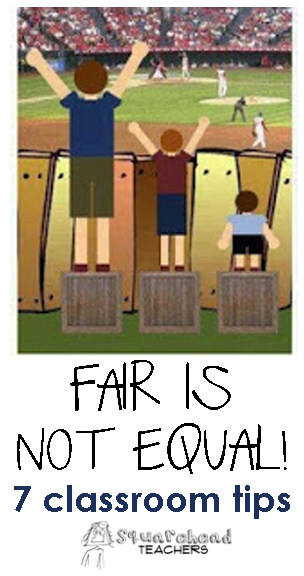
Fair Isn’t Equal (7 Classroom Tips)

Fair is not equalHere are some excerpts from an article by Dr. Richard Curwin of David Yellin College describes how “fair” in a classroom doesn’t mean equal. He gives seven valuable tips for teachers. Click here for the original article.

There are two skills that separate great teachers from good ones. I explained that the first skill is the ability to reframe student behavior, to see it in new ways. Today I want to discuss the second skill: knowing how to treat students fairly by not treating them the same.

If you ask students what are the most important qualities they like in teachers, one of the universally top-mentioned is fairness. Teachers and schools strive to be fair and build programs and polices based on this value.

But what is fair? Many define it as treating everyone the same, but I would argue that doing so is the most unfair way to treat students. Students are not the same. They have different motivations for their choices, different needs, different causes for misbehavior and different goals.

Here’s how to put this concept into practice (*Read the original article for more detail on applying these ideas):

1. Everyone has the same rules.

2. Consequences are flexible.

3. Equal isn’t always fair.

4. Teach the concept of fair vs. equal to your class before implementing it.

5. Follow the basic tenets of great discipline.

6. Be willing to discuss your strategy with students.

7. Be willing to discuss your strategy with parents.

Being truly fair is harder and requires more work in the short run that just treating everyone the same. In the long run, it saves time and is more effective. And when it comes to treating everyone the same, every child deserves a lot better than that.

5 Quick (Yet Essential) Classroom Management Tips

5 essential classroom mgmt tipsThis is a great list of tips for new teachers. It’s written by Rebecca Alber and it’s very helpful for those seeking to improve their classroom management. Click here to see the original article.

I made a good number of blunders my first year teaching that still make me cringe. I learned though. And it’s fair to say, when it comes to managing a classroom, most of what we learn as new teachers is trial by fire. It’s also smart to heed the advice of those who have walked — and stumbled — before you. If you are struggling with discipline, here are five tips that you can start using right away:

#1) Use a normal, natural voice

Are you teaching in your normal voice? Every teacher can remember this from the first year in the classroom: spending those first months talking at an above-normal range until one day, you lose your voice.

Raising our voice to get students’ attention is not the best approach, and the stress it causes and the vibe it puts in the room just isn’t worth it. The students will mirror your voice level, so avoid using that semi-shouting voice. If we want kids to talk at a normal, pleasant volume, we must do the same.

You want to also differentiate your tone. If you are asking students to put away their notebooks and get into their groups, be sure to use a declarative, matter-of-fact tone. If you are asking a question about a character in a short story, or about contributions made by the Roman Empire, use an inviting, conversational tone.

#2) Speak only when students are quiet and ready

This golden nugget was given to me by a 20-year veteran my first year. She told me that I should just wait. And wait, and then wait some more until all students were quiet.

So I tried it; I fought the temptation to talk. Sometimes I’d wait much longer than I thought I could hold out for. Slowly but surely, the students would cue each other: “sshh, she’s trying to tell us something,” “come on, stop talking,” and “hey guys, be quiet.” (They did all the work for me!)

My patience paid off. Yours will too. And you’ll get to keep your voice.

#3) Use hand signals and other non-verbal communication

Holding one hand in the air, and making eye contact with students is a great way to quiet the class and get their attention on you. It takes awhile for students to get used to this as a routine, but it works wonderfully. Have them raise their hand along with you until all are up. Then lower yours and talk.

Flicking the lights off and on once to get the attention is an oldie but goodie. It could also be something you do routinely to let them know they have 3 minutes to finish an assignment or clean up, etc.

With younger students, try clapping your hands three times and teaching the children to quickly clap back twice. This is a fun and active way to get their attention and all eyes on you.

#4) Address behavior issues quickly and wisely

Be sure to address an issue between you and a student or between two students as quickly as possible. Bad feelings — on your part or the students — can so quickly grow from molehills into mountains.

Now, for handling those conflicts wisely, you and the student should step away from the other students, just in the doorway of the classroom perhaps. Wait until after instruction if possible, avoiding interruption of the lesson. Ask naive questions such as, “How might I help you?” Don’t accuse the child of anything. Act as if you do care, even if you have the opposite feeling at that moment. The student will usually become disarmed because she might be expecting you to be angry and confrontational.

And, if you must address bad behavior during your instruction, always take a positive approach. Say, “It looks like you have a question” rather than, “Why are you off task and talking?”

When students have conflicts with each other, arrange for the students to meet with you at lunch, after or before school. Use neutral language as you act as a mediator, helping them resolve the problem peacefully, or at least reach an agreeable truce.

#5) Always have a well-designed, engaging lesson

This tip is most important of all. Perhaps you’ve heard the saying, if you don’t have a plan for them, they’ll have one for you. Always over plan. It’s better to run out of time than to run short on a lesson.

From my own first-hand experience and after many classrooms observations, something that I know for sure: Bored students equal trouble! If the lesson is poorly planned, there is often way too much talking and telling from the teacher and not enough hands-on learning and discovery by the students. We all know engaging lessons take both serious mind and time to plan. And they are certainly worth it — for many reasons.


Teaching Roman Numerals

P1030589

Roman numerals are hard for most Americans… mostly because we don’t use them very often. So here’s one way to help get your kids used to Roman numerals, and hopefully teach them a few: Refer to your tables using Roman numerals! If you were really excited about it, you could have each student learn their number in Roman numerals and have them write it as part of their heading on papers. In case you forgot Roman numerals yourself, here’s a nice chart to help you keep Roman numerals straight.

Simple Organizational Improvements For Your Classroom

1. Use multiple bins to collect work your students submit to you. This way, they’re already sorted and easier for you to grade! I use stackable paper trays to save space.P1030356


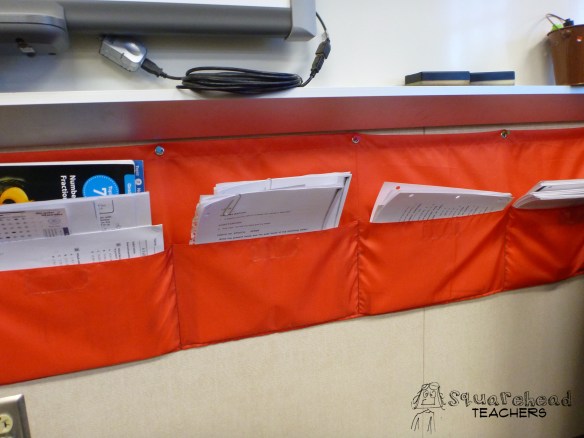
2. Place fabric pockets in the area where you teach from most. Then you can store commonly used papers, forms or reference materials for you to grab at a moments noticeP1030590.


3. I don’t know about you, but sharpening pencils is the bane of my existence! Designate two containers for pencil storage (one of broken pencils that need sharpened  and one for freshly sharpened pencils for kids to grab). I used to have one student be the pencil sharpener for the week.P1030599


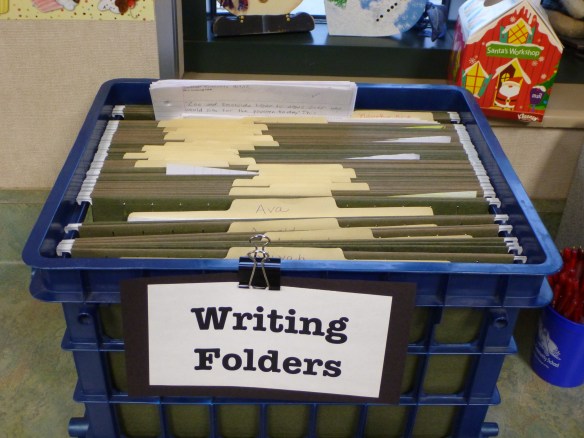
4.Collect important writing samples or projects in a bin. Give each student a file folder and collect important paperwork throughout the year. Then “all” you have to do at parent teacher conferences is grab the bin and hand over the work samples to proud parents.P1030699


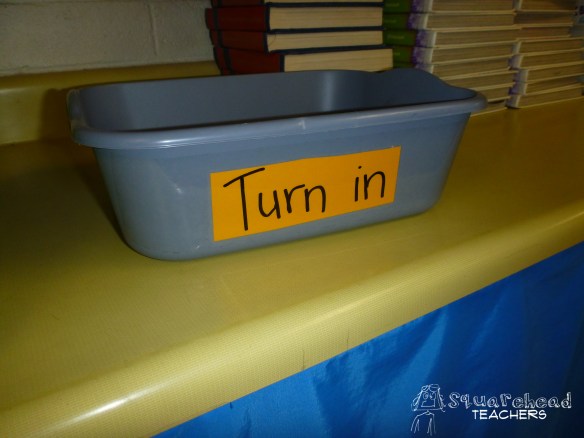
5. This next idea is PURE GENIUS! I learned this trick from my mentor teacher during student teaching (way back in the day). Designate a tote or box for a super secret purpose: a secret recycle bin! Students don’t work as hard when they know their teacher isn’t going to look at their paper. So use this bin to collect papers you don’t need to look at, but still want kids to work hard on. At the end of the day when all the students are gone, you can recycle the paperwork and keep your students’ desks clutter free! The picture above is from a lower grade classroom that doesn’t have any turn in bins. So this teacher just calls the secret bin the “turn in bin.”P1050972


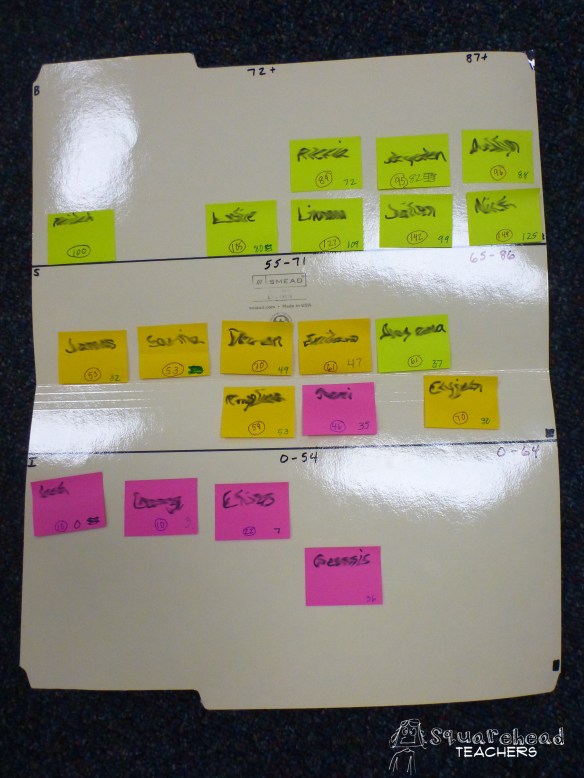
6. Track your students’ reading progress with a laminated file folder. Divide it into sections using whatever lingo your district or state uses. The photo above uses benchmark, strategic, intensive to indicate at, slightly below and way below grade level. Use sharpie to designate areas of the folder according to words per minute, etc. Then give each student a sticky tab according to where they are at the beginning of the year. This allows you to see who’s made significant progress throughout the year. For example, this teacher used green to indicate at grade level, yellow for slightly below, and pink for way below grade level. She writes the words per minute (or whatever you’re tracking) on the sticky tab as you assess the students throughout the year. When you’re not using the folder, fold it up and keep it away from curious student eyes. P1050973

Supplies for Today’s Project (UPDATED)

P1030667 copy

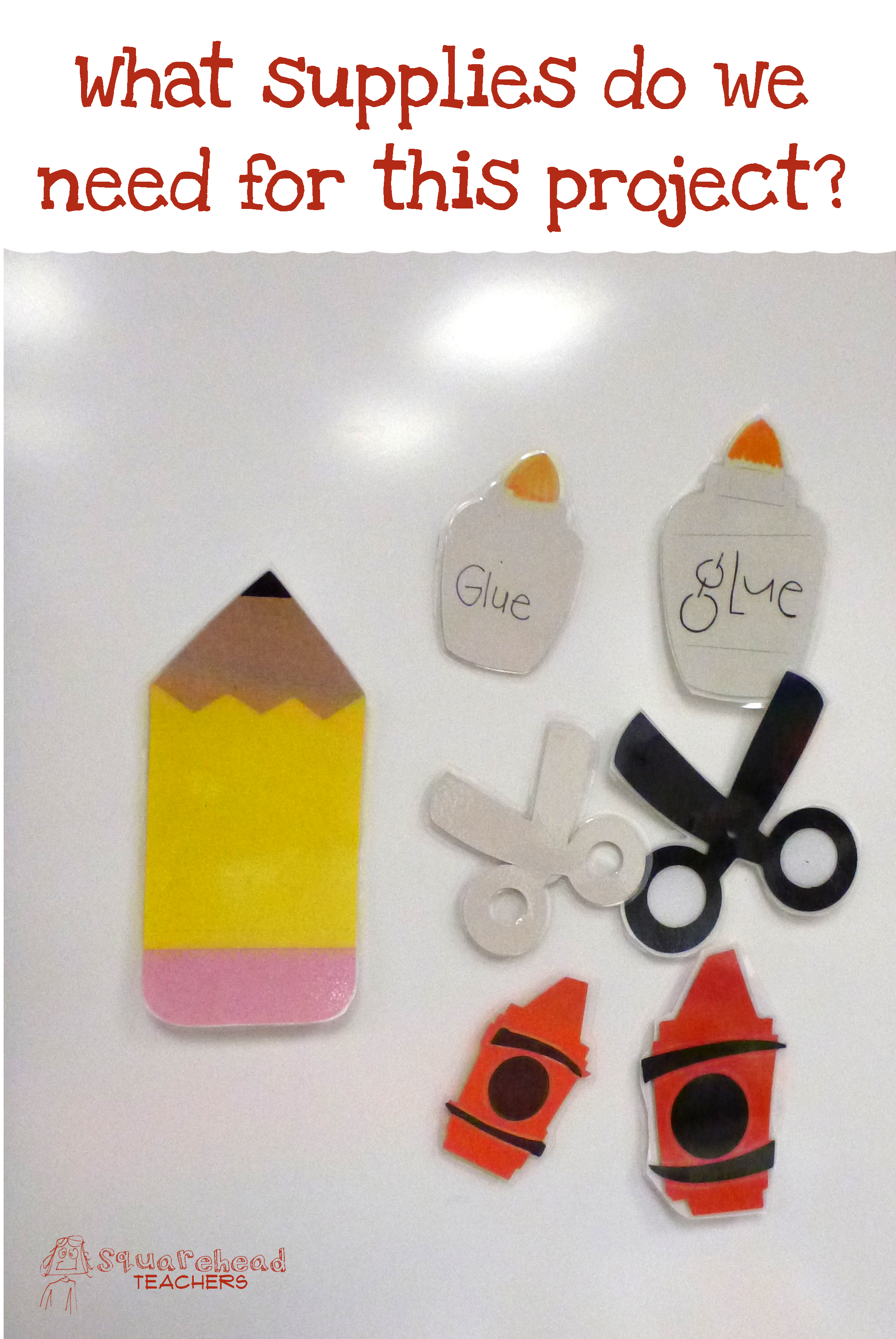
I recently was this in a kindergarten classroom and was blown away by this simple, but genius idea! The teacher had clip art of commonly used classroom supplies attached to the board with a magnet. When it was time for a project, she’d move the magnets of the necessary supplies to the center of the board for her students to get out. This way, she visually reinforces what she says and doesn’t have to repeat herself!

I made some for you, so just print out my Supplies for Today’s Project PRINTABLE, cut out and laminate each piece and add a magnet. Then you’ll be genius too!

supplies for today's project

3 Steps to Apologize (free poster) UPDATED

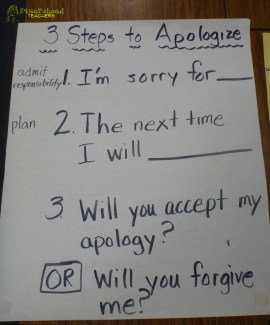
P1050767I don’t know about you, but I think there’s more to an apology than a sneering “sorry!” I tell ya, kids these days don’t know how to apologize… and it drives me nuts! Here’s a poster I recently saw in a lower grade classroom that I thought NAILED the issue. Although it’s not the most glamorous, it serves the purpose.
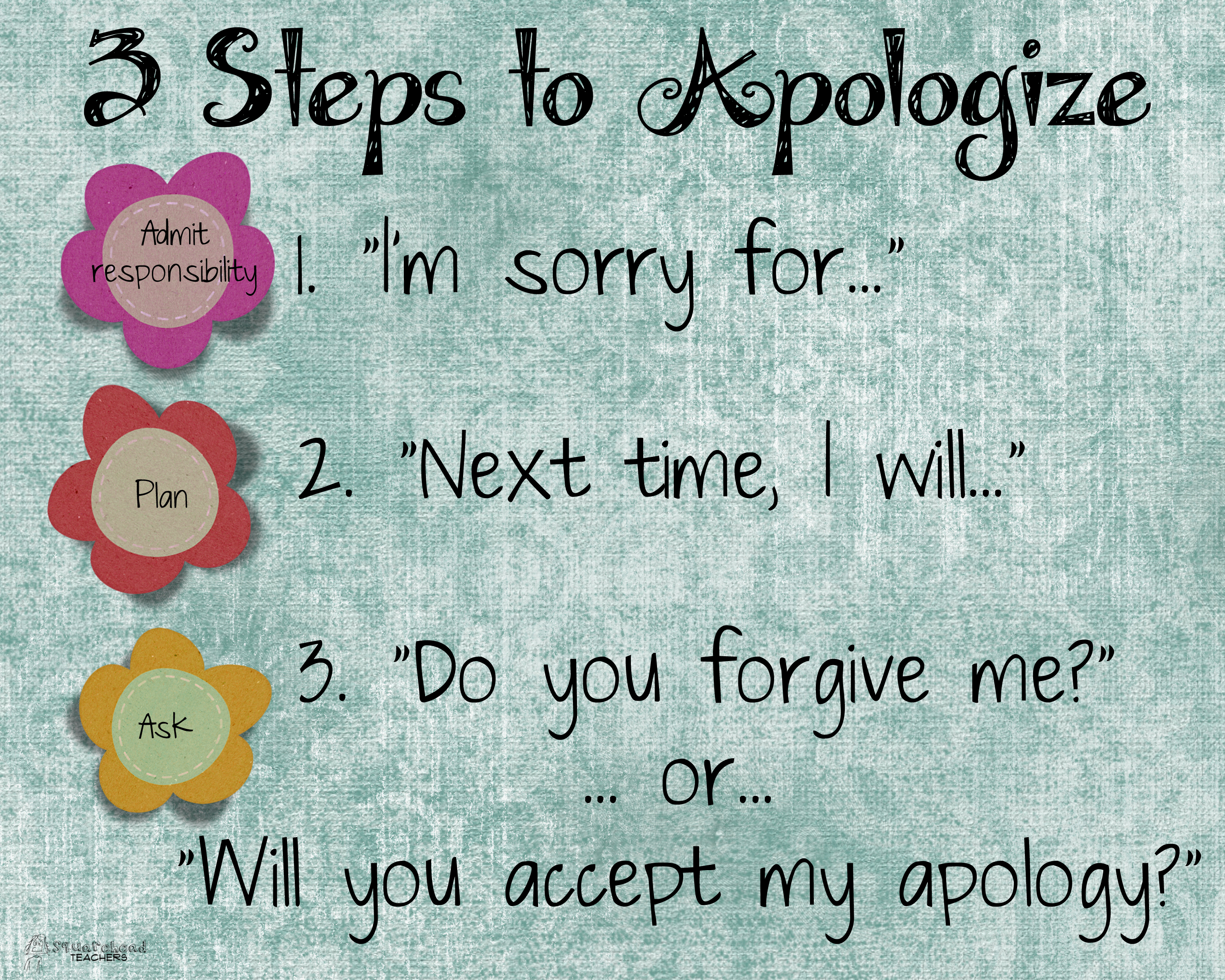
Then I thought to myself, “Dang! I need one of these for my classroom and my house, and as a bumper sticker, and on a T-shirt…”  *sigh* I’ll just start with my classroom. So I made this one for myself (and you) that I could print on a regular size piece of printer paper.

3 steps to apologize poster

Click here to download the free printable PDF: Apologize Poster

Here’s a picture (sent in by a reader) of the same idea:
Sorry poster 1 Sorry poster 2

Starburst Classroom Drawing

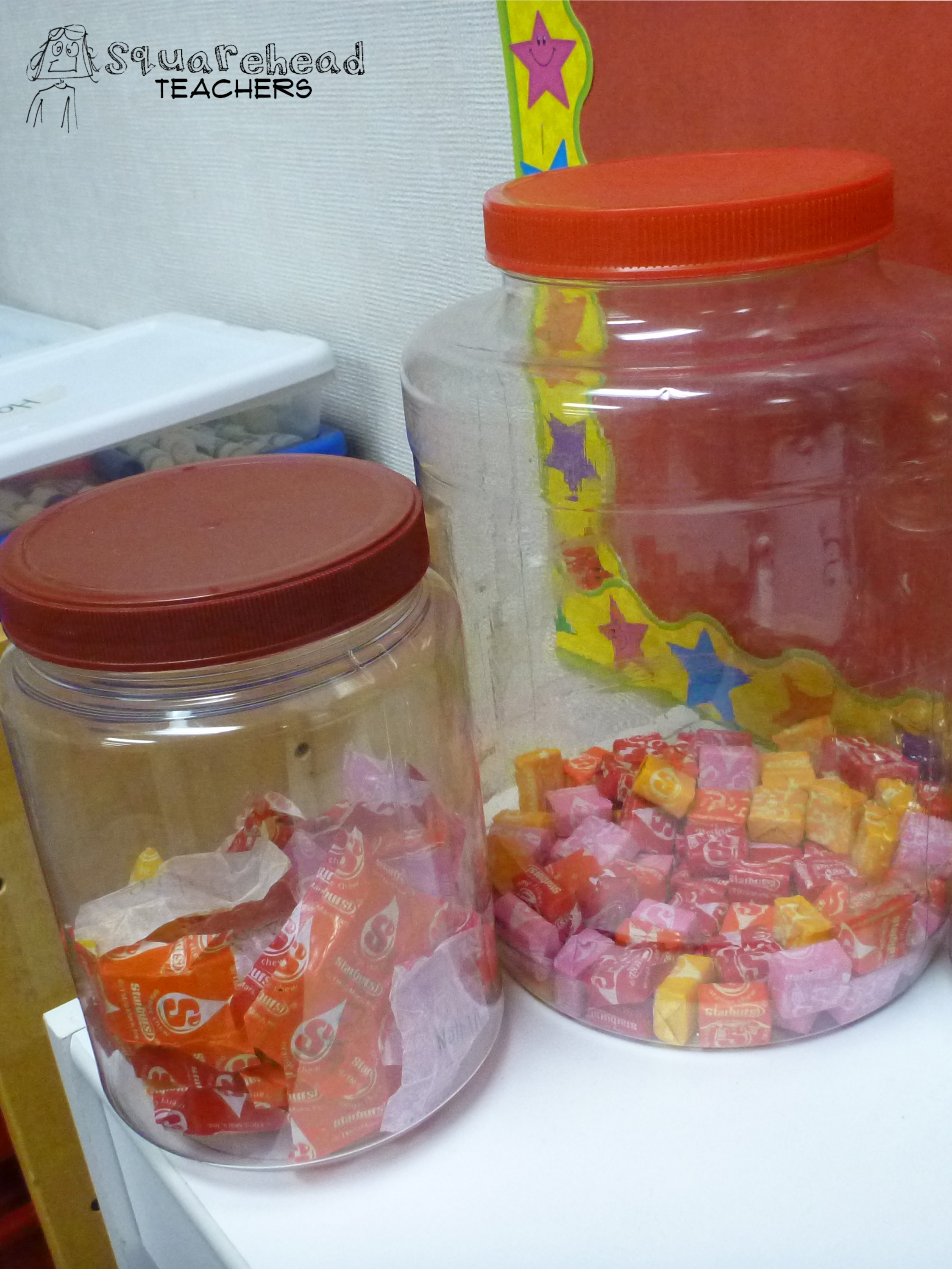
This management/student motivation idea seemed pretty genius to me. The teacher has 2 jars – one full of Starburst candy, and another empty jar. When a student earns a piece of candy, they write their name on the wrapper (using a permanent marker) and drop the wrapper into the empty jar. The she draws one wrapper from the jar each month for an extra special prize. This saves a lot of time cutting out slips of paper and you can pretty much choose any candy with a decent wrapper. Candies that won’t melt seem to work the best (so you have a relatively clean wrapper to write on).

P1030666