Golfing Review Game

I recently saw this picture on Pinterest. I couldn’t follow the link very far, because I wasn’t a member of acvitityconnection.com, but I was inspired. Here’s my idea:

Set up: Make a box like this, with varying sized holes in the front. Smaller holes are worth more points. Then set it up in your classroom, with masking tape line on the ground, denoting where students should stand before they putt.

Game play: Group students for the review. Ask a review question, and have each team write down their answer. At the same time, have all groups reveal their answer. Any team who gets the answer right, gets to send 1 person to putt once to try to earn points. At the end of the game, the team with the most points wins!

I’ve tried numerous games like this with my 6h graders and they loved them! It disguised reviewing for the end of the year tests so the kids had a blast and we got through tons of math and science review questions!

Hot and Cold Candy

(Guest Post by Loralee Leavitt)
In hot weather, kids crave cold drinks.  This makes summer a great time to learn about hot and cold temperatures. Here’s a candy experiment from candyexperiments.com that demonstrates how things dissolve differently in hot and cold water.
What to do:
1. Fill one cup with hot water.  Fill another cup with cold water.  (You can even add ice cubes to make it colder!)
2. Take identical pieces of brightly colored candy, such as Skittles, M&M’s, or spoonfuls of Nerds.   Put half in the hot cup and half in the cold cup.
3. Watch the colors spread as the candy dissolves.  Does the candy in hot water dissolve faster?
What’s happening:
Because molecules move faster when it’s hot, the candy in hot water dissolves much faster.  The candy in ice water might take all night to dissolve.
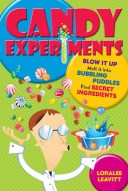
*Loralee Leavitt is the author of the new hit book, Candy Experiments. Thank you to Loralee for being the first guest post! If you’re interested in being a guest on Squarehead Teachers, contact us via email at squareheadteachers [at] gmail [dot] com.

Candy Experiments (Way Fun Summer Science Activities For Kids)

Kids love summer time. Parents love learning. Kids love candy. The perfect combination? Candy Experiments! If you haven’t heard about this new hit book (available January 2013), you’re totally missing out. 
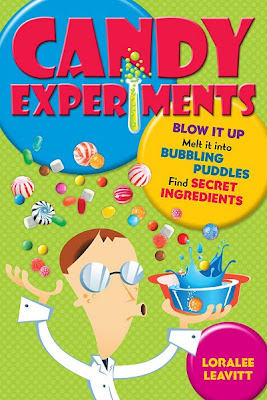
Make giant gummi worms, turn M&Ms into dazzling comets, grow candy crystals, and turn cotton candy into slime! You’ll find all these experiments and more, plus simple scientific explanations, in the book Candy Experiments!

Candy Experiments, by Loralee Leavitt, shares experiments from the popular website, Candy Experiments, as well as experiments that have never been published before. Learn how to separate candy colors, make candy cane stripes in bowls of water, sink marshmallows, and float taffy. Each experiment includes color photos and scientific explanations. Your kids will love experimenting with their candy, and they’ll learn something, too!

But how do you know kids will like the experiments? Because kids planned and did them! The author writes this about how it all started: “One day when she was sorting through her Halloween candy, my daughter asked a life-changing question: “What would happen if I put these Nerds in water?”  I got her a glass, and she conducted her first candy experiment.” Read more about these little scientists here.

This is such a great collection of fun activities for kids (especially in the summer or after Halloween). When I heard about it, I went on Amazon right away and bought 3 copies (I just Had to get one for my mom and sister, also teachers). When I got it in the mail, I spent an hour looking through it, reading it and planning fun summer activities.

The 3 R’s of Recycling Printables

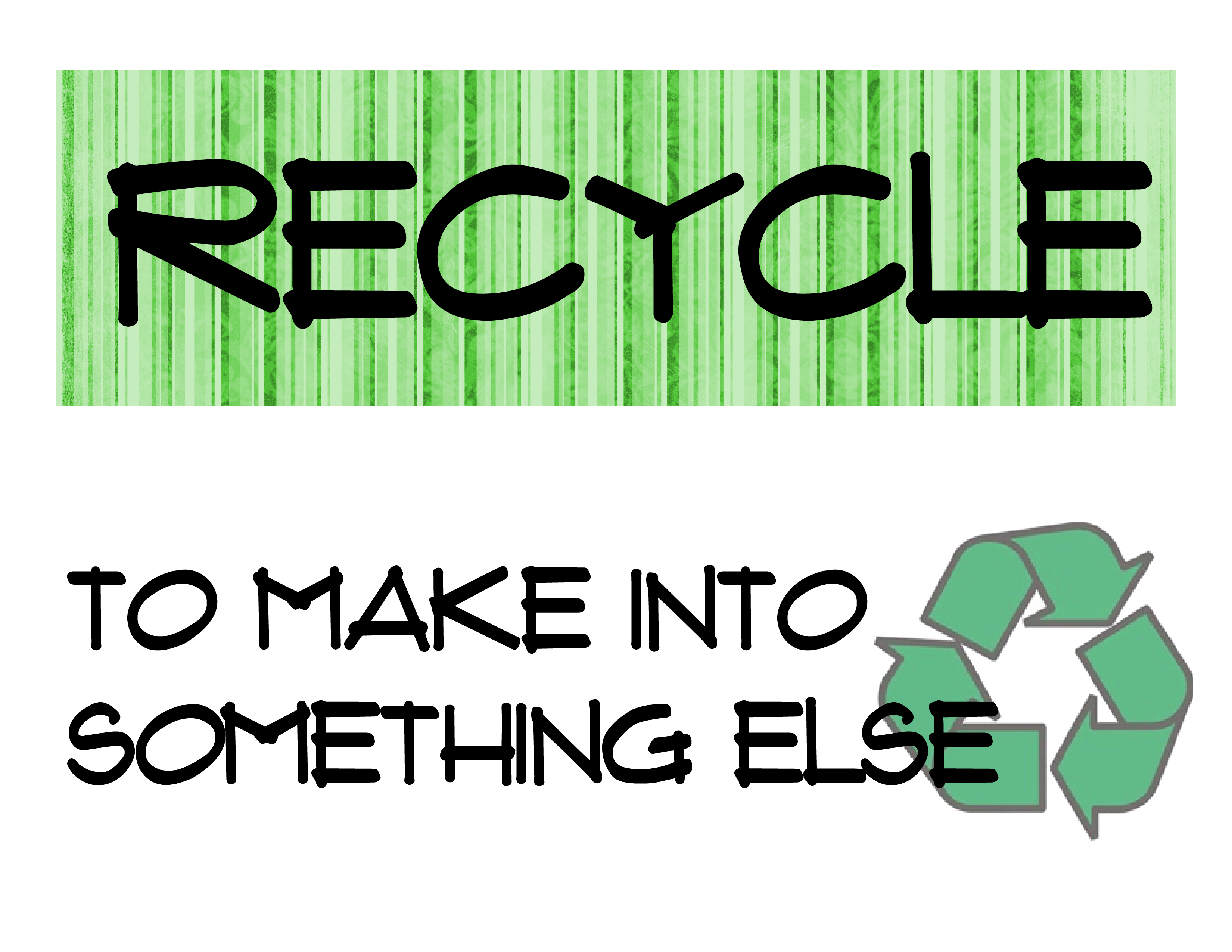
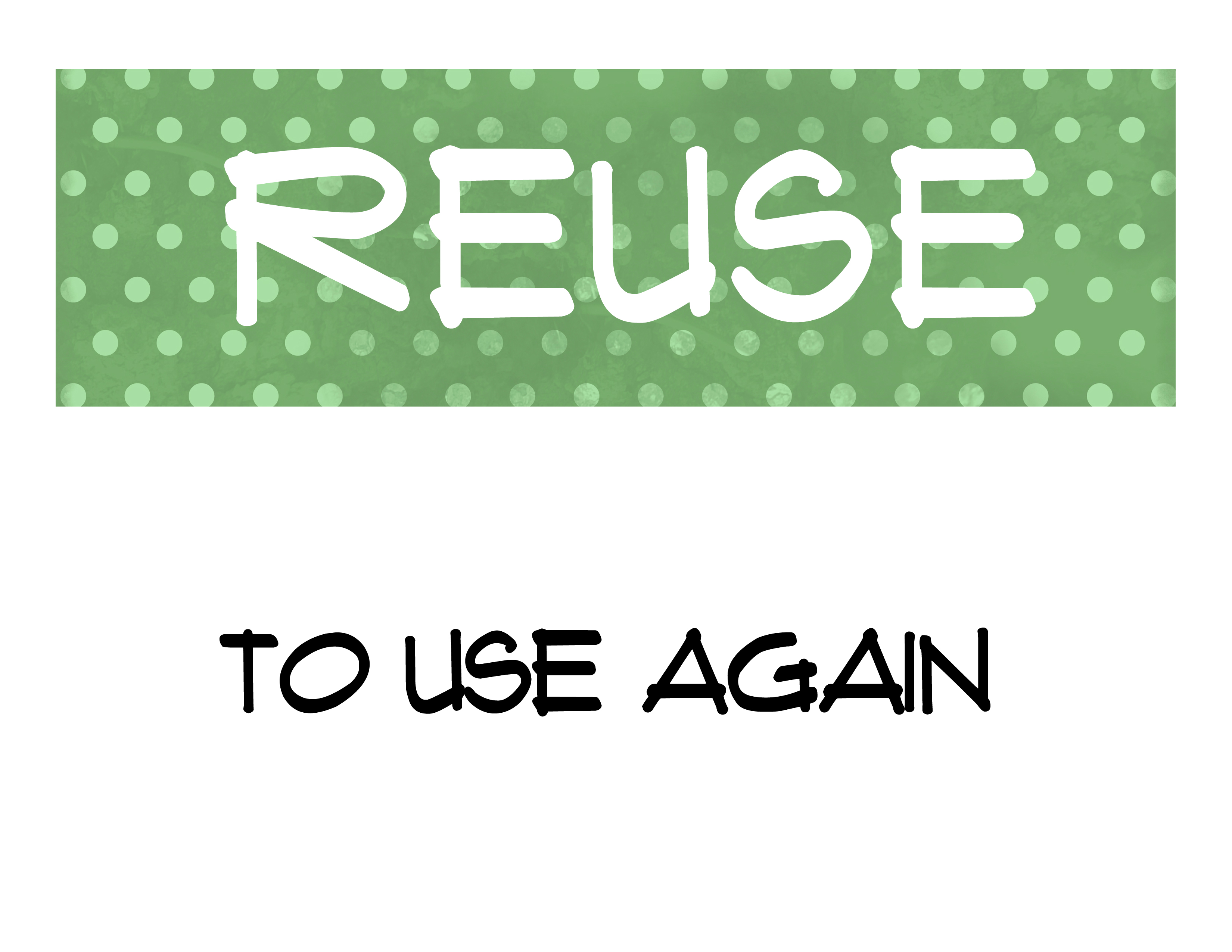
Many teachers have to touch on the topic of recycling sometime throughout the year (most talk about it on Earth Day). A fellow teacher requested that I make some word strips of the 3 R’s of Recycling for her to use in their Earth Day discussion and then to put on their science bulletin board. I’d recommend laminating them if you’ll be using them multiple years. Here they are (formatted to fit on a regular letter-size sheet of paper):

recycle- word strip header

recycle- word strip 1 recycle- word strip 2 recycle- word strip 3

Grass Heads

I just saw one of the cutest ideas ever over at Rainbows Within Reach: grass heads! Maybe you remember Chia Pets from back in the day, but these are way cooler because each one is a kid! It would be cool to try with a variety of plants so the hair turns out different in each one…

Take a picture of each child and tuck it in the cup before filling it with dirt. I’d recommend laminating them first so the water inside doesn’t make the ink run (or just attach the picture on the outside somehow). Then plant your seeds and give them some TLC. What a cool spin on growing plants in cups!

Discover the Forest (Kids Adventure Packet)

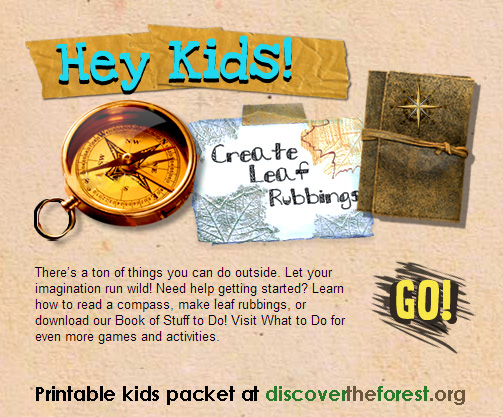
I recently stumbled upon this cool 12-page printable packet for kids. It’s all about nature and our environment. It’s got stuff for animal tracks, bark/leaf rubbings, compasses, water, etc. Go to http://www.discovertheforest.org and click on the Hey Kids picture at the bottom right corner of the page. It will open a PDF for you to print. Happy discovering!

discover the forest kids packet

3 Websites Every Teacher Should Browse

3 websites to browseTeaching is much easier when you know where you can look for help. So this summer, spend a few minutes each day browsing teacher resource sites. Anything you see that you like should be bookmarked on your browser (make a folder called “teaching resources”), or written down in an organized way so you can find it later. Here are some websites to start with:

1. http://www.pbs.org/teachers/– Tons of stuff (including videos) for teachers

2. http://free.ed.gov/– Free teaching & learning resources from federal agencies

3. http://www.smithsonianeducation.org/educators/– Smithsonian… need I say more?

There. Those 3 links should lead you to enough discovery to last you a looong time! 😉  But if you’ve still got “extra” time, here’s a huge list to browse (collection of links posted by a fabulous home school mom): Huge list of links

Classroom Journal Tips

Keeping journals is a great way to help students keep new information recorded and stored in a neat and useful way. Many teachers give their students notebooks for each core subject and expect students to maintain their own journal to use for note taking during lessons and future reference. I love this idea! I’ve done it with my own classes. But if you’re going to do journals, do them the smart way. Here’s what I mean:

1. Choose a specific color for the subject. Get that same color journal for each student. If you can’t find an entire class set of 1 color, try 2 colors that are easy to remember. So when your student says “Wait! Which one is our science journal?” You can tell them what color notebook to look for. Also make sure the notebooks are clearly labeled with the student’s name, classroom number and what subject the journal is for. Tell students at the beginning of the year that the journal is only for that subject, not for drawing, writing notes to a friend, etc.

P1030237

2. Use the first sheet (front/back) for the table of contents. Each time you have students start a new journal entry/topic, have them add it to the table of contents. Then, when they’re looking for their notes on a certain topic, they’ll be able to fins it easily. This also means your students need to add page numbers as they go. I have conflicting thoughts about writing in all the page numbers in the beginning. PRO- you don’t have to worry about it each time you start a new set of notes. CON- if your kids tear out pages, they can get confused when there’s no page 16.

P1030238

3. Do projects directly in the journal… or have them glued in when kids finish the project. This way, you can refer back to projects/assignments you’ve done when you need to review for a test, etc.

P1030239 P1030240 P1030241

4. Pockets are awesome. Sometimes you want students to keep a project, but you don’t want it glued down. So pockets do the trick. Fold down one corner of a sheet and staple it to the page behind it. Label the pocket, so kids will know what goes in the pocket. Some teachers like the triangle cut off, but I sometimes just have them staple it down to save time (I walk around with the stapler, since it just seems to work out better when I do it). Make sure you have the folded triangle on the outside, or sometimes things get stick inside the pocket. Cut or staple the triangle piece, it’s up to you…

P1050168

If you have to combine 2 subjects into one notebook, you’ll have to figure out a way to keep the subjects straight. Some teachers have the kids start one subject on one side, have them flip the book over and start from the back on the second subject. This way, there are 2 front covers and no back cover. My only caution with this is to make sure your kids understand how this flipping ordeal works and that they open to the right part of the book each time you start a lesson.

I also make a sample journal as the students make theirs. This way, I can model exactly how I want theirs to look, and the struggling kids can just copy me each time.

Oooh! One more thought. Sometimes, for really important things, I give students a quarter sheet of colored paper and ask them to write main ideas on it before gluing it to the page. This way, you’ve got the effect of highlighting without the mess of the marker. And everyone’s looks the same. For my 6th grade math journals, I did this with things like formulas. This way, I could always say “the formula you need is on a bright orange square in your journal. Go find it in your notes.”

One teacher I discussed this with keeps lots of extra copies of a hundreds chart handy so she can use them in math journals.

P1030236

P1030233

P1030235 P1030234

Click here for more free math stuff!