
Thanksgiving’s the time to be grateful… for cool stuff like bar graphs! So here’s my free graphing worksheet for your Thanksgiving pleasure! Click here for the PDF: Turkey Graphing
Click here for more free Thanksgiving stuff for kids!

Thanksgiving’s the time to be grateful… for cool stuff like bar graphs! So here’s my free graphing worksheet for your Thanksgiving pleasure! Click here for the PDF: Turkey Graphing
Click here for more free Thanksgiving stuff for kids!

Kids often need reminders to use evidence and support from the text when explaining or writing about a piece of text. Here’s a free printable poster for your classroom (near your guided reading table?) to remind kids to use textual evidence! Click here for the PDF: Show the Evidence Poster
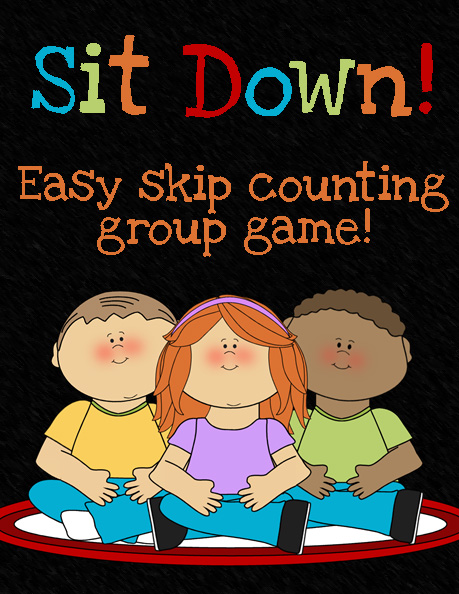
“Sit Down!” is another all purpose game. Kids stand in a big circle. One student is “it” in the middle with a pointer (or just his finger). “It” gets to decide what number we start counting on to count by 10s. He might pick 7. So “It” starts pointing at one child at a time as the whole class counts by tens starting at 7. So we count 7, 17 27, 37, 47, 57, 67, 77, 87, 97 and if you are the student pointed to when it is over 100, you “SIT DOWN”. The whole class says “SIT DOWN” and then the game continues, starting with 7, 17 and so on until you again reach 100 and SIT DOWN. When a student sits down, they just sit in their place in the circle and they continue to help the class count. You do this until the whole class is sitting with just one per son standing. Then the last one down is “It” and you start again. “It” picks a new number to start with and you keep going. This game could be down with numerous concepts (like saying the alphabet, state names, etc.), or skip counting by any number (not just 10). Kids especially like it if teacher plays and has to sit down too.

I recently saw this idea on Mrs. T’s First Grade Class and thought it was awesome! It’s got so many applications in math, I can hardly stand it! Id’s be great for simple addition/subtraction (draw a number line from 0 up). I wish I had known about this idea when I was teaching kids about negative numbers (write 0 in the middle along with positive and negative numbers)!

Hooray for free things! Today’s freebie is a free graphing Thanksgiving worksheet for kindergarten or first grade. Use the pictures as data to help you complete the graph. Enjoy! Click here for the free worksheet (PDF): I Can Graph the Pictures- Thanksgiving 2
Click here for more fun and free Thanksgiving stuff for kids!
This is the final part (part 4) in a series about Dyslexia. The author, Robin, is a mother of 4 boys, 2 of whom have dyslexia. She has been taking her sons to private tutoring and researching as much as she can about dyslexia for the past 7 years.
Famous people who are dyslexic (and these are only the ones whose names I recognized):
Whoopi Goldberg Henry Winkler*
Tom Cruise Jay Leno
Danny Glover Orlando Bloom
Alexander Graham Bell Albert Einstein
Thomas Edison Cher
John Lennon Bruce Jenner
Muhammad Ali Magic Johnson
George Washington Woodrow Wilson
Andrew Jackson Nelson Rockefeller
Hans Christina Anderson Agatha Christie
Henry Ford Charles Schwab
Steven Spielberg Walt Disney
*Henry Winkler, also known as the Fonz from the TV series Happy Days, is dyslexic. He never new until he was an adult and his own son struggled with it and was diagnosed. He had a very strict military father and went to military school and really struggled. He had a talent for acting so that’s how he became a success. Anyway, he got together a few years ago with an author and they wrote a series of books about a kid in elementary school with dyslexia (based on Winkler’s life). They are called the Han Zipzer series. Many teachers haven’t heard of them, but they’re an excellent read. They are funny but bring to light some of the struggles that kids with dyslexia have as well as some of the stereotypes of being lazy or just a bad kid.

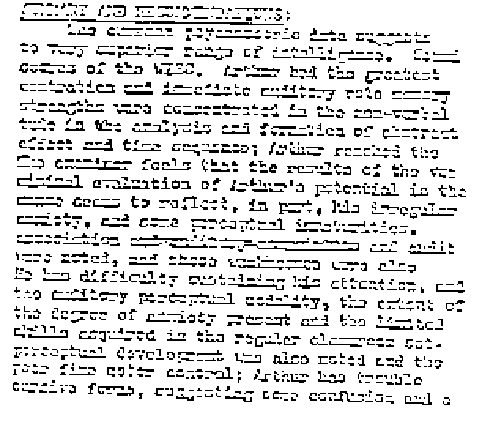
I’ve combined all these posts together into a 9 page PDF document so you can print it out easily. Here it is: Dyslexia book.
DISCLAIMER: The medical information in this article is merely information – not advice. If you need medical advice, you should consult a doctor or other appropriate medical professional.
This is part 3 in a series about Dyslexia. The author, Robin, is a mother of 4 boys, 2 of whom have dyslexia. She has been taking her sons to private tutoring and researching as much as she can about dyslexia for the past 7 years.
Kids with dyslexia learn best kinesthetically. Here is a list of ways to help them learn material if they are struggling with other areas.
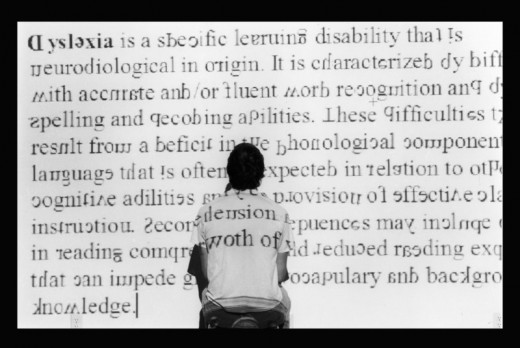
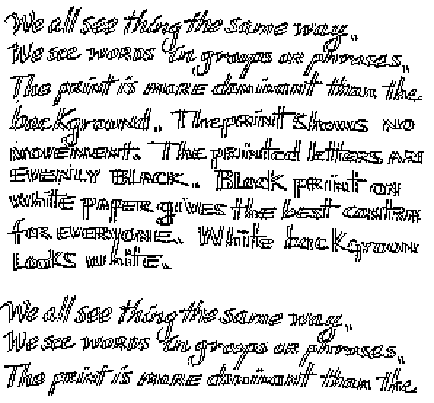
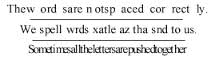
One final thought. Kids with dyslexia often have distortions when looking at a page with a lot of text. Copy work on to colored paper (blue is the most common to help) to eliminate the stark difference between black print and white background. The distortions are part of what is called Irlen’s Syndrome. The Irlen method of using colored overlays or lenses was discovered by Helen Irlen. It is common among people with all kinds of learning disabilities such as dyslexia, ADD/ADHD, and various other visual processing disorders. The disorder is not only associated with dyslexia, although many people with dyslexia are helped by the Irlen method.
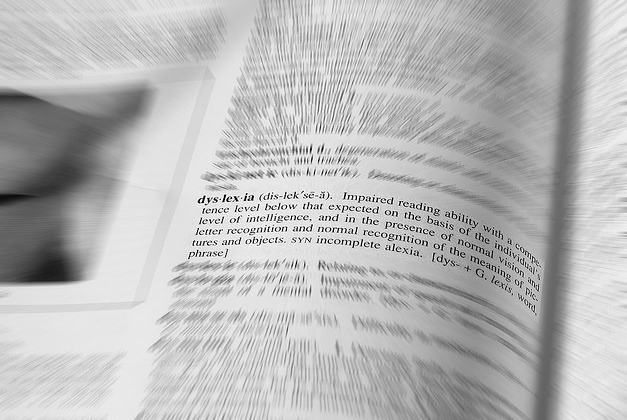
Remember, these are smart kids that just learn differently. Find what works best for them. You will be their best friend if you show that you try to understand them. Encouragement goes a long way with a child who puts forth a great effort that seems effortless to others.
{MINDY’S 2 CENTS: I had Irlen’s Syndrome as a kid. In elementary school, I was in the gifted and talented classes, but I had a hard time reading. I complained of having headaches while reading and said the words seemed to swim on a white page with black printing. My GATE teacher referred us to a specialist from the Irlen Institute who tested me to see how well I did on reading and different tasks when I had colored lenses on. Light blueish-violet was the trick! That particular shade of blue caused no color distortion (when I looked at a white wall it was still white), and my reading problems went away! The specialist said that without the colored lenses (or colored transparency on the page), I wasn’t blinking so my eyes would become fatigued. The colored sheets did the trick, and I wore blue-tinted lenses for many years as a kid. This was a relatively inexpensive fix (not funded by the school district) and it did wonders! Turns out, my sister also needed colored lenses (a different shade) for depth perception instead of reading. They weren’t the coolest glasses ever, but it made a world of difference in my studies, self-confidence and ability to get through scholastic tasks. Now I don’t really seem to have the problem, but boy am I glad my teacher knew enough about Irlen’s Syndrome, dyslexia and other learning circumstances to suggest this to my mom.}
Stay tuned for more in our Dyslexia series (symptoms, tips & tricks for parents and teachers)!
DISCLAIMER: The medical information in this article is merely information – not advice. If you need medical advice, you should consult a doctor or other appropriate medical professional.
This is part 2 in a series about Dyslexia. The author, Robin, is a mother of 4 boys, 2 of whom have dyslexia. She has been taking her sons to private tutoring and researching as much as she can about dyslexia for the past 7 years.
What does Dyslexia look like?
Do you have a child struggling to read? It might be Dyslexia. It’s not just reversal of letters as most people think. Dyslexia manifests itself in a variety of ways. It has been estimated that one in five children of average or higher intelligence have this common learning difference. Look at this list of symptoms. If you have a child who exhibits a few of them, maybe it’s time to be tested.
* difficulty reading unfamiliar words
* slow, sound by sound reading
* headaches when reading
* words moving, shifting, or blurring on the page
* difficulty with handwriting
* unable to write alphabet in order or alphabetize
* reverses or flips letters or numbers
* writes from right to left or backwards
* unable to determine dexterity – tries to use both hands
* difficulty of eyes following text on a line
* fixating on one word or area of text for longer than normal
* spells phonetically, often eliminating vowels (HND for hand)
* poor organizational skills – messy desk or backpack, forgets homework
* loses concentration and attention quickly
* makes many errors while reading
* re-reads text often
* mispronounces larger words – amblience for ambulance, pasketti for spaghetti
* has difficulty recalling a list of items when given the list verbally
* has difficulty remembering names or objects
* forgets or doesn’t follow instructions
* slower than most kids to complete work or tasks
* difficulty learning math facts, days of the week, months of the year
* lack of coordination, clumsy or bumps into things
* difficulty remembering left from right
* is very artistic, musically inclines, or athletic (right brained)
* seems to zone out
* learns best by hands-on activities
* knows material but doesn’t test well
* difficulty copying print
* writes in an upward or downward slant
* might be extremely orderly or line things up even if it’s not organized
* time management problems
* difficulty with large or fine motor skills
* difficulty telling time on a traditional face clock
* learning to type is difficult
It was a list similar to this one that helped me determine why my son was struggling to read and succeed in school. His teacher had previously told me that she thought he was just lazy. Look over the list and you’ll find that you too might recognize multiple symptoms in your struggling reader. If you are a teacher, ask parents to look at this list. Maybe they will recognize some of the symptoms that you don’t encounter at school. If so, refer the child for testing.

Stay tuned for more in our Dyslexia series (symptoms, tips & tricks for parents and teachers)!
DISCLAIMER: The medical information in this article is merely information – not advice. If you need medical advice, you should consult a doctor or other appropriate medical professional.
 Squarehead Teachers