Teaching Yes/No & Cardinal Directions to Lower Grades

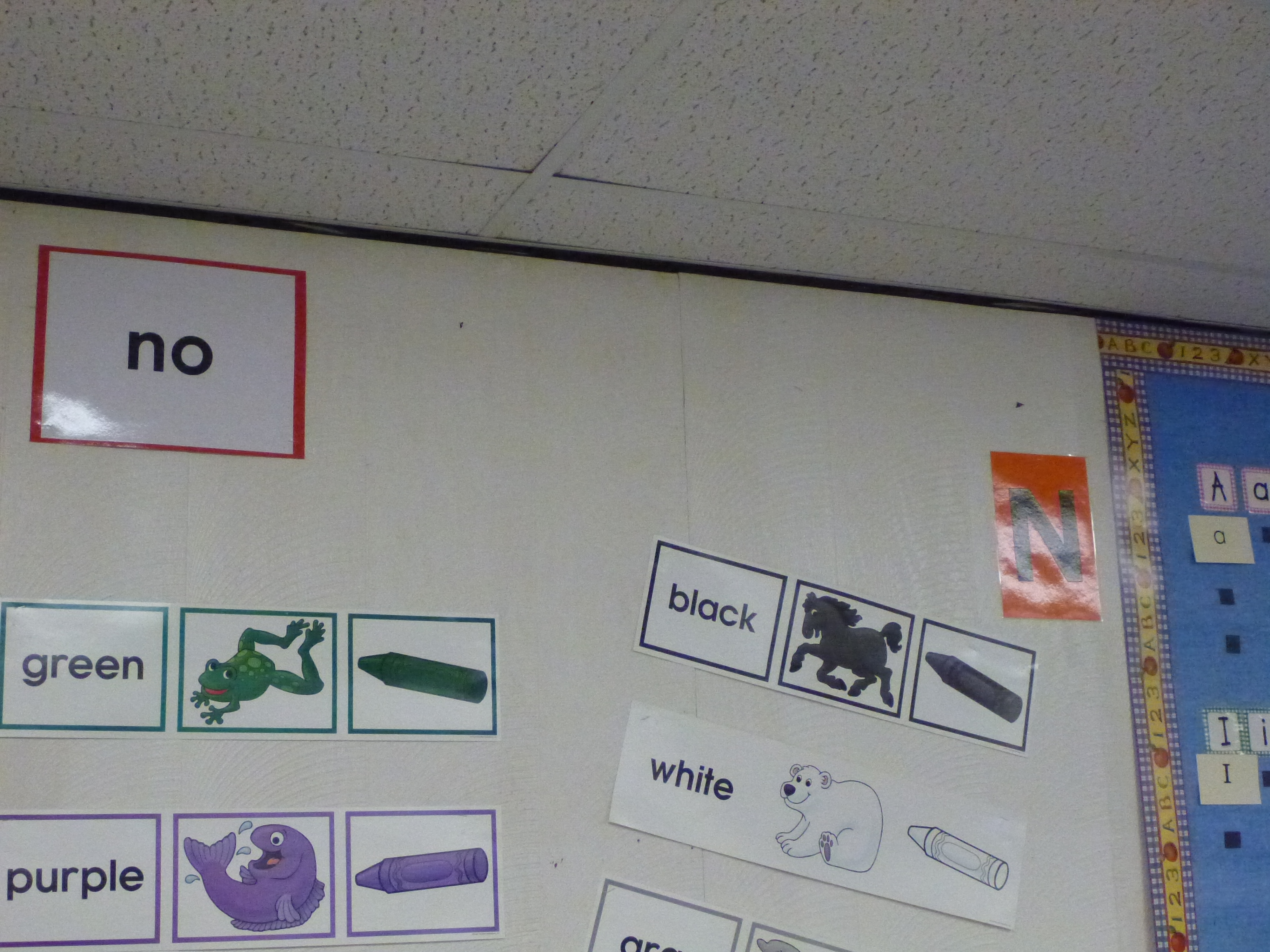
One smart kindergarten teacher uses simple signs in her classroom that teach her kids some crucial things that can’t necessarily be mastered in one lesson. She posts signs that say  “yes” and “no” on opposite sides of the room. She often has her kids point to a response and look at the sign when voting (thus reinforcing the site word).

P1030271P1030272

She also puts up signs for the cardinal directions (north, south, east and west) and asks students to point to a certain direction to get their attention. She says things like “if you can hear me, point to the north. If you can hear me, point to the east.” Great way to do a tiny bit of map reading skills!

She says by the end of school kids are pretty good with both yes/no and cardinal directions. Not bad for a few seconds a day, huh!?

Roll-A-Word Spelling and Thesaurus Pages

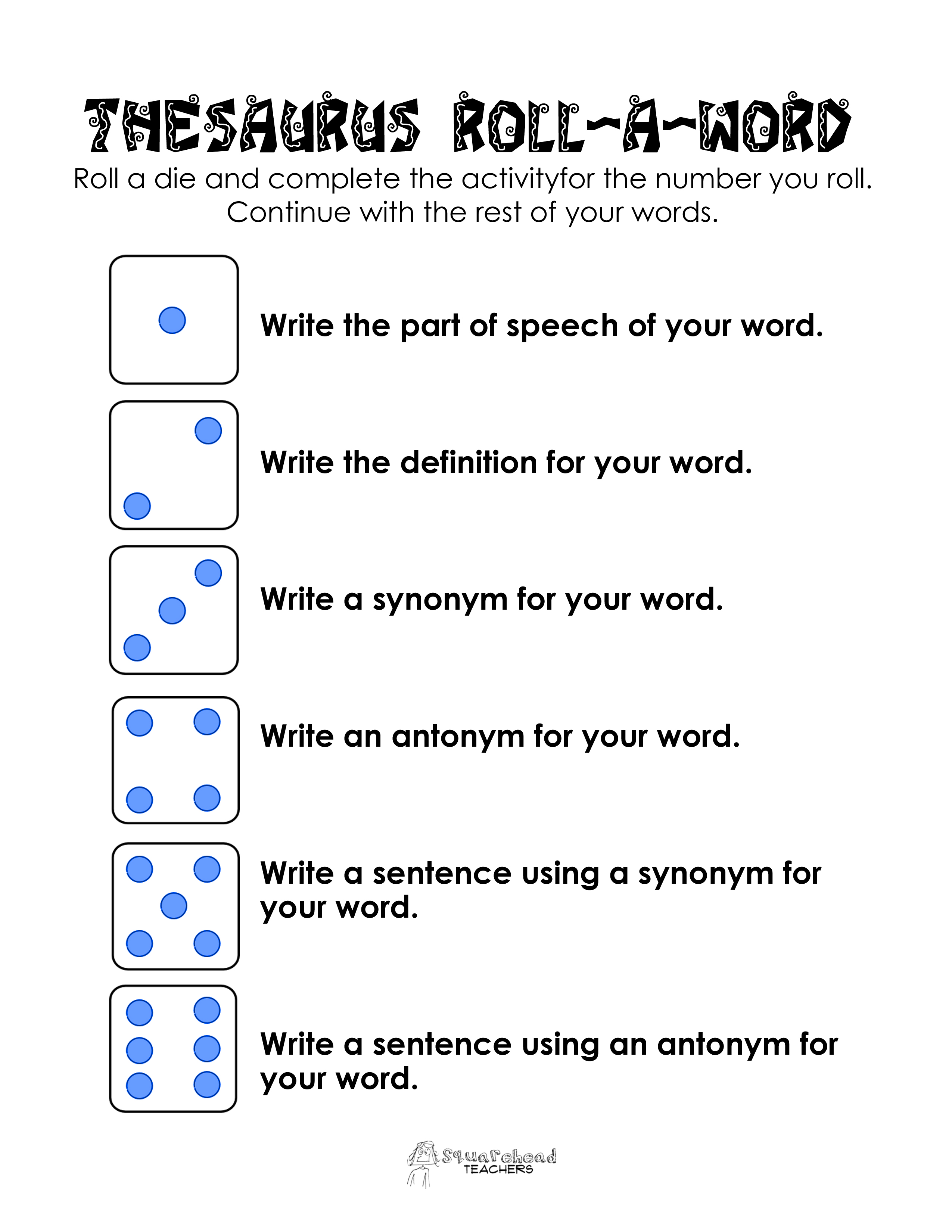
I’ve always struggled with giving creative tasks to do with spelling words. So when I saw this idea, I just HAD to make one. Here’s the instruction sheets for use with both spelling lists and thesaurus work:

Spelling Roll A Word thesaurus roll a word

Here’s a sheet you can give the kids when you have them do this activity. They can draw in the tiny box to indicate what number they rolled and write the word they’re working on next to it before doing the activity in the bigger square. Roll a word blank sheet

I suppose you could modify this activity to help reinforce vocabulary words for a science, math or social studies unit.

Explaining English Can Give You A Headache

When I read this for the first time, it reminded me of all the crazy things I had to try to explain to my Chinese students when teaching them English.  It makes me so grateful that English was my first language. I don’t think I’m smart enough to learn it otherwise!

UP. This two-letter word in English has more meanings than any other two-letter word, and that word is ‘UP.’ It is listed in the dictionary as an [adv], [prep], [adj], [n] or [v].

It’s easy to understand UP, meaning toward the sky or at the top of the list, but when we awaken in the morning, why do we wake UP?

At a meeting, why does a topic come UP? Why do we speak UP, and why are the officers UP for election and why is it UP to the secretary to write UP a report? We call UP our friends, brighten UP a room, polishUP the silver, warm UP the leftovers and clean UP the kitchen. We lockUP the house and fix UP the old car.

At other times, this little word has real special meaning. People stir UPtrouble, line UP for tickets, work UP an appetite, and think UP excuses.

To be dressed is one thing but to be dressed UP is special.

And this UP is confusing: A drain must be opened UP because it is stopped UP.
We open UP a store in the morning but we close it UP at night. We seem to be pretty mixed UP about UP!

To be knowledgeable about the proper uses of UP, look UP the word UPin the dictionary. In a desk-sized dictionary, it takes UP almost 1/4 of the page and can add UP to about thirty definitions.

If you are UP to it, you might try building UP a list of the many ways UPis used. It will take UP a lot of your time, but if you don’t give UP, you may wind UP with a hundred or more.

When it threatens to rain, we say it is clouding UP. When the sun comes out, we say it is clearing UP. When it rains, it soaks UP the earth. When it does not rain for awhile, things dry UP. One could go on and on, but I’ll wrap it UP, for now . . . My time is UP!

Oh . . . One more thing: What is the first thing you do in the morning and the last thing you do at night?


UP
!

Did that one crack you UP?

Don’t screw UP. Send this on to everyone you look UP in your address book . . . Or not . . . it’s UP to you.

Now I’ll shut UP!

Parts of Speech Stocking

This page is for helping kids sort words according to part of speech. You could have kids think of holiday words that fit into the various noun, verb and adjective sections or have kids sort words in a list like spelling, vocab, or words from a selected reading passage.

holiday words stocking

Shamrock Spelling Activity (Updated)

Shamrock spelling words

I’m always up for new activities to do with spelling/vocab words. Here’s a new one I’ve come up with for kids to do this year…

1. write each word on its own shamrock

2. lightly color the shamrocks (unless you printed the worksheet on green paper)

3. cut out and glue on to construction paper (also draw a leprechaun, pot of gold, rainbow, etc.) or turn into a necklace, etc… just do something crafty with it.

Click here to download the free printable PDF: Shamrock Spelling

-ear, -er, -ir, -ur sounds (quick paper project)

I recently found these little paper/brad projects. My 2nd grade teacher used to to one every week (or day… I don’t remember which) and I absolutely loved them! She had tons of them, but I only found 4. So here they are, just for memory’s sake…

ear counds- earth project

er sounds- fern project

ir sounds- bird project

ur sounds- purse project

Thanksgiving Compound Words Worksheet

Here’s an easy way to practice compound words (1st or 2nd grade). Click here for the printable PDF: Thanksgiving compound words PDF  Happy Thanksgiving!

Click here for more fun and free Thanksgiving stuff for kids! Help keep this blog completely free by sharing it with your friends! Thank you!

End of the Day Review- NO PREP Jeopardy!

Sometimes you have a few minutes left at the end of the day you’d like to use productively.
Sometimes, you’re just an awesome teacher and you plan for an end of the day review on spelling, grammar, social studies, math vocab, etc. Here’s a super easy way to do it:

  1. Draw columns on the white board (1 for each topic you’d like to review)
  2. Title the columns from things you’ve done that day/week
  3. Write the following numbers under each column header: 10, 20, 30, 40, 50
  4. Divide your class into small groups (super easy if you have kids in tables already) and let a team choose a question.
  5. MAKE UP QUESTIONS AS YOU GO! Killer easy right!? Just make the higher point values a little more challenging. You can make any kind of question you want: multiple choice, true/false, fill-in-the-blank. Just do it!
  6. Keep track of points on the whiteboard

Additional rules/notes:

  • Let everyone try to answer so that everyone is part of the review (choose whoever raises their hands, or choose a student number randomly, you choose)
  • More than one team can answer if you make an answer with multiple answers (just day that the first team to raise their hands or whatever gets to choose the next question)
  • Whatever team gets the question right, chooses the next category/point value