“Now Turn To Your Partner And…”

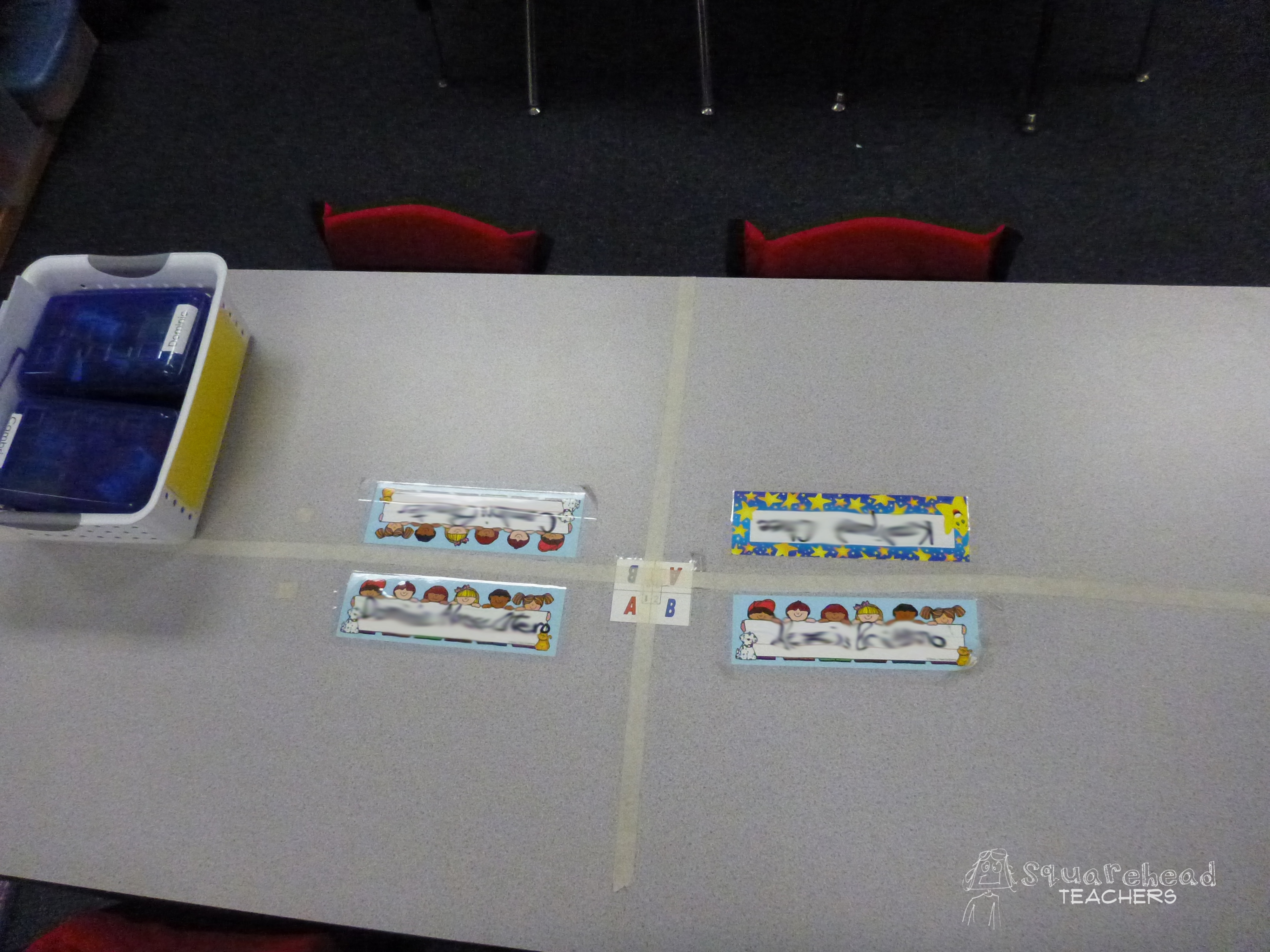
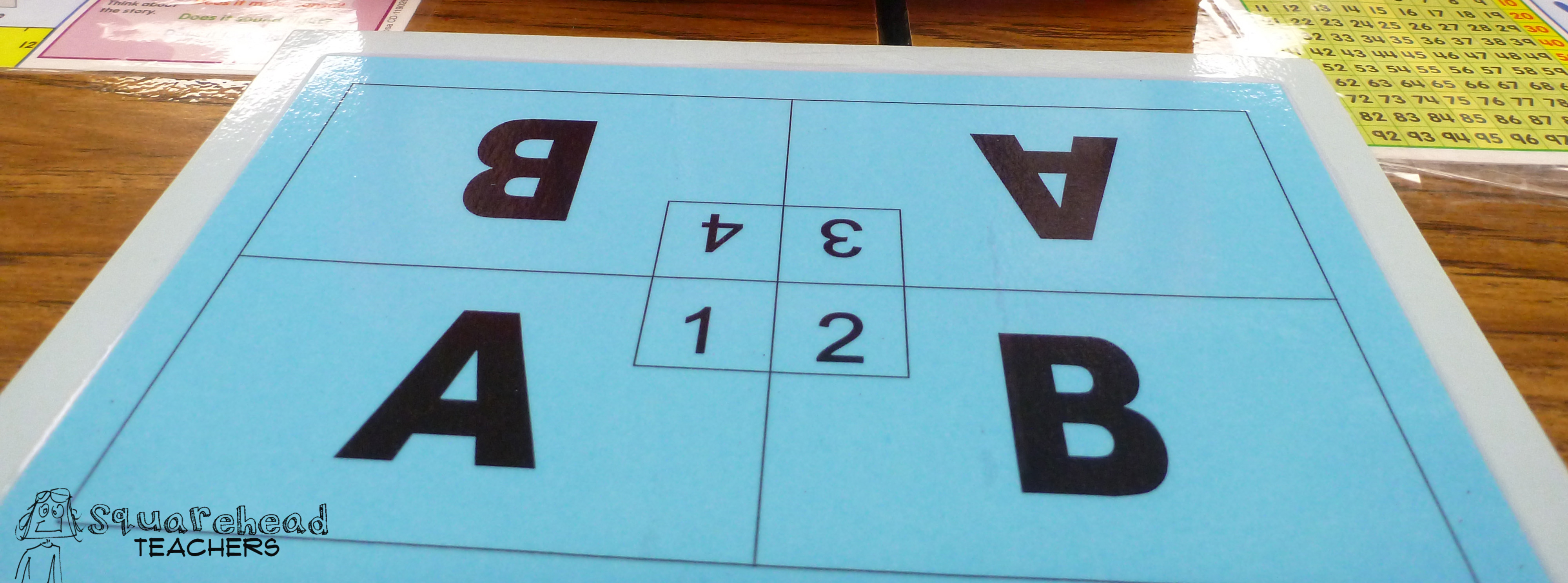
Many, many activities in today’s classrooms involve partner/group work. But you don’t want kids to work with the same partner/group every time. So you need methods for grouping kids in a variety of ways. Below are a variety of table mats that teachers have used so that they can easily group kids by number, color, letter, etc.

P1030242 top

P1030268

This kindergarten teacher used masking tape to give each student space at the desk (and the tape holds down her partner sheet).

P1030242 bottom P1030243 P1030254

table mat

Classroom Journal Tips

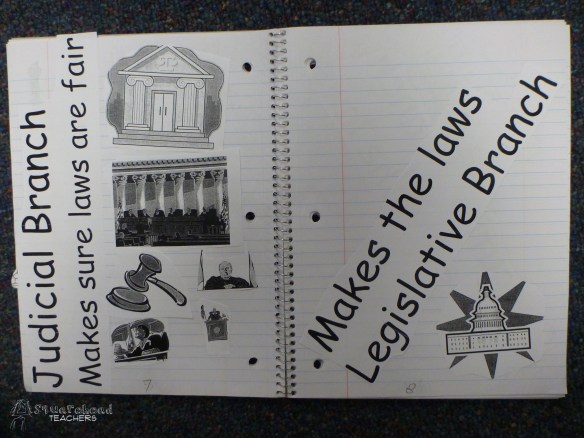
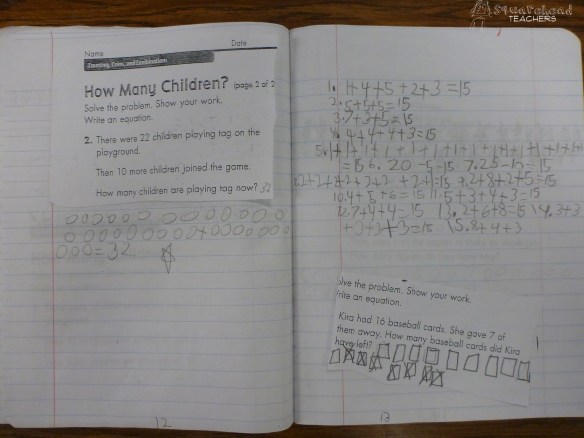
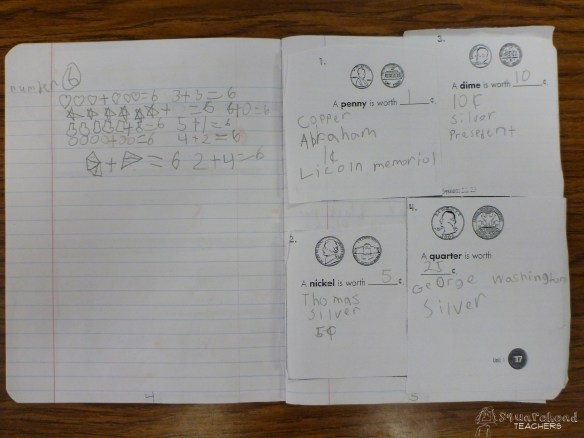
Keeping journals is a great way to help students keep new information recorded and stored in a neat and useful way. Many teachers give their students notebooks for each core subject and expect students to maintain their own journal to use for note taking during lessons and future reference. I love this idea! I’ve done it with my own classes. But if you’re going to do journals, do them the smart way. Here’s what I mean:

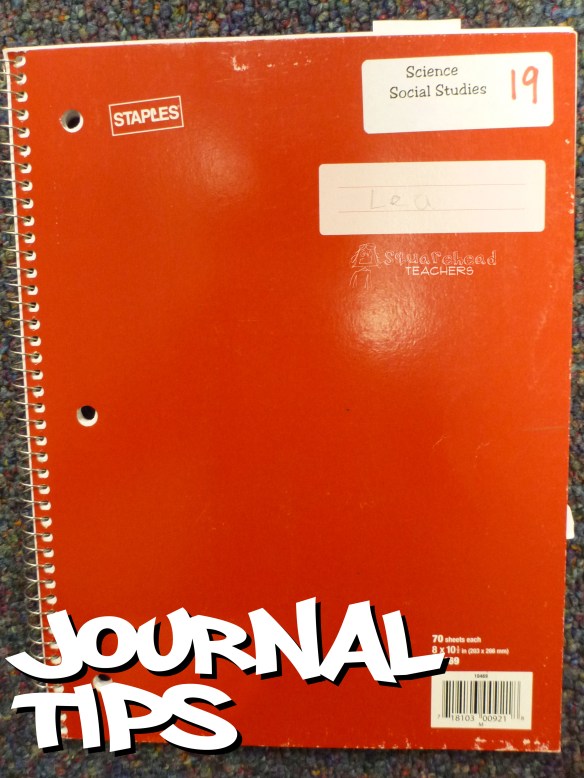
1. Choose a specific color for the subject. Get that same color journal for each student. If you can’t find an entire class set of 1 color, try 2 colors that are easy to remember. So when your student says “Wait! Which one is our science journal?” You can tell them what color notebook to look for. Also make sure the notebooks are clearly labeled with the student’s name, classroom number and what subject the journal is for. Tell students at the beginning of the year that the journal is only for that subject, not for drawing, writing notes to a friend, etc.
P1030237

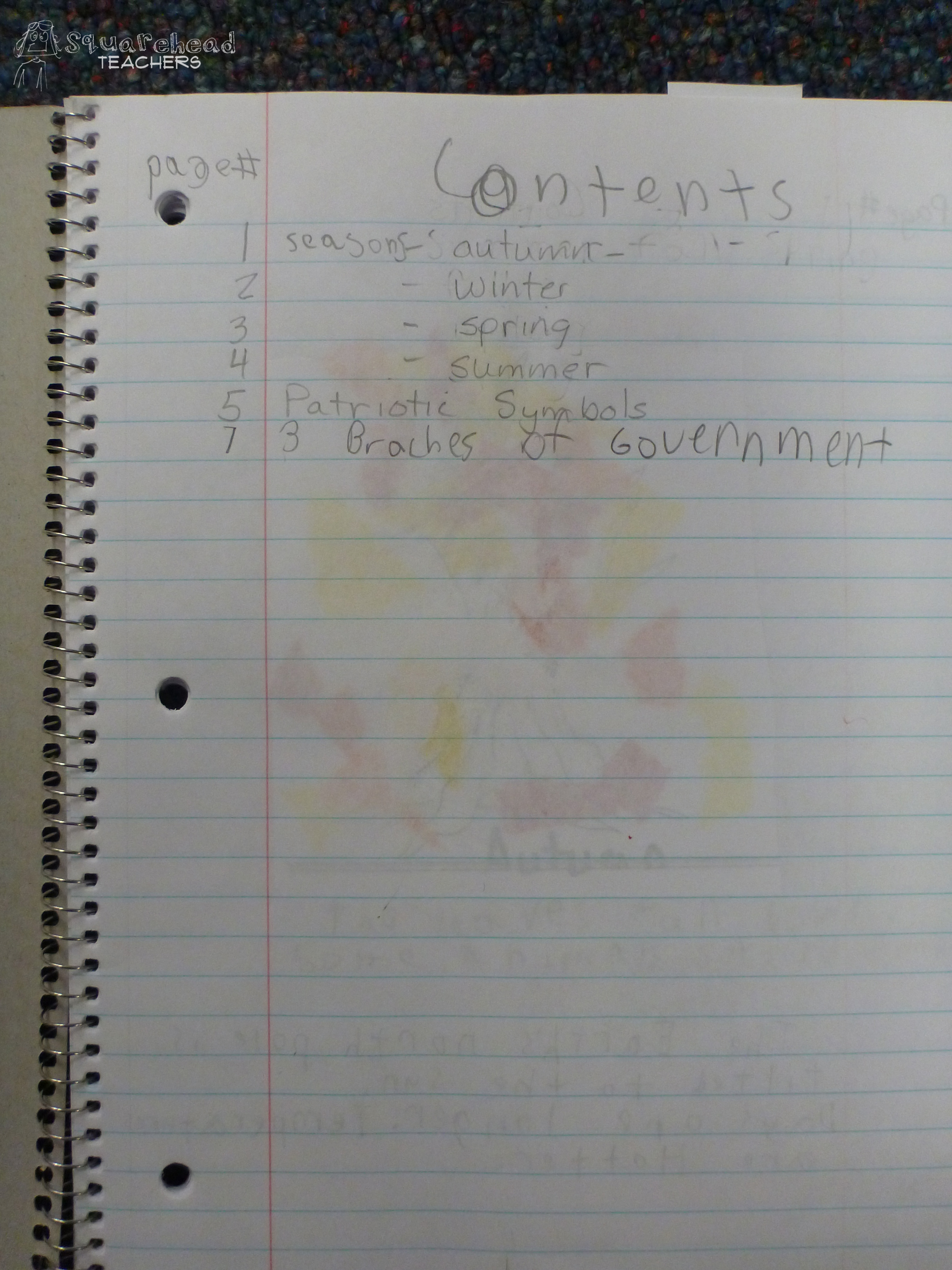
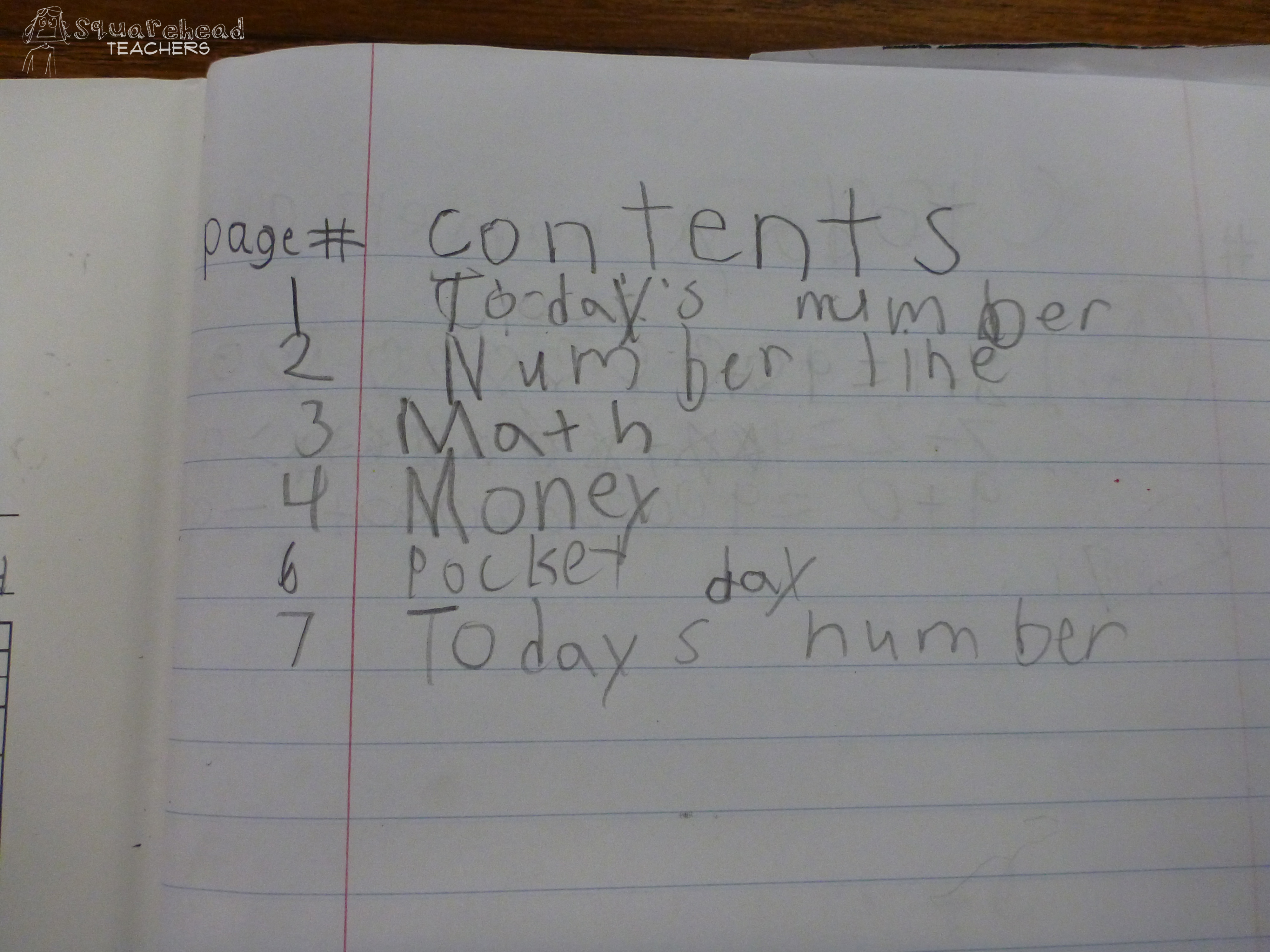
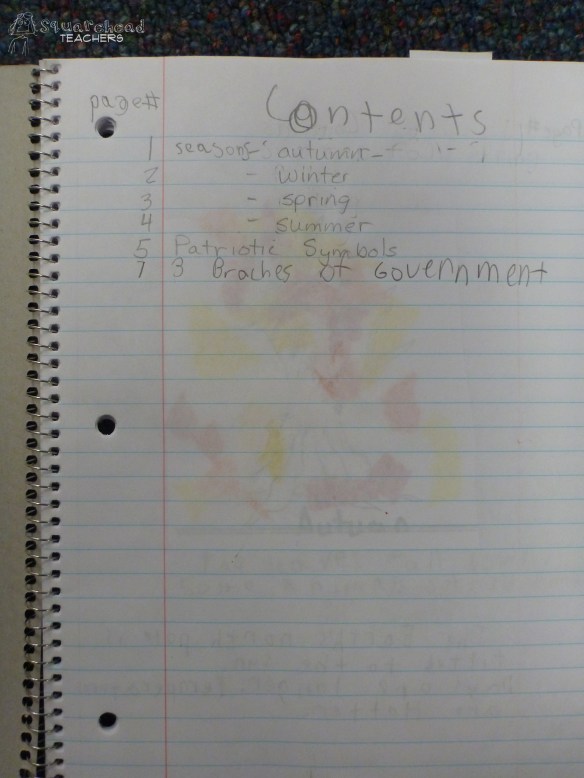
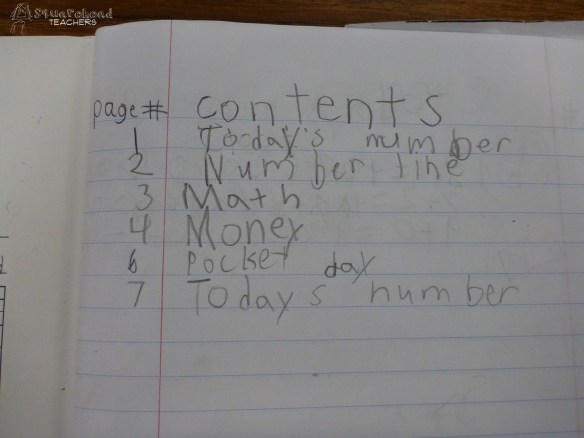
2. Use the first sheet (front/back) for the table of contents. Each time you have students start a new journal entry/topic, have them add it to the table of contents. Then, when they’re looking for their notes on a certain topic, they’ll be able to fins it easily. This also means your students need to add page numbers as they go. I have conflicting thoughts about writing in all the page numbers in the beginning. PRO- you don’t have to worry about it each time you start a new set of notes. CON- if your kids tear out pages, they can get confused when there’s no page 16.
P1030238

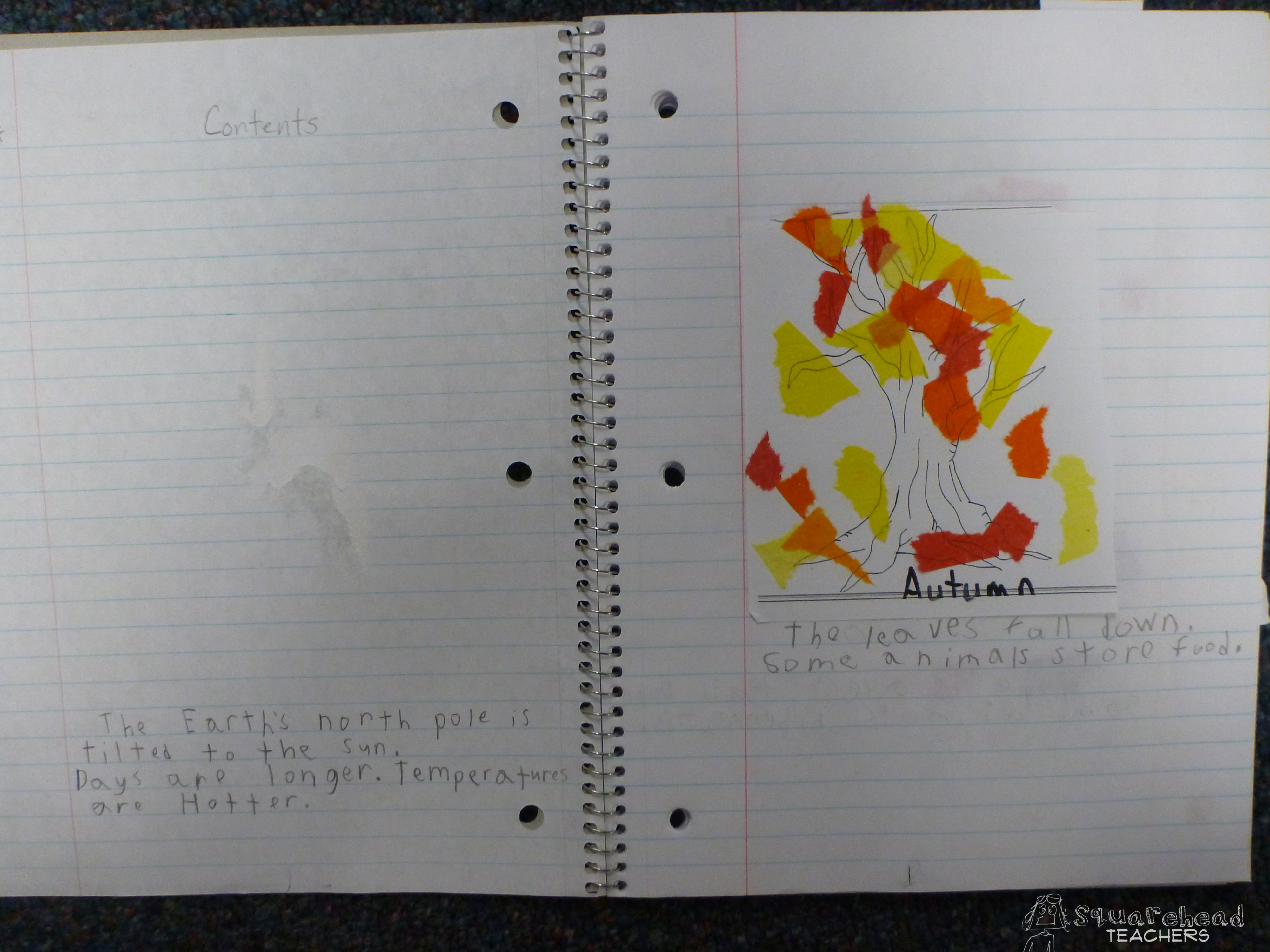
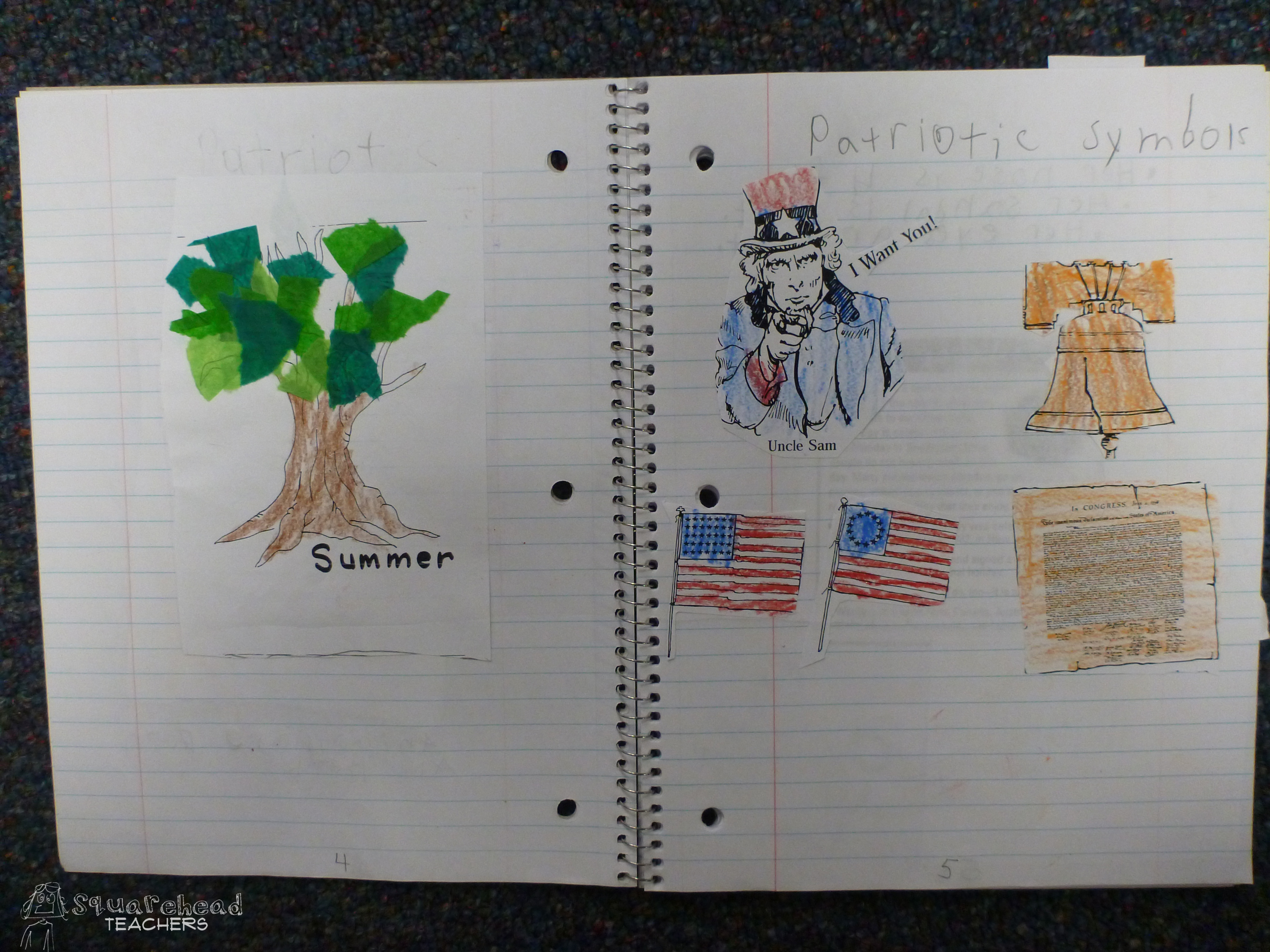
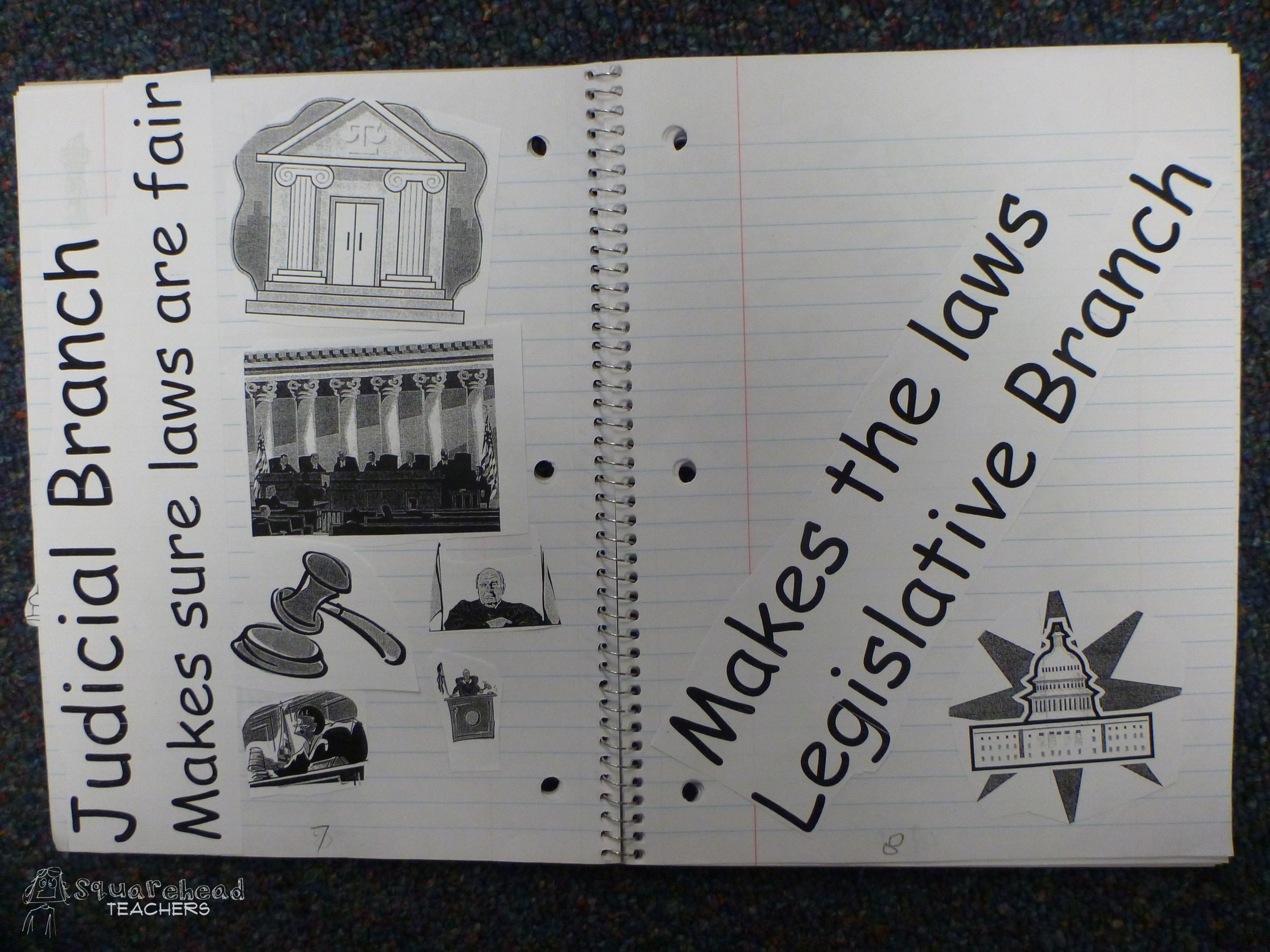
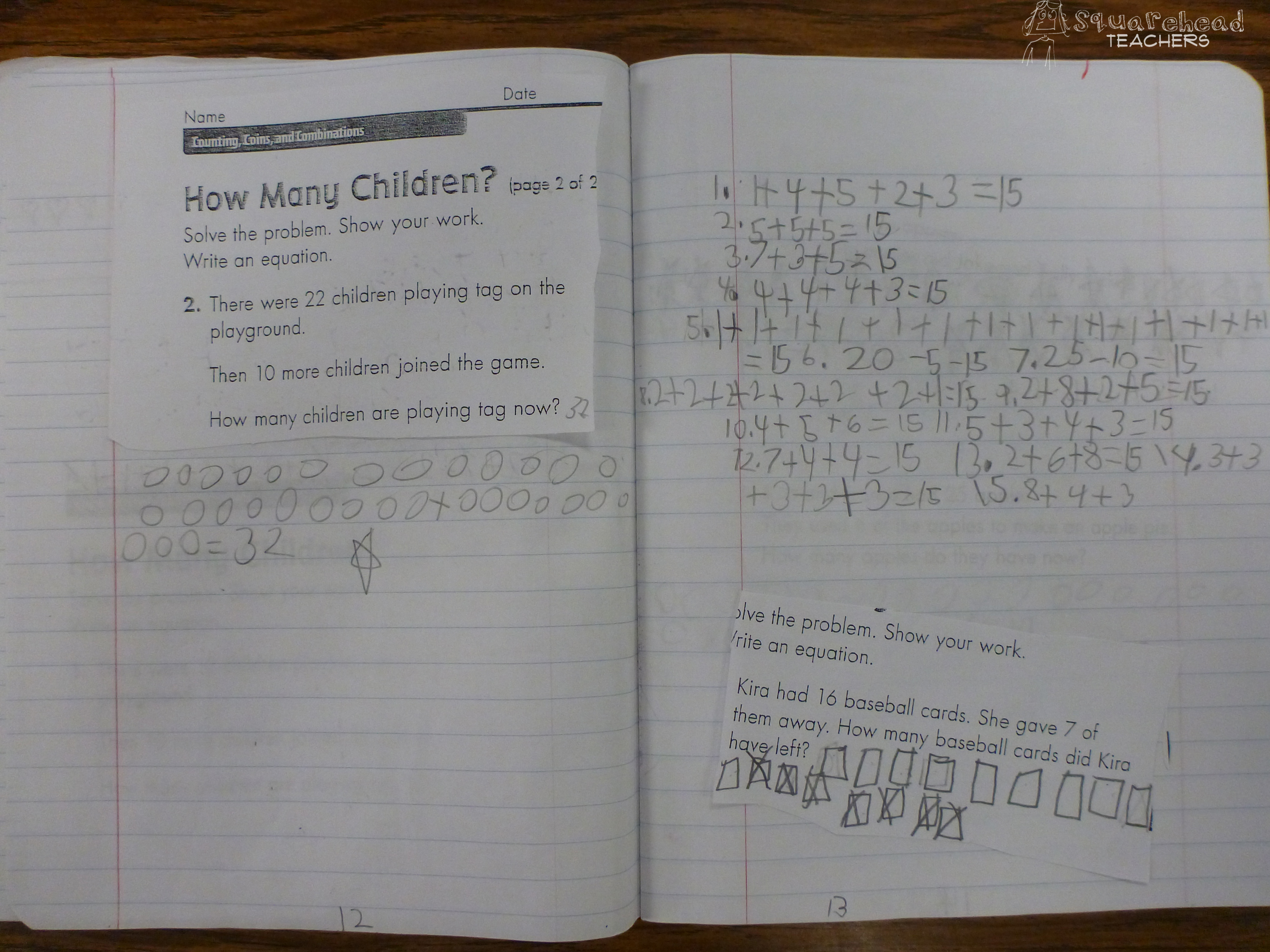
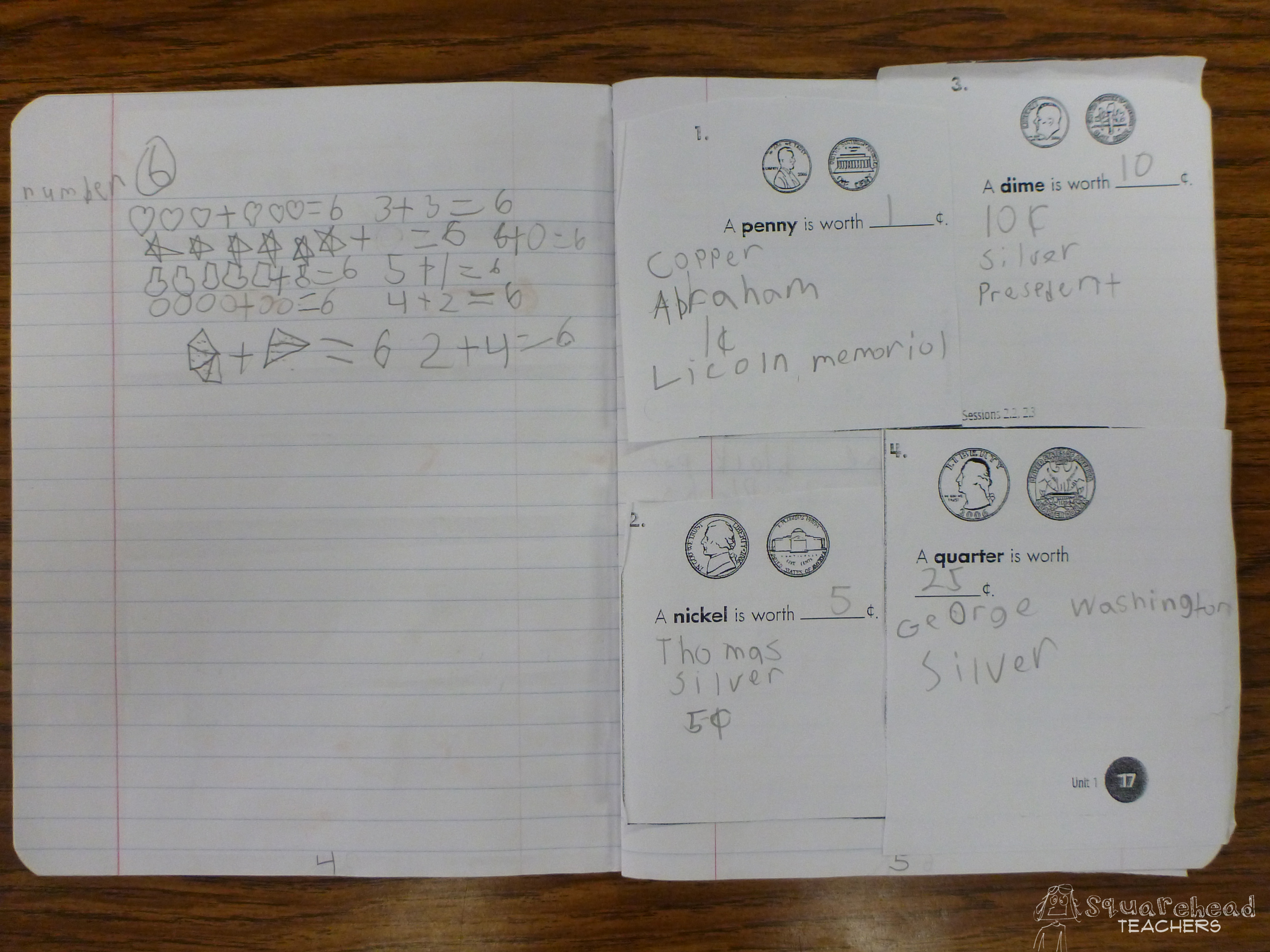
3. Do projects directly in the journal… or have them glued in when kids finish the project. This way, you can refer back to projects/assignments you’ve done when you need to review for a test, etc.
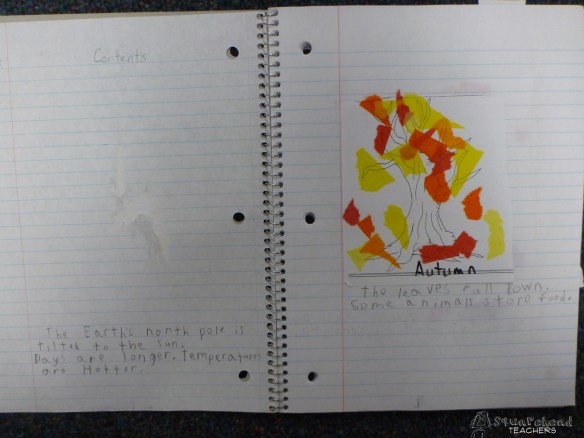
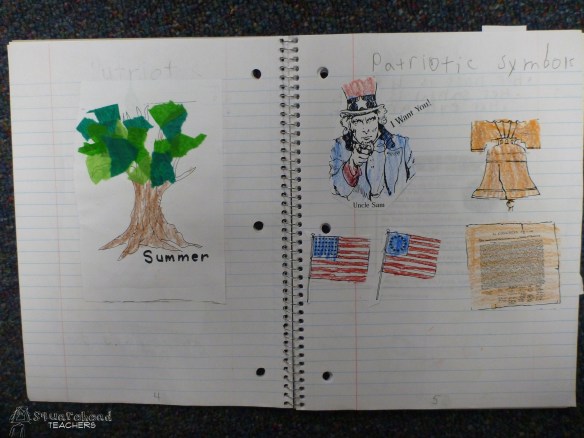
P1030239 P1030240 P1030241

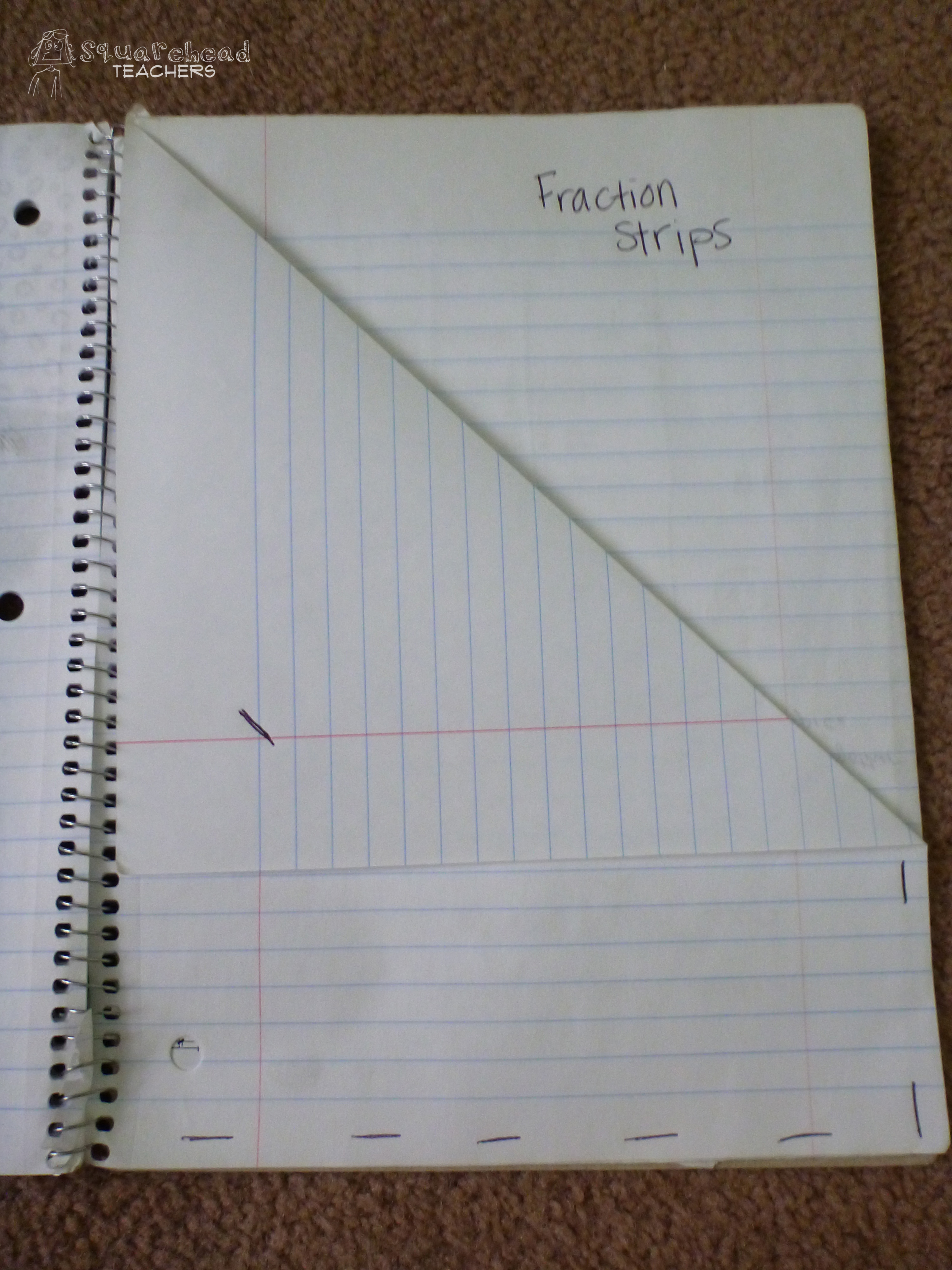
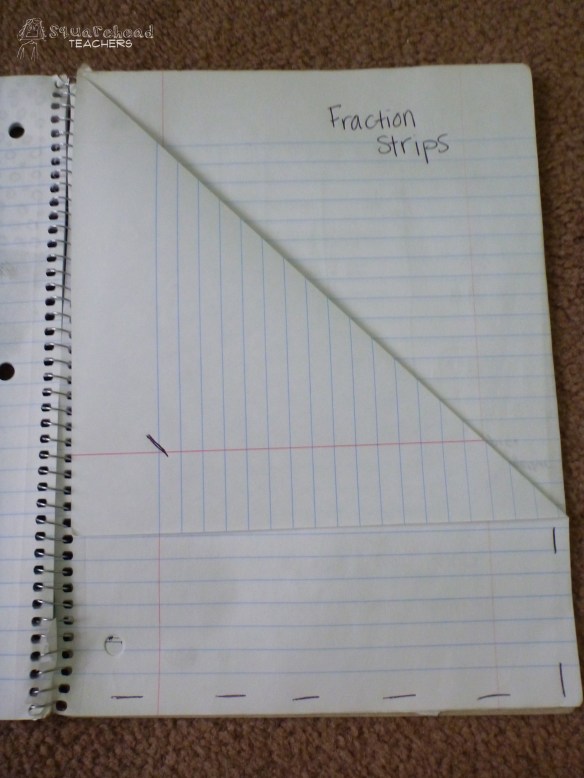
4. Pockets are awesome. Sometimes you want students to keep a project, but you don’t want it glued down. So pockets do the trick. Fold down one corner of a sheet and staple it to the page behind it. Label the pocket, so kids will know what goes in the pocket. Some teachers like the triangle cut off, but I sometimes just have them staple it down to save time (I walk around with the stapler, since it just seems to work out better when I do it). Make sure you have the folded triangle on the outside, or sometimes things get stick inside the pocket. Cut or staple the triangle piece, it’s up to you…
P1050168

If you have to combine 2 subjects into one notebook, you’ll have to figure out a way to keep the subjects straight. Some teachers have the kids start one subject on one side, have them flip the book over and start from the back on the second subject. This way, there are 2 front covers and no back cover. My only caution with this is to make sure your kids understand how this flipping ordeal works and that they open to the right part of the book each time you start a lesson.

I also make a sample journal as the students make theirs. This way, I can model exactly how I want theirs to look, and the struggling kids can just copy me each time.

Oooh! One more thought. Sometimes, for really important things, I give students a quarter sheet of colored paper and ask them to write main ideas on it before gluing it to the page. This way, you’ve got the effect of highlighting without the mess of the marker. And everyone’s looks the same. For my 6th grade math journals, I did this with things like formulas. This way, I could always say “the formula you need is on a bright orange square in your journal. Go find it in your notes.”

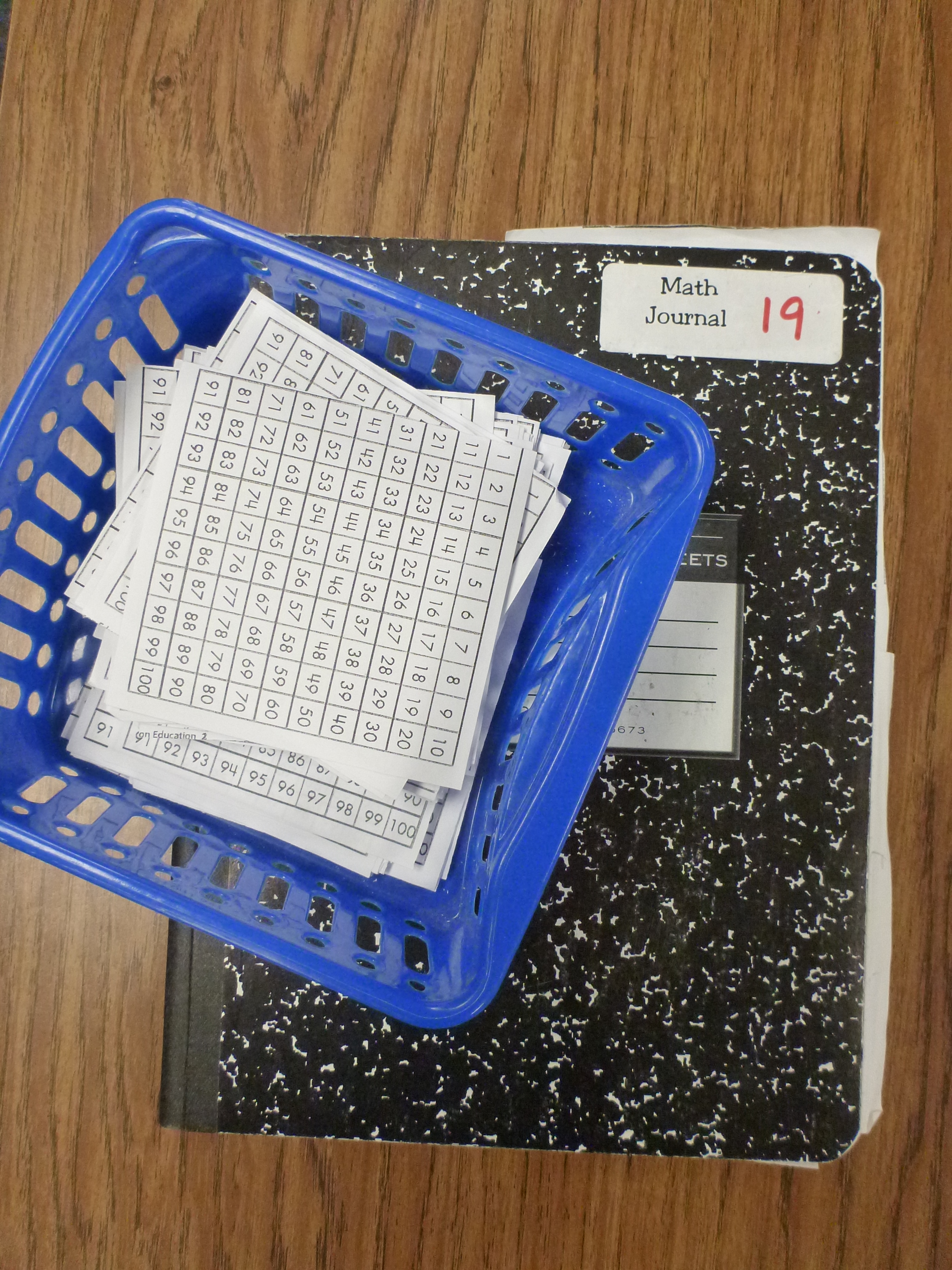
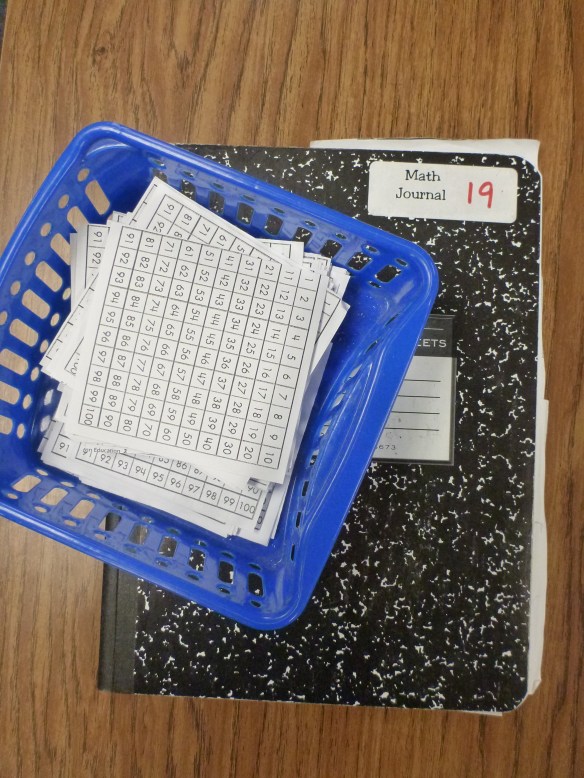
One teacher I discussed this with keeps lots of extra copies of a hundreds chart handy so she can use them in math journals.
P1030236

P1030233

P1030235 P1030234

Click here for more free math stuff!


Rotating Literacy Centers

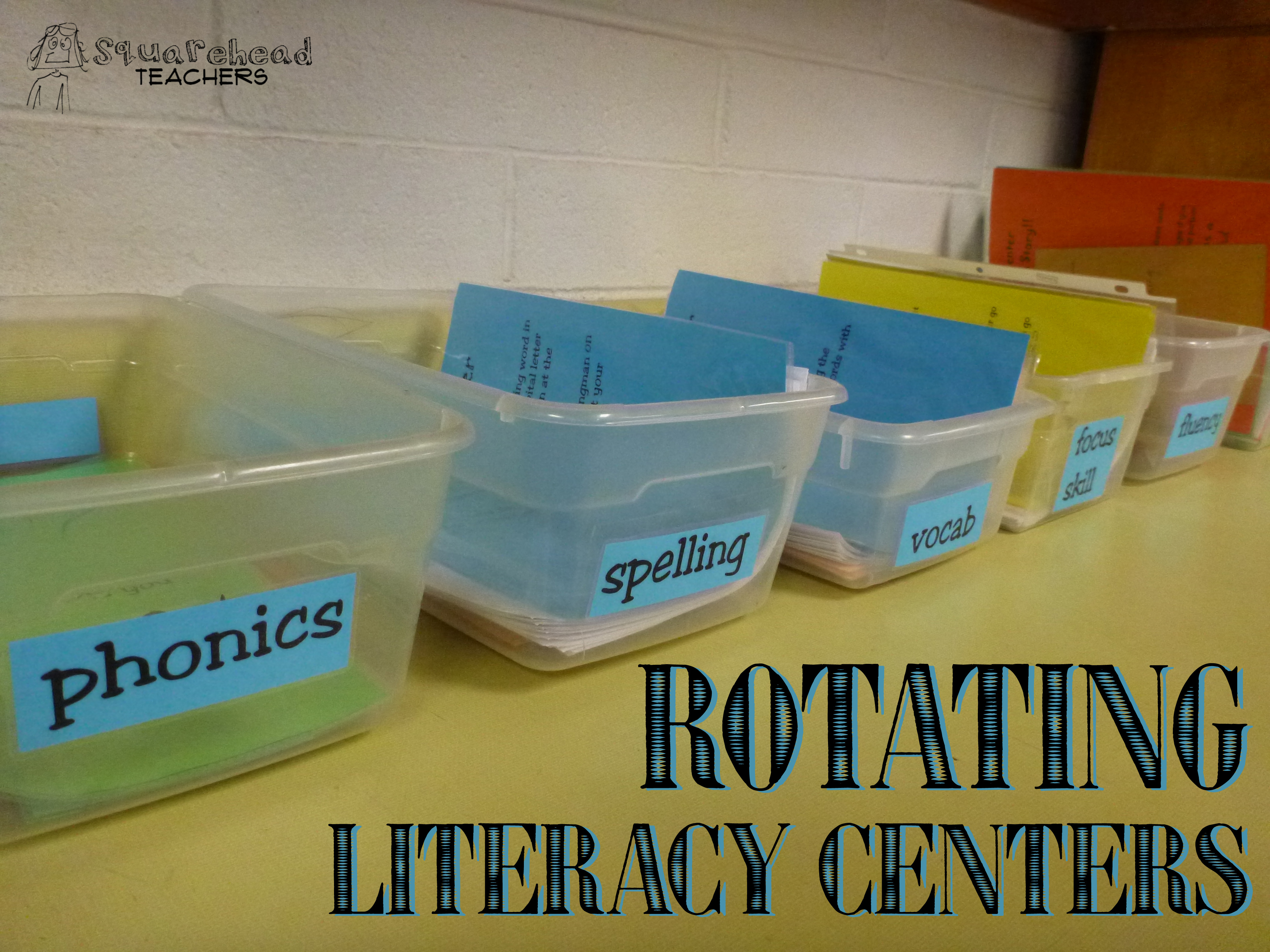
With an increase in class sizes, it’s getting harder and harder for teachers to have extra space for group work during centers. One teacher has the desks grouped in clusters of 4 and rotates the center each day. Each center is in a plastic shoe box and the kids take a different shoe box depending on the day of the week.

P1030202

She places the the entire class set of copies, materials, etc. in the box at the beginning of the week (which saves lots of time). The directions for the center are on colored paper in a plastic page protector (this gives her the opportunity to switch out the activity as needed without the hassle of laminating). She also puts a sample of the worksheet/activity for her very lowest learners to copy if they need to. I agree with her that copying the spelling words a few times a week is much better than sitting doing nothing. The kids know which box to grab, because it’s posted on the wall. The TA (Teacher’s Assistant) is the student who is in charge of getting the box from the counter and returning it with all the materials in it at the end of centers time. Each day, she switches which person gets to be the TA.

P1030204

Since there are only 5 centers, tables 4 and 5 share the box.


Keeping Track of Students’ Writing Progress

keep track of student writing


One of the most important parts of school is teaching kids to monitor their own progress. Here’s one way to help kids keep track of their own writing progress. We made a giant pencil with different sections (one for each step of the writing process) and laminated it. Then we added velcro strips down the side and to little tags that had each student’s classroom number on it. When kids finish one step of the process, they move their number tag down to the next step. This also helps kids know when they can get up from their seats… I’ve also seen charts where kids move a numbered popsicle stick from pocket to pocket to indicate progress through the writing steps. How have you helped your students keep track of their writing progress?

Organizing Your Teacher Bookshelf

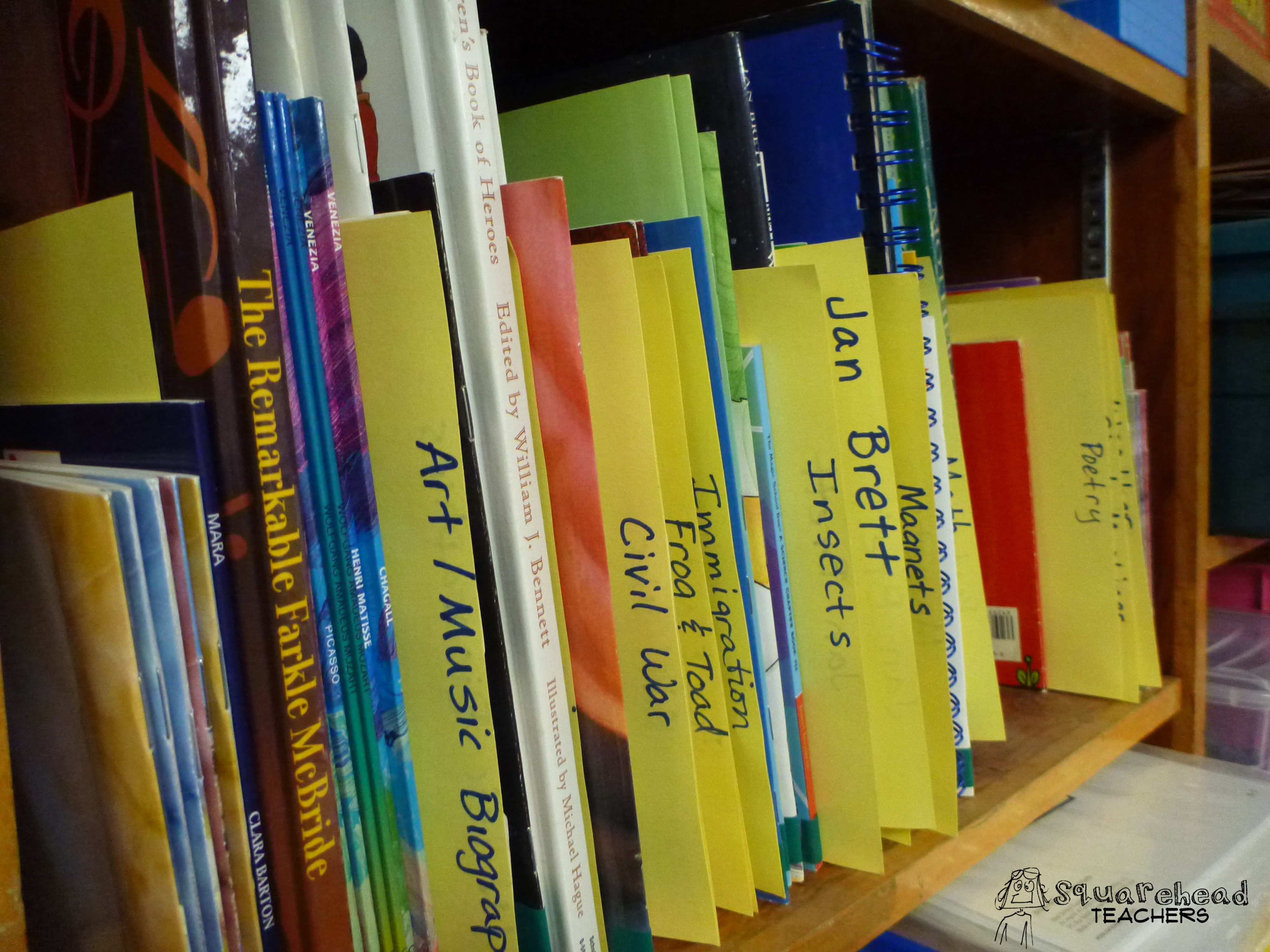
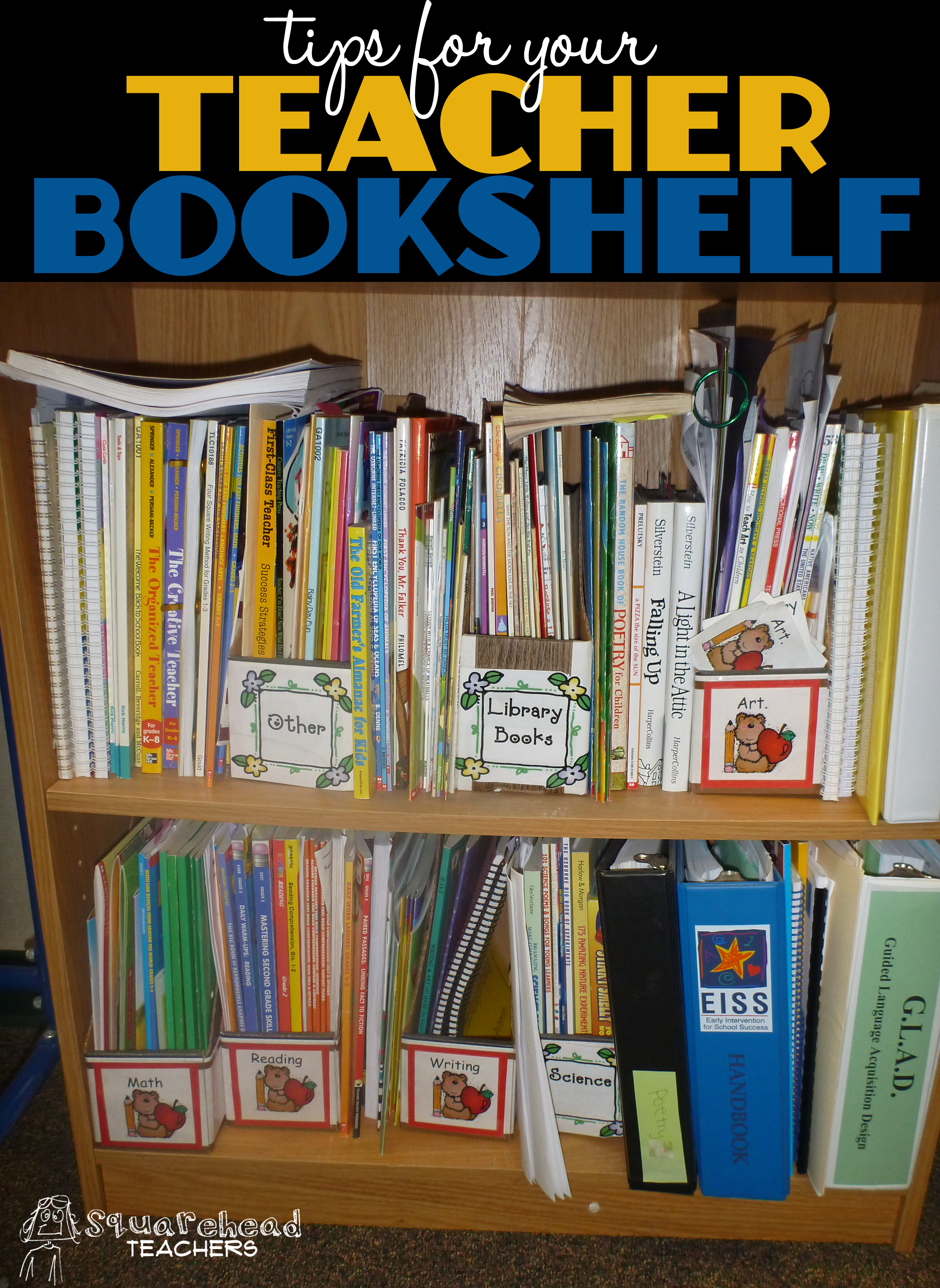
I love having gobs of “teacher” books to use… you know, those books of reproducibles, fun ideas, picture books you don’t want your students messing up, etc. The problem with having lots of them is it can be easy to forget you have them – unless you have a good organizing system for them. Here are some systems that seem to work (a picture’s worth a thousand words, so here they are):

Use card stock to separate picture books by theme.

Use magazine boxes to sort those skinny paperback books.

I also used to use magazine boxes to hold sets of worksheets I had already run off but wasn’t using right then. I had a box for math copies, literacy copies, science copies, etc. Having my copies sitting vertically (rather than stacked on top of each other) made it a lot quicker for me to look through them and find copies I was looking for. One thing I did differently from the photo above was I made the label on each box a different color so it would be easy for me to tell them apart. I’m not super into cutesy stuff, so I didn’t have those darling little pictures on my tags. Totally personal preference though; whatever works for you! 🙂

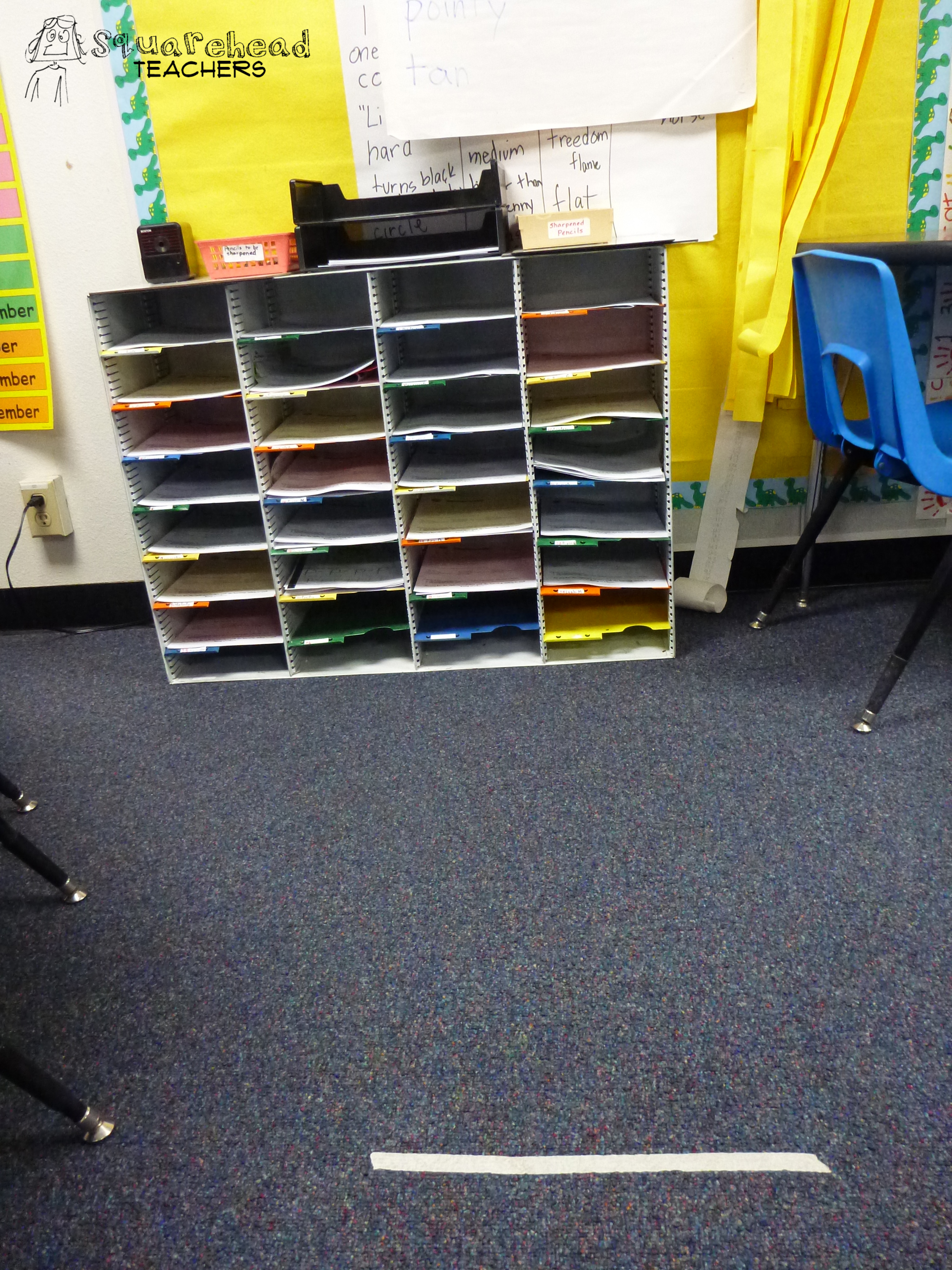
Too crowded at the Classroom Mailboxes? SOLUTION!!!

Here’s a genius idea that’s so simple I’m embarrassed that I didn’t think of it on my own. The teacher put a strip of masking tape a few feet away from the mailboxes to help her 2nd graders not crowd around the mailboxes at the end of the day. Her classroom rule is that only 2 students can be in front of the mailboxes at any one time (the rest have to form a line behind the line) and they can’t bring their backpacks to the mailboxes (they should be open on your desk before you go empty your mailbox). AWESOME idea!

The Ultimate Teacher Organization

Every teacher faces the problem of keeping organized for the upcoming week. Teachers use files, folders, trays and magazine boxes. I’ve tried to stay organizes, but it wasn’t until I saw this that I felt like I’d stuck gold!

This teacher has a stack of 4 trays for each day. She has trays for math, literacy, science and social studies. She puts misc. papers on top of each stack for the day. She uses this system to stay ahead, since she has a place where she can store materials for a project in a few days. Her classroom doesn’t have tons of counter space, so this is a good fix. In addition, she has an organized place where she can put papers to send home, copies of a homework page to hand out in a few days etc. In addition, she can store papers she uses on a certain day of the week (like the spelling list for Friday’s test). I’m all about being organized, so I’m totally jealous!!


Keeping Track of Important Student Paperwork

Every year, there are tons of papers students need to take home and bring back. It can be an overwhelming task to keep track of who has brought back what… especially if you don’t have a system. I’ll post all the ideas I see on this topic here:

One teacher used an extra pocket chart. She assigned each student a pocket and made a bunch of colored laminated cards for each pocket. She would assign a colored card (she could write on it multiple times) to each form that needed returned so she could see who needed to bring something back.


.