Lesson Objectives Signs (free signs!)

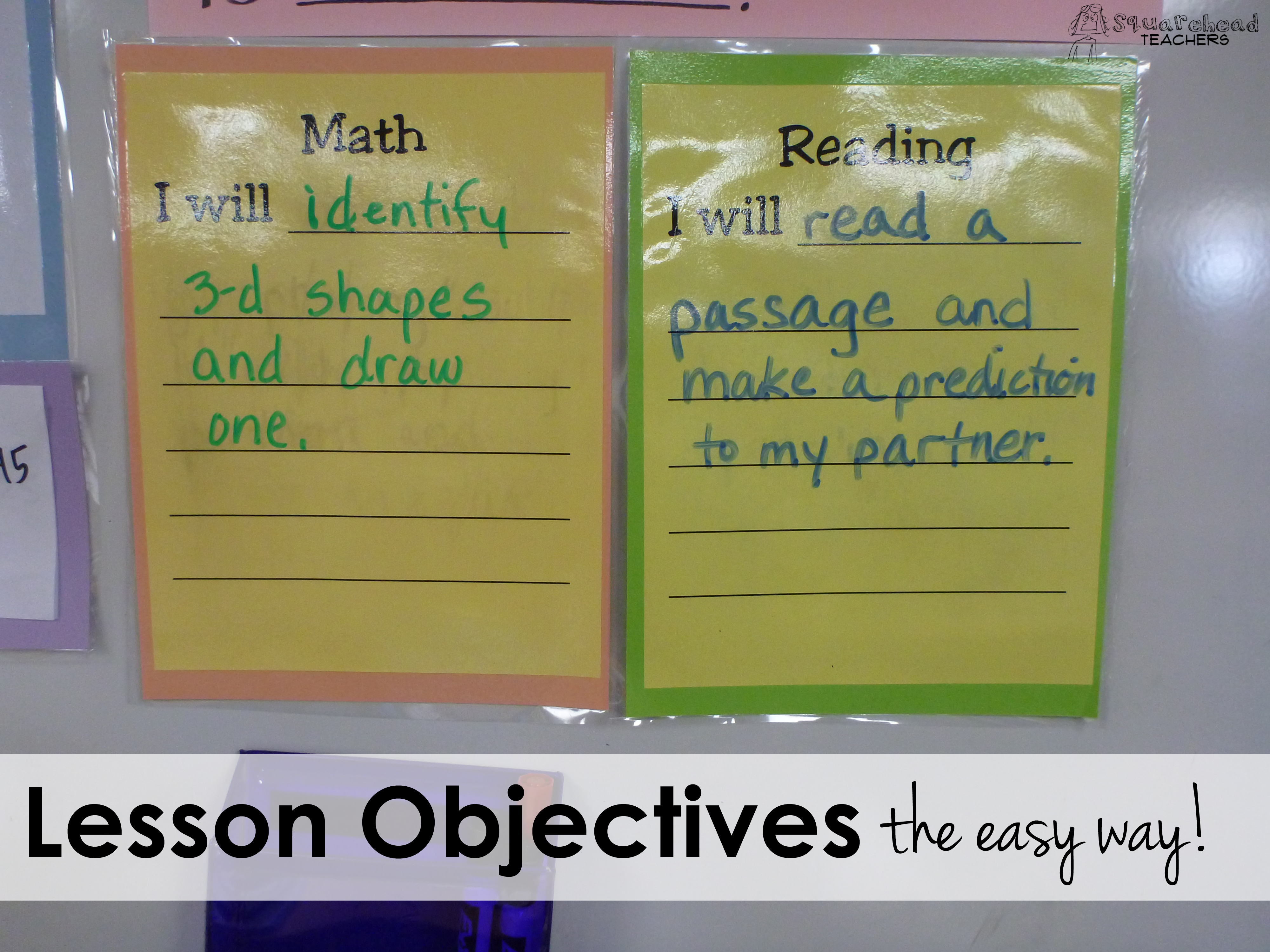
I saw a great idea I thought I’d copy. The teacher laminated signs and used whiteboard markers to write the lesson objectives each day. They were posted at the front of the room.

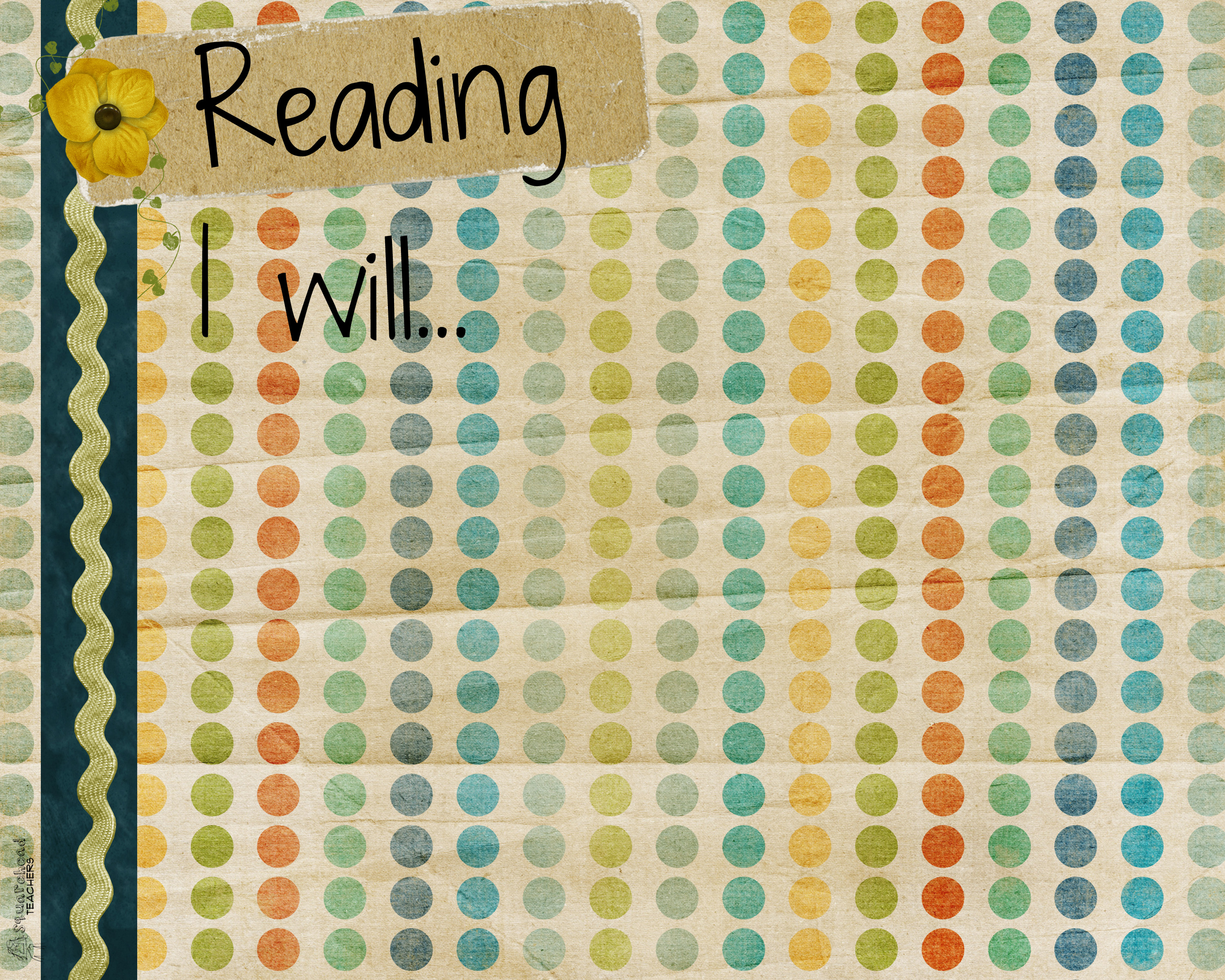
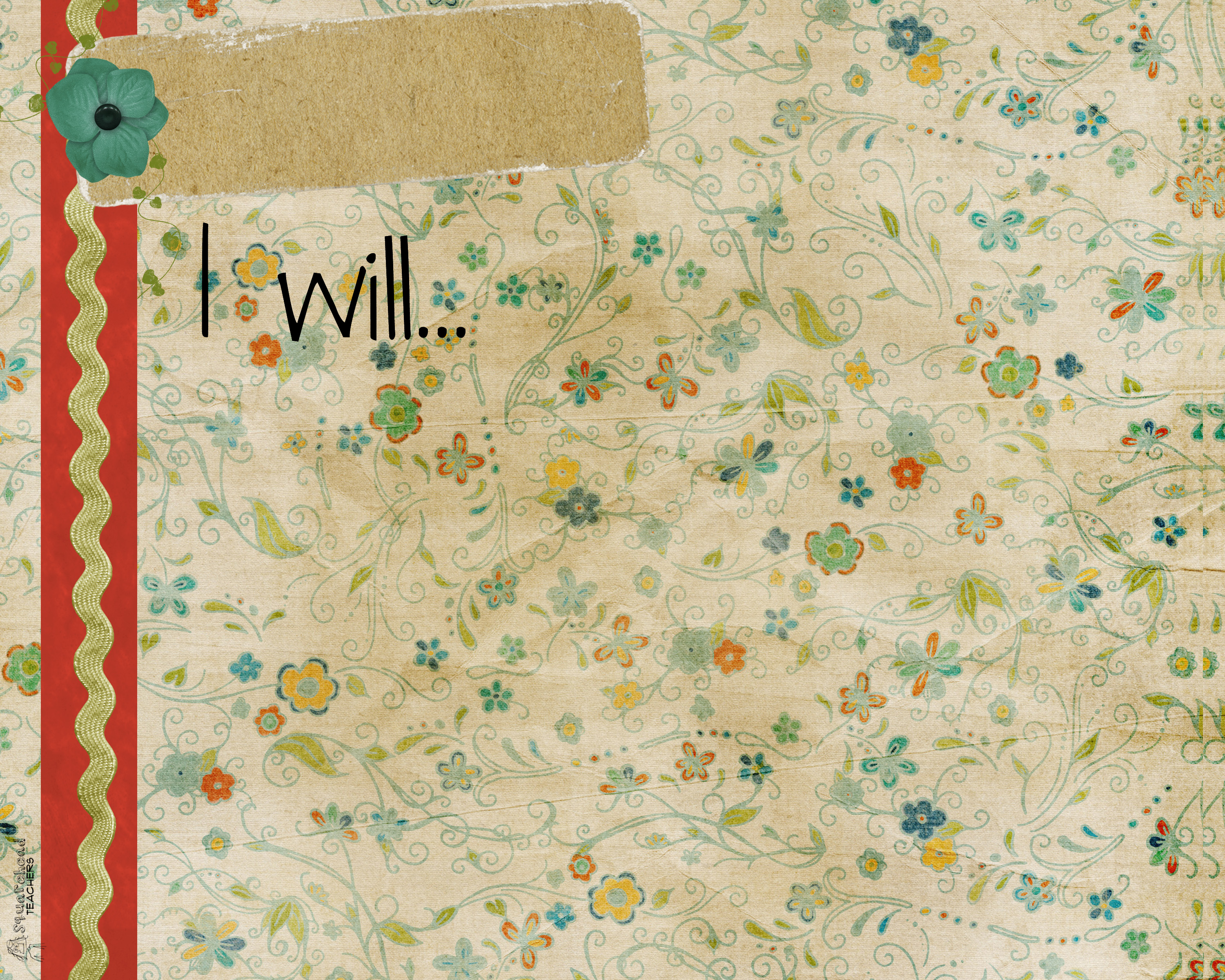
So here are my copy-cat signs… one for math, one for reading and two blanks for whatever you need. They’re made to fit on a regular 8.5 x 11″ piece of printer paper. Make sure you laminate them before you write on them so you can re-use them! Enjoy!

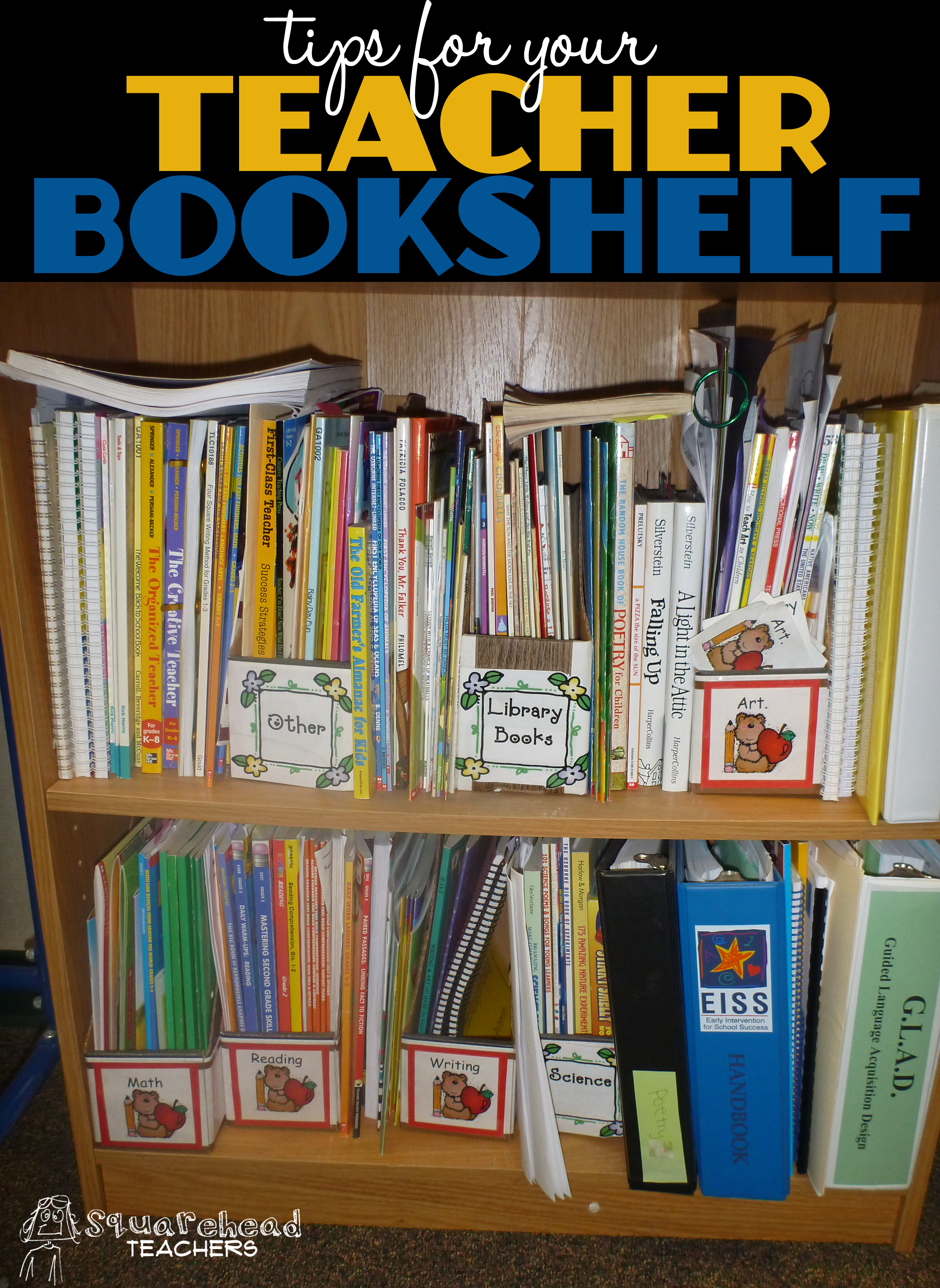
Organizing Your Teacher Bookshelf

I love having gobs of “teacher” books to use… you know, those books of reproducibles, fun ideas, picture books you don’t want your students messing up, etc. The problem with having lots of them is it can be easy to forget you have them – unless you have a good organizing system for them. Here are some systems that seem to work (a picture’s worth a thousand words, so here they are):

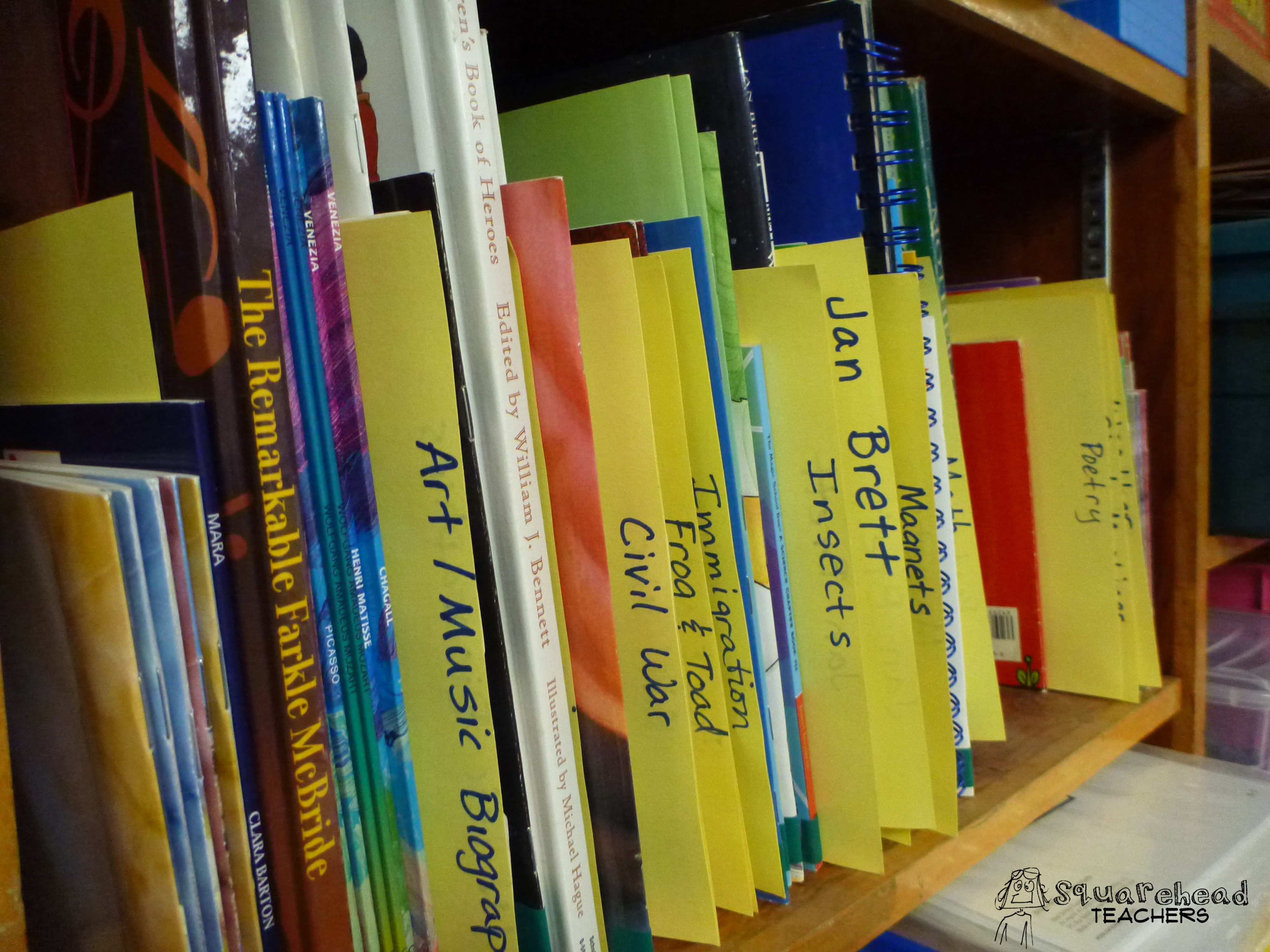
Use card stock to separate picture books by theme.

Use magazine boxes to sort those skinny paperback books.

I also used to use magazine boxes to hold sets of worksheets I had already run off but wasn’t using right then. I had a box for math copies, literacy copies, science copies, etc. Having my copies sitting vertically (rather than stacked on top of each other) made it a lot quicker for me to look through them and find copies I was looking for. One thing I did differently from the photo above was I made the label on each box a different color so it would be easy for me to tell them apart. I’m not super into cutesy stuff, so I didn’t have those darling little pictures on my tags. Totally personal preference though; whatever works for you! 🙂

Reminding Students About Pull-Out Classes

Every class has a few students who go to a special pull-out class like speech, the school psychologist, etc. One teacher taped this reminder to her students’ desks to remind them  when to go:

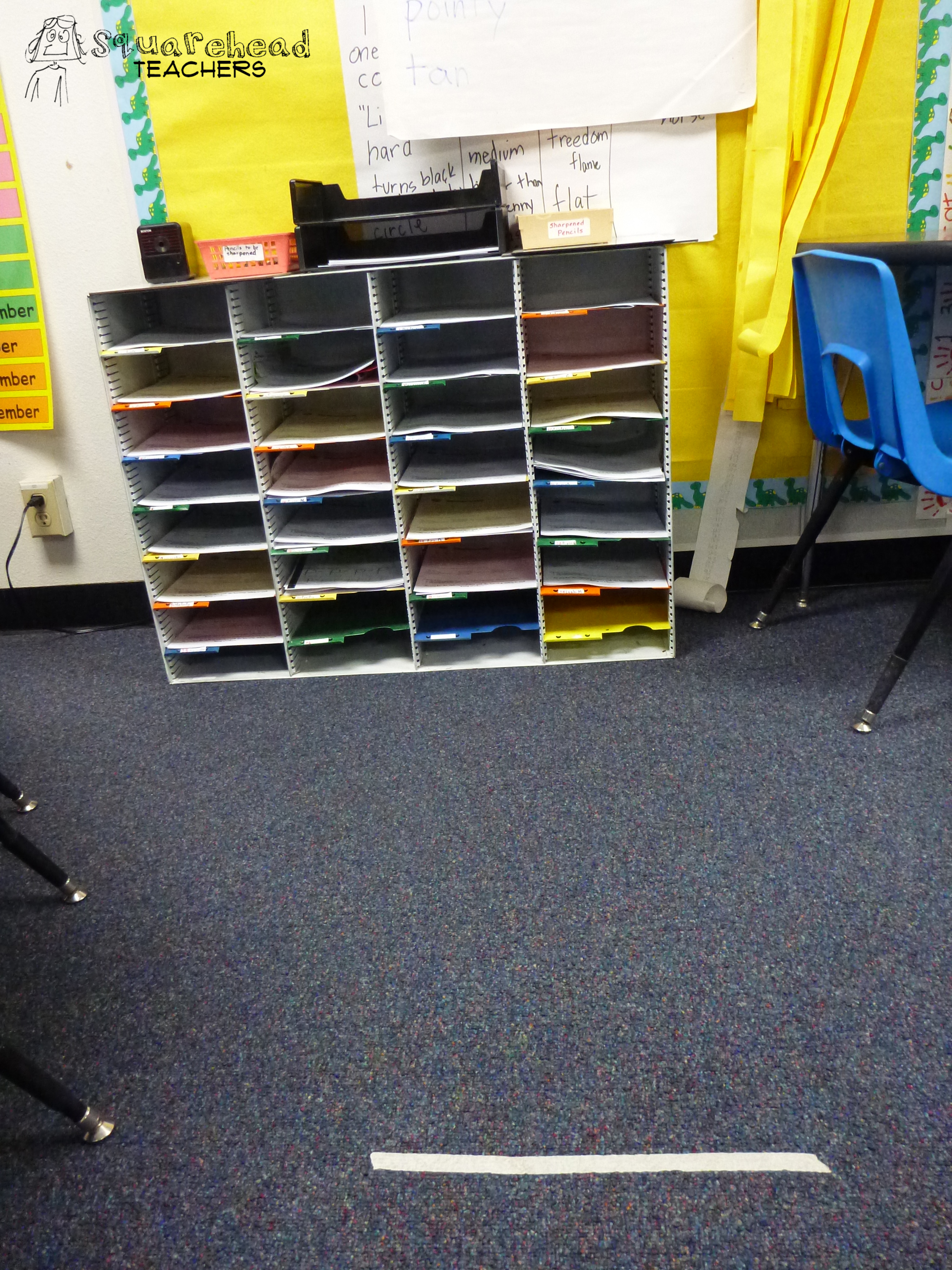
Too crowded at the Classroom Mailboxes? SOLUTION!!!

Here’s a genius idea that’s so simple I’m embarrassed that I didn’t think of it on my own. The teacher put a strip of masking tape a few feet away from the mailboxes to help her 2nd graders not crowd around the mailboxes at the end of the day. Her classroom rule is that only 2 students can be in front of the mailboxes at any one time (the rest have to form a line behind the line) and they can’t bring their backpacks to the mailboxes (they should be open on your desk before you go empty your mailbox). AWESOME idea!

Where is Our Class?

Many teachers have a system to keep track of which students are out of the classroom. Some use a sign in/out sheet, others have a pass that sits on the student’s desk, etc. Lots of teachers also have something to indicate where the class is when they’re not in the classroom. Many have door hangers, signs, etc. Here’s an idea that works great if you’ve got a metal door (magnetic):

This teacher found huge magnets (dry erase calendars) at the dollar store and bought 4. Here’s what she did with them:

1. Label this one “classroom” (you could just use tape or something to designate this section of the door if you only wanted to buy 3).

2. Cut it up into small pieces so each student has one (name, number on it). These start in one section of the door each day. The kids move them to the “classroom” section as they come in first thing in the morning and then move to a location when the student leaves the classroom (to go to the nurse, for example).

3.  Divide it into different sections to represent where a few students might go at a time (nurse, office, bathroom, literature lab, speech, etc.)

4.  Cut it up into small signs to put on the front of your door when your entire class goes somewhere (recess, art, computers, library, etc). Assign one student to move all the magnets to their proper place at the end of the day and to be responsible for moving the appropriate magnet to the outside of the door when the whole class goes somewhere.

You can spend time making yours cuter if you want. This teacher made this last-minute and has just kept it…

Know of another good system? Comment below!

The Ultimate Teacher Organization

Every teacher faces the problem of keeping organized for the upcoming week. Teachers use files, folders, trays and magazine boxes. I’ve tried to stay organizes, but it wasn’t until I saw this that I felt like I’d stuck gold!

This teacher has a stack of 4 trays for each day. She has trays for math, literacy, science and social studies. She puts misc. papers on top of each stack for the day. She uses this system to stay ahead, since she has a place where she can store materials for a project in a few days. Her classroom doesn’t have tons of counter space, so this is a good fix. In addition, she has an organized place where she can put papers to send home, copies of a homework page to hand out in a few days etc. In addition, she can store papers she uses on a certain day of the week (like the spelling list for Friday’s test). I’m all about being organized, so I’m totally jealous!!


Motivating Kids to Do Things Quickly!

Sometimes kids just want to shuffle around and it feels like when you ask them to turn in papers quickly, they’re moving in slow motion! Here’s one way I found to fix that:

I was teaching 6th grade when I developed this idea. Each student had a number according to ABC order by last name. I timed my kids to see how fast they could turn in their papers in order and reverse order (so the order matched the order in my grade book). I would write their time record on the board and rewarded the entire class each time they broke their record. In the beginning, this meant giving lots of rewards, but by the middle to end of the year when they were really coordinated, it was really hard for them to break their record and knowing I would give them a reward was motivating. This saved me TONS of time (turning in papers and shuffling through papers and my grade book). Try it!


Management System: Colors

I saw this system used successfully in a kindergarten classroom. It worked well because it was so simple. Each kid had a magnet with their number and started in the middle of the chart each week. Depending on behavior, the kids could move up or down the chart.