Confused about partitive and measurement division? Not anymore! Here’s a quick video explaining the difference…
Partitive/Measurement Division (Review Video)
Reply

Confused about partitive and measurement division? Not anymore! Here’s a quick video explaining the difference…


Here’s a simple handout to give parents and community members at back-to-school night. These are simple ways parents can teach their kids with math everyday. This printable PDF has a color version and a black and white version that may be easier to run off on the copy machine…
7 Ways to help your child with math – collection

1. Use multiple bins to collect work your students submit to you. This way, they’re already sorted and easier for you to grade! I use stackable paper trays to save space.
2. Place fabric pockets in the area where you teach from most. Then you can store commonly used papers, forms or reference materials for you to grab at a moments notice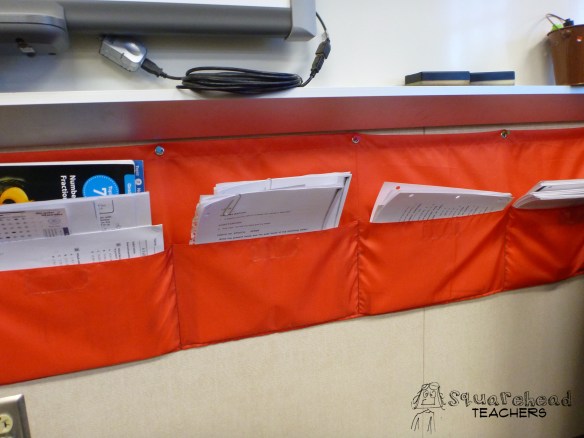 .
.
3. I don’t know about you, but sharpening pencils is the bane of my existence! Designate two containers for pencil storage (one of broken pencils that need sharpened and one for freshly sharpened pencils for kids to grab). I used to have one student be the pencil sharpener for the week.
4.Collect important writing samples or projects in a bin. Give each student a file folder and collect important paperwork throughout the year. Then “all” you have to do at parent teacher conferences is grab the bin and hand over the work samples to proud parents.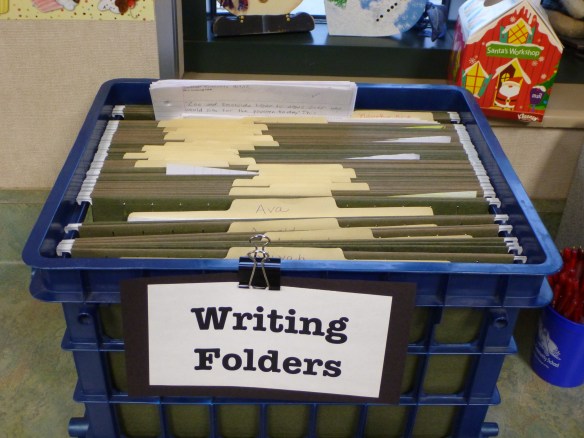
5. This next idea is PURE GENIUS! I learned this trick from my mentor teacher during student teaching (way back in the day). Designate a tote or box for a super secret purpose: a secret recycle bin! Students don’t work as hard when they know their teacher isn’t going to look at their paper. So use this bin to collect papers you don’t need to look at, but still want kids to work hard on. At the end of the day when all the students are gone, you can recycle the paperwork and keep your students’ desks clutter free! The picture above is from a lower grade classroom that doesn’t have any turn in bins. So this teacher just calls the secret bin the “turn in bin.”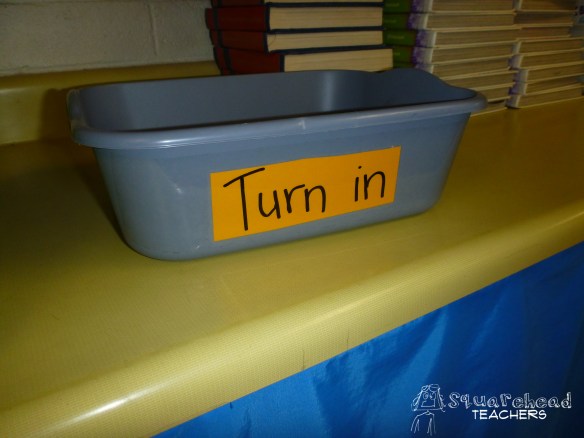
6. Track your students’ reading progress with a laminated file folder. Divide it into sections using whatever lingo your district or state uses. The photo above uses benchmark, strategic, intensive to indicate at, slightly below and way below grade level. Use sharpie to designate areas of the folder according to words per minute, etc. Then give each student a sticky tab according to where they are at the beginning of the year. This allows you to see who’s made significant progress throughout the year. For example, this teacher used green to indicate at grade level, yellow for slightly below, and pink for way below grade level. She writes the words per minute (or whatever you’re tracking) on the sticky tab as you assess the students throughout the year. When you’re not using the folder, fold it up and keep it away from curious student eyes. 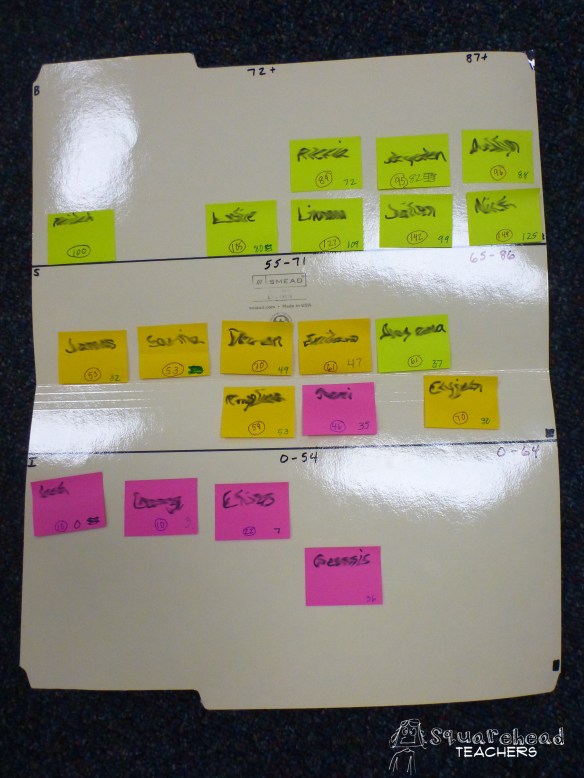
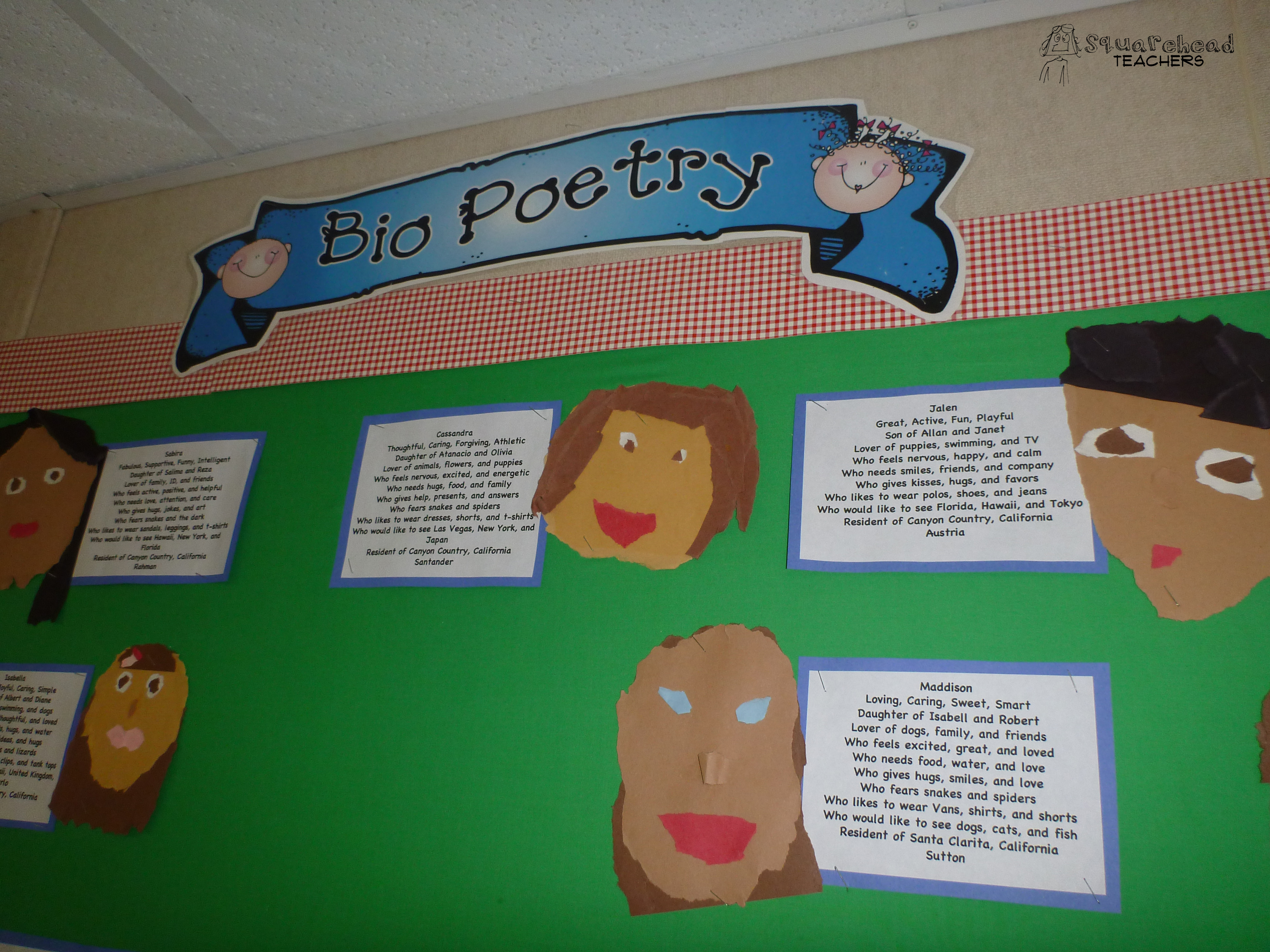
Bio Poems can be written by students to describe the lives of real people as creative writing exercise, or fictional characters to demonstrate reading comprehension. Bio Poems could even be written about inanimate objects. There are a variety of formulas for writing a bio poem. Here are 2 of the most common formulas:
Your name
Child of…
Who loves…
Who hates…
Who wants to go to…
Who wishes he/she could’ve met…
Who is scared of…
Who dreams of…
Who is determined to…
Who values…
Who is proud of…
Who graduated from…
Who lives…
Your name again
First name
Three or four adjectives that describe the person
Important relationship (daughter of . . . , mother of . . . , etc)
Two or three things, people, or ideas that the person loved
Three feelings the person experienced
Three fears the person experienced
Accomplishments (who composed . . . , who discovered . . . , etc.)
Two or three things the person wanted to see happen or wanted to experience
His or her residence
Last name
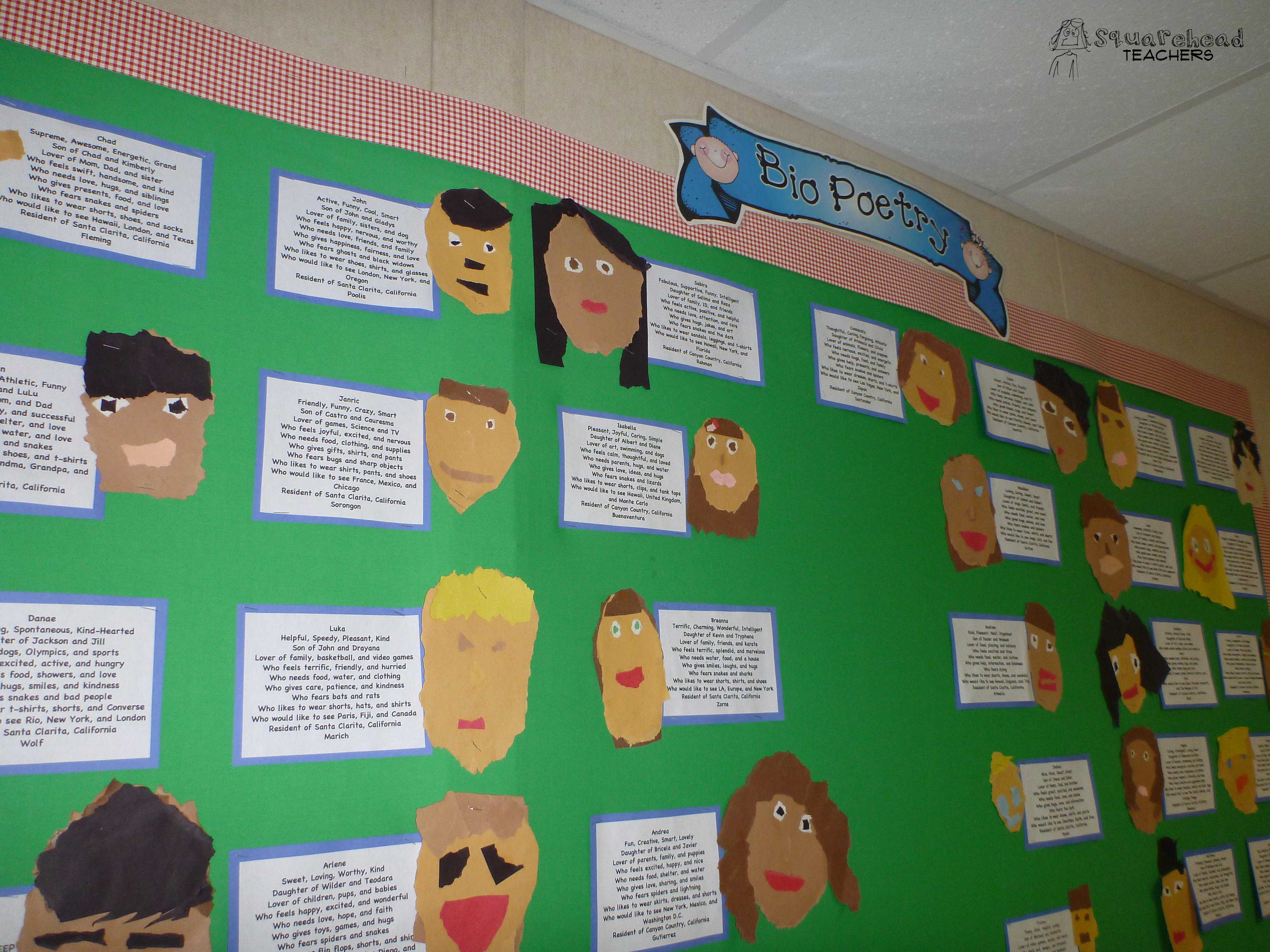
It’s always fun to share or display the bio poems. One teacher had her students tear pieces of construction paper to create artwork of their face to put up next to the student’s bio poem. You could easily adapt this project to describe historical figures, events, etc. by changing the formula.
I recently posted my addition and subtraction key words posters. Then I saw this in one upper grade teacher’s room and had an idea for a group project to review these concepts at the beginning of the year.

Pass out a large sheet of paper to groups of 2-4 students. Then have them create a poster that shows what key words are associated with each of the 4 basic math operations: addition, subtraction, multiplication and division. Then post them on the wall as a reminder throughout the year. If you don’t have enough space to display them all, designate one spot for a poster and rotate through them throughout the year. When you switch posters to display a new group’s poster, have the group members review the key words with the whole class.


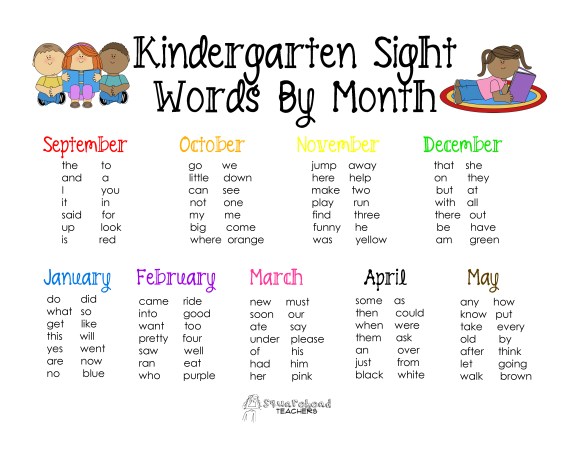
Here’s my list of kindergarten sight words. They’re organized by month of the school year, and each month includes a color word to focus on. This would also be a great list of words to start working on with your preschooler if you’re looking to get a jump on literacy!
Click here for the free printable PDF: Kinder Sight Words by Month
Like what you see? Tell your friends about this blog and check out my TPT store!

 Squarehead Teachers