Paint Partners (Student Mixer)

paint partners 1

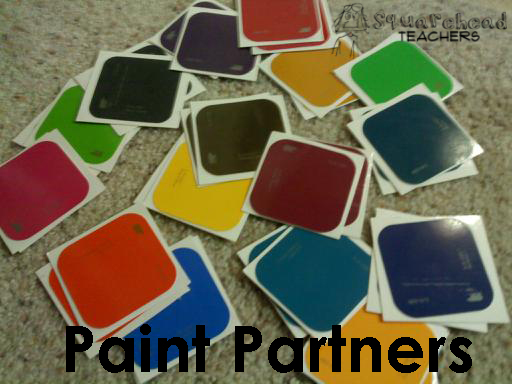
I think I’ve mentioned this before, but I LOVE the paint section at Lowes! All the colors are just way too fun. Also, there are times when I need students partnered randomly and I need a clever way to do it. So here’s my paint swatch student mixer idea:

  1. Grab 2 of each of your favorite paint swatches. (Make sure the names aren’t anything that’ll be distracting. I didn’t notice that one of the pinks was called “Tuti Fruiti” and it was a major distraction the first time we used these. I ended up taking that pair out of the stack in the future.)
  2. Glue each swatch onto a piece of white card stock.
  3. Laminate the cards so they will last.
  4. When it’s time go partner students, mix up the stack and hand out the cards. Give your kids a set amount of time (I used 1 minute) to find and sit next to their paint partner (the other student who has the same paint swatch as them).

Note: this idea requires time to let kids find their partner. I found this was a quick, effective break before introducing the new assignment.

Genius Teaching Tips!

no name tags

Desk name tags drive me nuts. So when I saw this idea (source) and just HAD to share it with you! Use an oil based Sharpie Paint Pen (available at craft and office supply stores) to write on the desk. It stays on just like a permanent marker, but you can see it better. Then at the end of the year when you’re ready to take it off, color over it with a whiteboard marker and it wipes off with a tissue! This same idea of erasing permanent marker with whiteboard markers also works on whiteboards, laminated posters, anchor charts, etc.

I’ve been focusing on multiplication facts with my kids lately, so, when I saw this idea I about fell over. (Yes, I’m always impressed by the creativity and pure genius I see in other educators!)!  Kids shake the egg carton (above), and then multiply whatever numbers the chips land on. This can easily be switched to addition for younger kids. I love this idea and I’m excited to try it! (source)

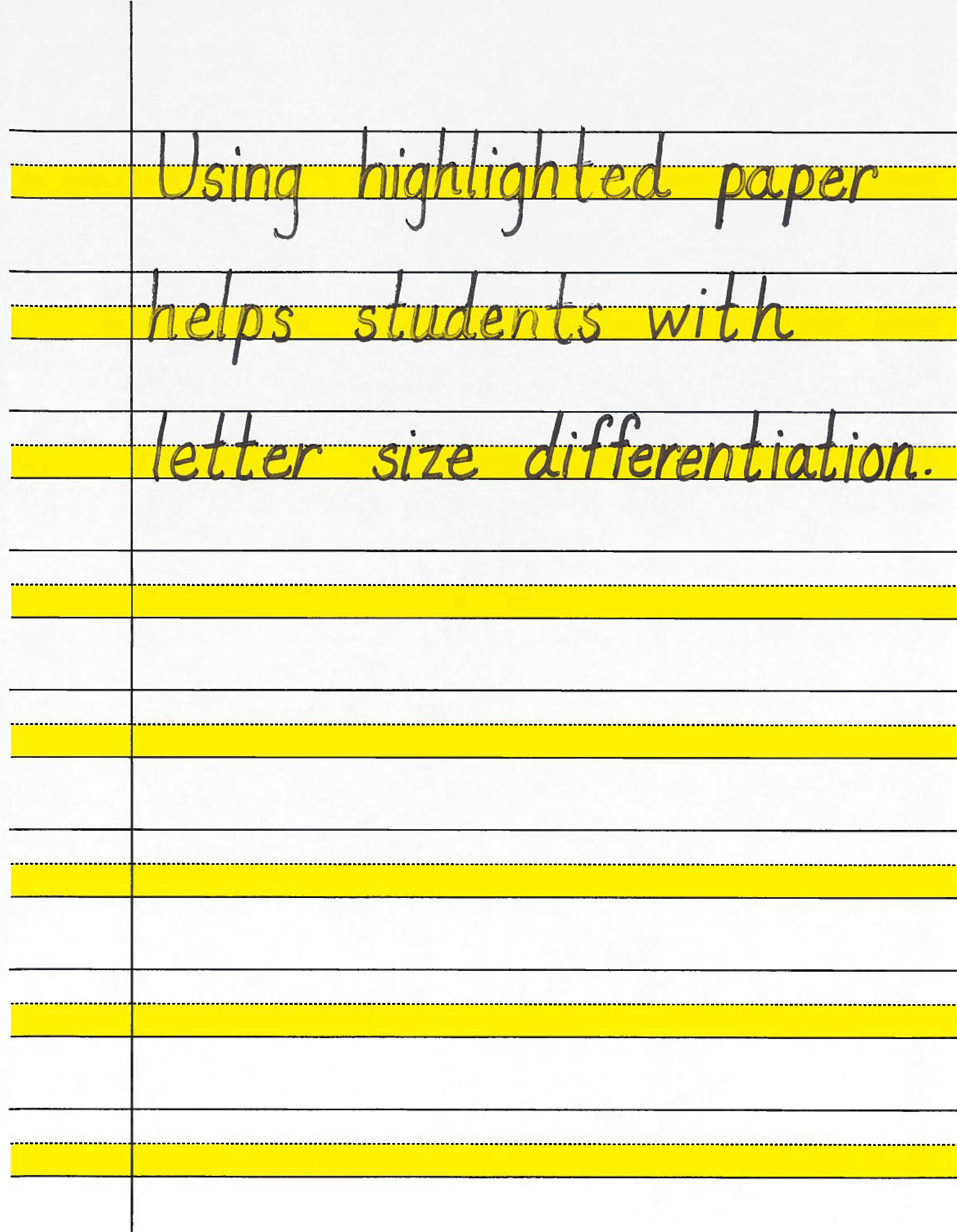
This next genius idea (source) helps kids practice writing their letters the right size. It really helps younger students see what space should be used for lower case vs. upper case letters. This would be an awesome activity for kindergarten or first grade, even if you only did it once. You can buy pre-highlighted paper or just make your own using a highlighter. Making a bunch of these pages yourself is totally doable, but I recommend putting on a movie while you do it! 😉

25 Parent-Teacher Conference Tips for New Teachers

Parent Teacher Conferences TIPS- stickerParent teacher conferences (PTC) can be intimidating for new teachers. Here are 25 tips to help you survive PTC (and get the most out of it!):

Before PTC:

  • In the weeks prior to PTC Collect samples of student work, record impressions of student progress and behavior.
  • Plan how students will be involved in the conference. If students are presenting work or progress, give them a chance to look over materials and prepare.
  • Contact parents (note, email, etc.) telling them you’re looking forward to meeting them to discuss their child’s progress.
  • Come up with a system for parents to easily schedule a time to see you. (Some schools run their PTC differently, so check with your principal if you’re unsure.)
  • A day before PTC, remind parents about the conference!
  • For parents who are unable to physically attend, arrange for a make-up conference. For tech-savvy parents, consider scheduling a virtual face-to-face meeting using Skype or FaceTime.
  • Brainstorm questions parents might ask and plan your answers. Think about ways parents support their child’s learning outside the classroom. Create a list of educational resources (websites and apps, special programs, books, etc.), then highlight specific ones that are a good fit for each student.
  • If there’s a specific conference you’d like another staff member (your principal, special education teacher, school psychologist, translator, etc.) to be a part of, let them know ahead of time.
  • Look ahead in your schedule for times when you can meet/talk with parents who need additional time with you. Be prepared to suggest these times if a conference goes over time.
  • Bring a notebook or something to write down a post-PTC to-do list (things you’ll need to check on, things to implement with specific students, etc.)
  • Pack snacks for conference days! Bring plenty of water and a non-messy snack to help give you energy. PTC can go fast, but you’ve got a whole class to do, so be prepared!

During PTC:

  • Start and end on time. It shows respect for everyone and will help make sure you’re not there until crazy late.
  • Share a quick agenda at the start of each conference so parents know what you will cover and what the general timing of the conference.
  • Listen to parents! They usually know their kid really well and may have some valuable insight for you!
  • Ask parents how they feel the school year is going and how they feel their child is doing.
  • Be positive. Share several specific examples of the child’s strengths, successful performance on projects and behavior.
  • Share true concerns. Choose one or two opportunities for improvement ties to age appropriate skills and standards. Seek feedback from the parent (and student, if present) to form a plan.
  • Don’t be afraid to ask questions! “Is there anything you think I should know that would help me serve your child better?”
  • Without being nosy, ask parents to keep you informed about home/family situations can affect their child’s learning and school work (e.g. family illness, divorce, job loss).
  • Invite parents to participate! Parents are a great resource with a wide range of experiences and skills. When parents participate in their child’s education, it shows their children that they value education (which helps lead to student success).  Plan ways for parents to participate both at school and from home.
  • Keep a count-down timer handy with a gentle alert 5 or 3 minutes prior to the conference end time.
  • Suggest a time to continue the conference if you start to go over time. Politely assure parents that you are very interested in discussing the issue further, but that you need to meet with the next family.
  • Thank parents for attending and be genuine about it. Without their support, students in their class would have a really tough time succeeding!
    Give parents a small sheet with your contact information on it (and any other important resources, like school website, class blog, etc.). This will ensure continued communication.

After PTC:

  • Follow through on any action items you discussed with parents (check your to-do list). Let them know the outcome.
  • Tell your principal or administrator any concerns you have regarding the conference.
  • (Bonus tip: BREATHE! and congratulate yourself and your fellow teachers for surviving! Take yourself out to dinner or take a warm bubble bath. You deserve it!)

For administrator looking to give their faculty some tips and ideas, here’s a great 8 page printable packet from the Harvard Family Research Project or a 3 page printable packet from Washoe County School District (NV).

Great Anchor Charts

Anchor charts are a staple in any elementary school classroom. Here are some truly inspired ones:

Group work expectations anchor chart


Ways to compare fractions anchor chart


Quadrilaterals anchor chart

The Secret Way to De-clutter your Classroom!

(I wrote about this idea a while ago, but I’ve made some signs to help you execute it, so here’s the idea again…) This idea is PURE GENIUS! I learned this trick from my mentor teacher during student teaching (way back in the day). Designate a tote or box for a super secret purpose: a secret recycle bin! Students don’t work as hard when they know their teacher isn’t going to look at their paper. So use this bin to collect papers you don’t need to look at, but still want kids to work hard on. At the end of the day when all the students are gone, you can recycle the paperwork and keep your students’ desks clutter free!

P1050972

The picture above is from a lower grade classroom that doesn’t have any real turn in bins. I suggested this idea to the teacher and she said it works so well, she’s gotten other teachers at her school to do this trick! She just calls the secret bin the “turn in bin.” But if you have a real turn in bin (for work you actually want to look at, grade, etc.), consider naming this bin the “big turn in bin” or something else to distinguish it from your other trays/bins. I’ve made some signs (1/3 sheet size) for you to print off and label your tote with if you’d like. Your choice of chevron or polka dots.

Turn In Bin signs STICKER


Click here: Turn In Bin signs PDF

Brain Break: The Little Chick Cheep!

The Little Chick Cheep stickerI first heard this song in Spanish, and it CRACKED ME UP! It’s an international sensation, and it’s called “The Little Chick Cheep” (in English). It’s similar to the Old McDonald song in that it uses animal sounds, but it uses sounds of a hen, a rooster, a turkey, a pigeon, a cat, a dog, a goat, a sheep, a cow and a bull (teaching onomatopoeia!). It would make a great brain break, since it’s only 2:47 minutes long and kids everywhere LOVE it! Have your class make up actions to it! You could even use the animals as characters in a shared writing, to teach dialogue, etc. So without further ado, I give you the Little Chick Cheep!

(I kept trying to embed the video, but it wouldn’t show up right, so click here to see the video on YouTube. Sorry!)

Here’s some more information about the song.

Awesome Classroom Ideas!

I absolutely LOVE Pinterest. It’s one of my favorite productive diversions. Here are some cool elementary education ideas I’ve seen recently…

Awesome way to help kids practice tying shoes! (source)

Ticket Out the Door! Have students write their answer to a given problem as they leave the classroom each day. Motivational, and a good way to check who did it and who did not. (source)

Turn in basket sheet reminds students what’s required before they turn it in, and students can’t “peek” at papers turned in before theirs. (source)

Last 20 days of school, each balloon has a special activity. Everyday you pop one balloon to find out what it is! (For example, sit wherever you want for the day. (source)

Classroom Rules Poster – Owl (DIY)

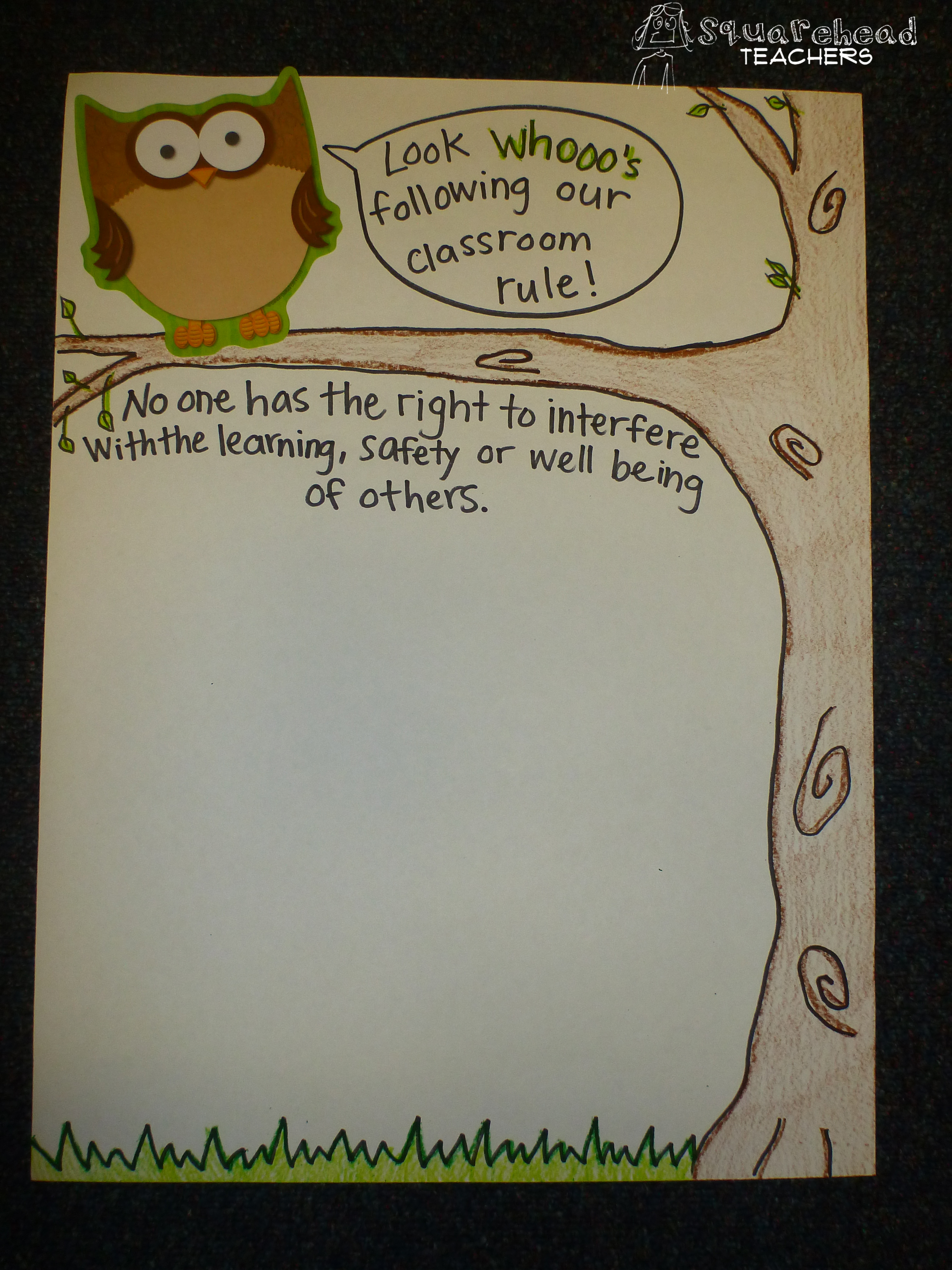
Owls are pretty trendy these days. So when I saw a cute owl-shaped note pad at the dollar store, I just had to buy it (with plans to work it into my classroom somehow). Here’s the poster I came up with (pretty proud of my DIY project!):

owl poster

Our classroom rule is “no one has the right to interfere with the learning, safety or well being of others.” Each student will sign the poster and we’ll put it up on the wall so everyone will remember our classroom behavior expectations.