
As far as educational worksheets go, I’m really picky with what I’ll spend money on. I searched and searched for a number of the day packet I liked, but I couldn’t find any that I was completely jazzed about (or was willing to pay the listed price). So I made my own. They’re aligned with the Common Core (for example, 2nd grade works on “100 more than” and “100 less than”) and best of all, they’re FREE!
Click here for the collection: number of the day collection

4th worksheet in the collection
* Be sure you know what’s on each worksheet before choosing a number for the day. Some worksheets ask for “100 less than” and it would confuse younger grades if the number of the day was 17.
* The PDF presents the pages in order of difficulty, starting with the easiest. I didn’t number them, because I was afraid a student would think the worksheet number was the number of the day. I suggest printing them all off and labeling them with a sticky tab so you know what order they go in.
*Number 6 and 7 aren’t all that different. The only difference is one question clearly asks for multiplication, where as the previous 5 worksheets allow the option for repeated addition (double or triple the number).
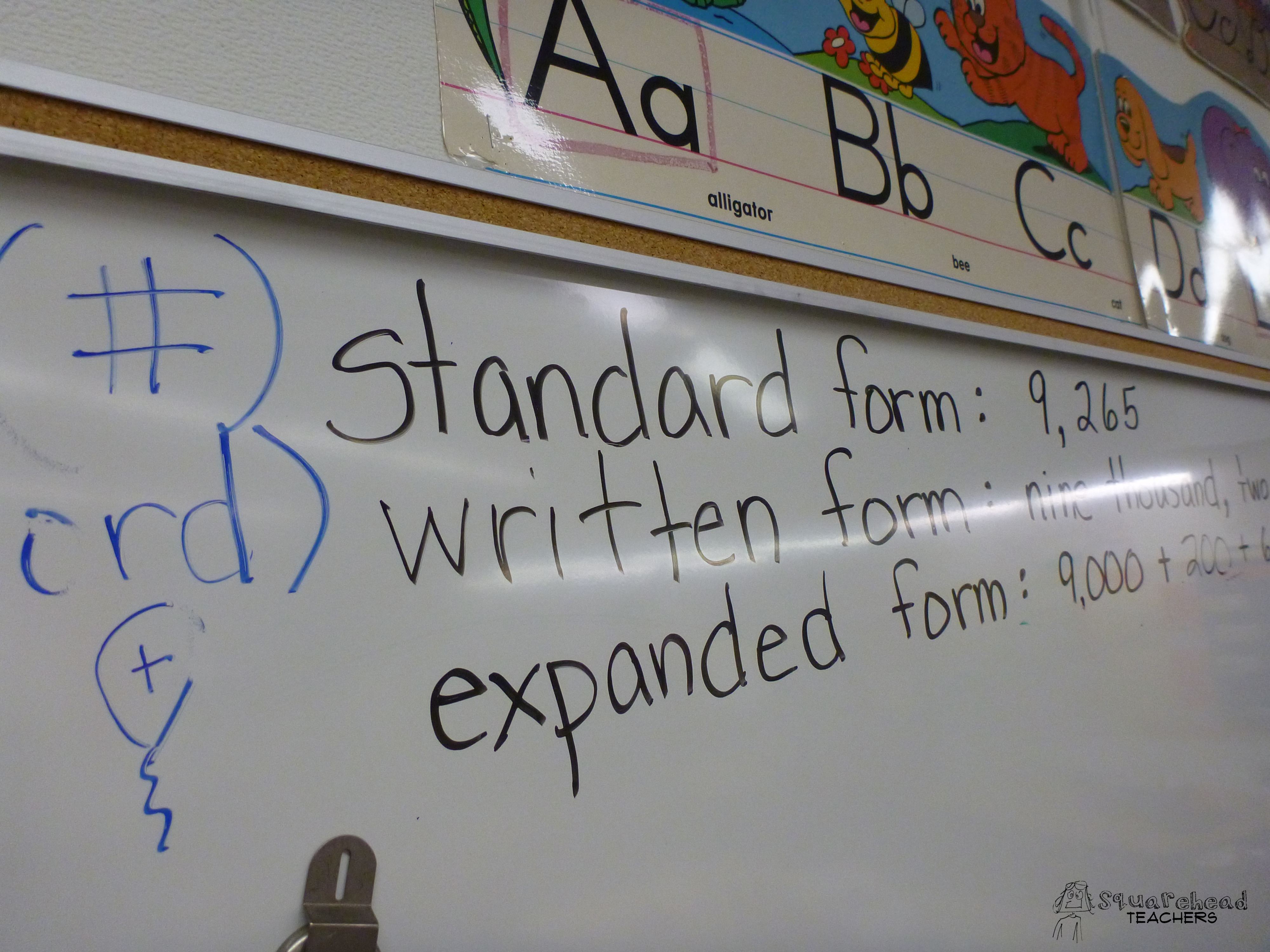
I’ve also seen teachers do a number of the day on the whiteboard to help reinforce it even more:

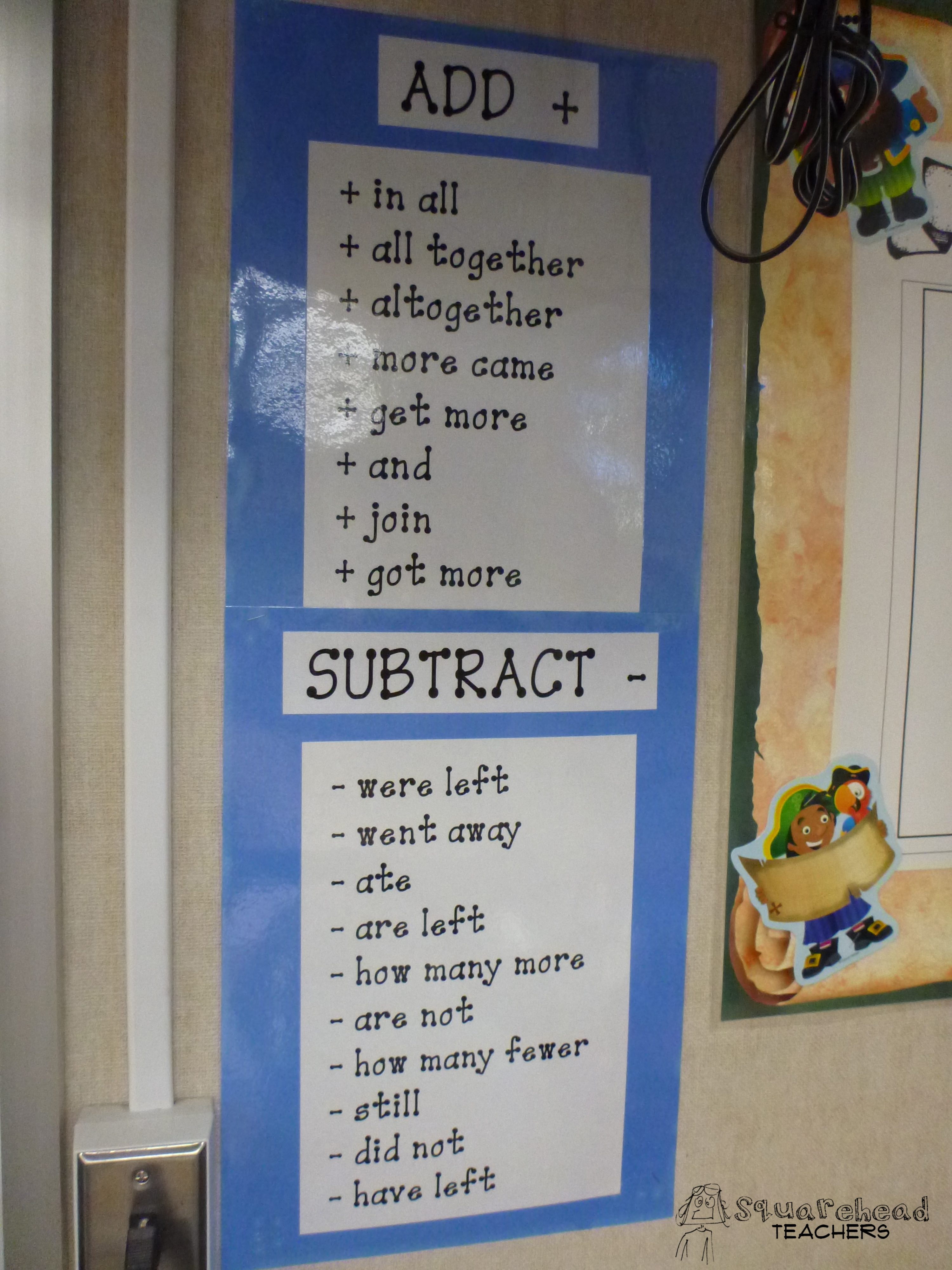

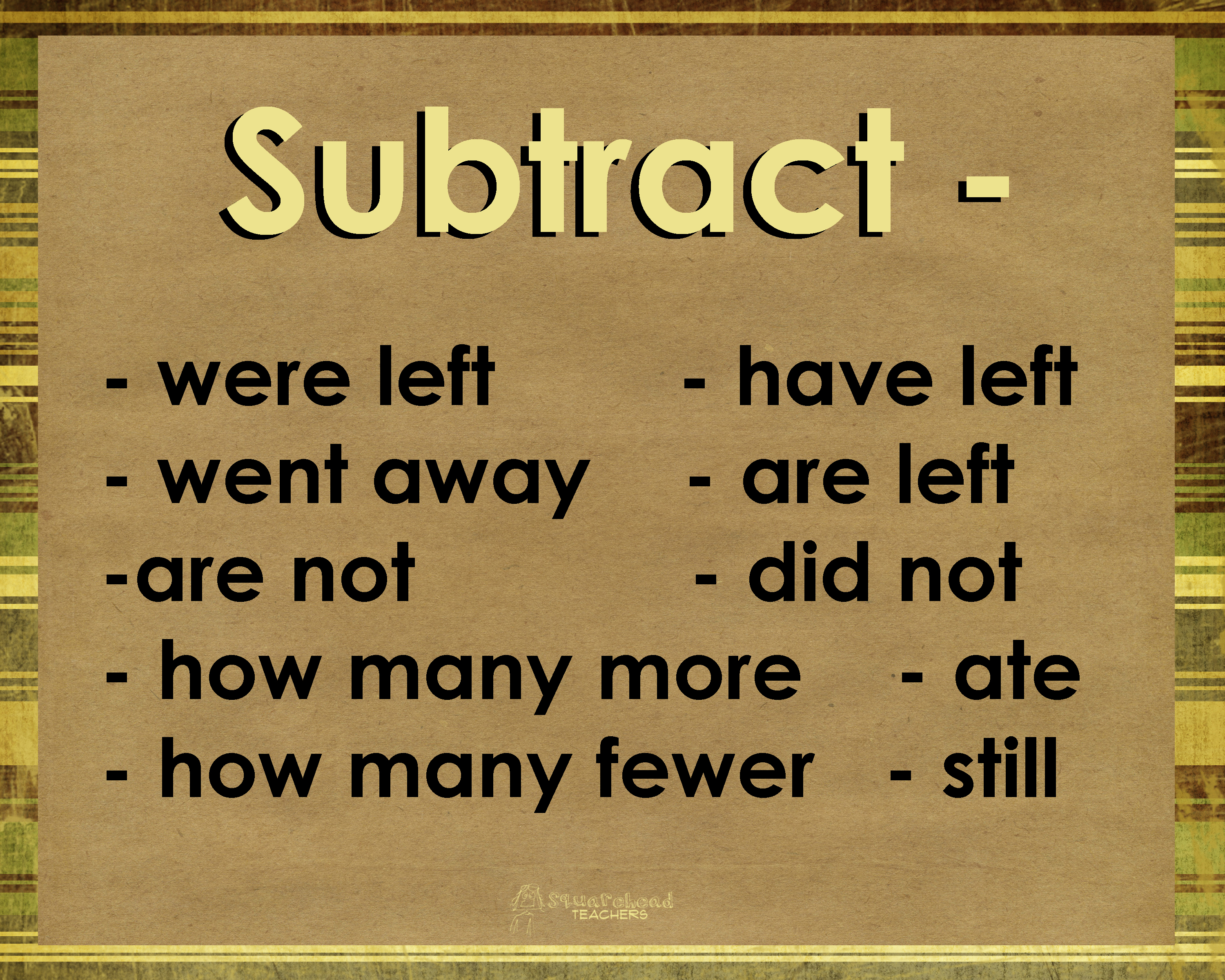

 When I first heard about this article, I was amazed. What? Not teach kids to memorize basic math facts like the teacher did when I was a kid?! With the timed tests and everything? This article, “Strategies for Basic-Facts Instruction” by Andrew M. Isaacs and William M. Carroll, is an excellent article that discusses what teachers really need to be focusing on when teaching math facts. What really makes learning math facts effective? The author argues that rote memorization is much less effective in teaching mathematics, and why a strategy-based approach should be used. Isaacs and Carroll conclude that “a strategies-based approach {to teaching math facts} builds students’ understanding and confidence. De-emphasizing rote memorization encourages students to use their common sense in mathematics, thus supporting concept development.”


 Squarehead Teachers
