After you teach your kids the states and capitals (using the “Fifty Nifty States” song!?), you’re going to need a quiz. Or a practice page to make sure your kids can spell everything correctly. Either way, it’s pretty handy! The printable has two versions of the page to give students (one with the states listed and one with the capitals listed) and an answer key.
Learning about clouds in elementary school is always fun. At minimum, it’s an excuse to go outside! Here’s my really simple graphic organizer to teach the science basics of clouds. There’s a space for some words about each type and an illustration. You can also glue cotton balls in that section instead. Shape/pull the cotton ball to match each type.
CHIP stands for “current homework and important papers.”
One pocket is for current homework that students have been assigned. The other pocket is for important papers (reference sheets that we use frequently, reading passages that we are working on, group work info, etc.). Nothing else goes in this folder so that it doesn’t get cluttered. I use the boomerang folder for assignments that have been graded and papers for their parents and pretty much anything that is in their take home mailbox. This system has been helpful in keeping my students organized.
Click here to see the full-size PDF: chip-folder-cover-pdf.
About the author: Lauralee specializes in dual immersion (English/Spanish) and math education. She currently teaches sixth grade. She enjoys travelling and spending time with family.
I recently found this worksheet I made forever ago. It worked well with basic graphing. . Have the kids color and count each shape. Then create a graph based on the number of times each shape appears. It has worked well to start with a page like this where the graph structure is there and they just have to fill in the grid. Once we get good at this kind, I start having the kids make the graph structure themselves. Sometimes I just cover the bottom half of the paper before I run copies. Then the students have to make the entire graph themselves. Easy-peasy!
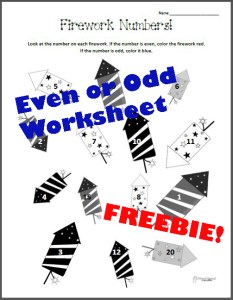
Whenever we have a family gathering (like Fourth of July that’s coming up!), I like to have something for the kids to do. Whether it’s a craft, new game, something to color or an educational page worth a candy, I don’t feel prepared unless I have something planned in case they don’t find something to entertain themselves. Check out this page. It’s super simple: just color the fireworks based on if they’re even or odd.
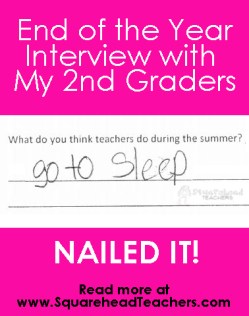
This year, I conducted “interviews” with my second grade class (ages 8-9). I gave them 5 simple questions to respond to. The questions were:
What makes a teacher cool?
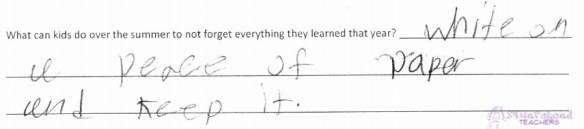
What can kids do over the summer to not forget everything they learned that year?
If you could change one thing about school, what would it be?
What advice would you give to kids who will be in second grade next year?
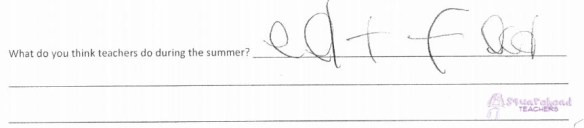
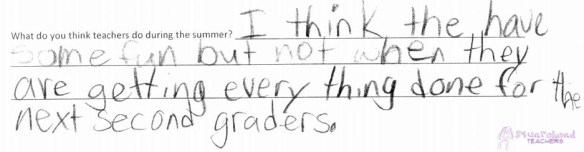
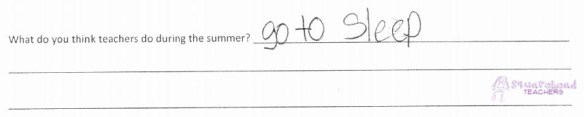
What do you think teachers do during the summer?
Here is the PDF version you can use for your class: End of the Year Interview. (Just change the fourth question to say whatever grade you will teach next year.)
Here are some of my favorite responses:
Question #1: What makes a teacher cool?
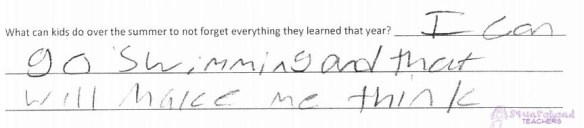
Question #2: What can kids do over the summer to not forget everything they learned that year?
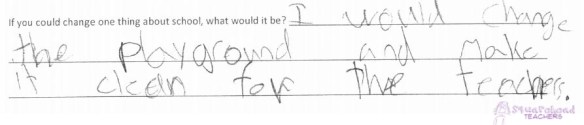
Question #3: If you could change one thing about school, what would it be?
Obviously that’s why teachers don’t play on the playground themselves – it’s not clean enough? 😉
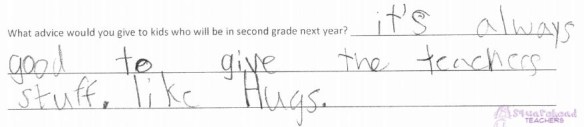
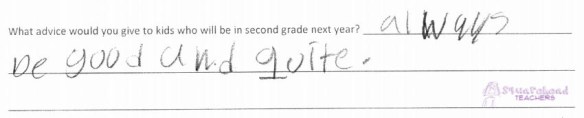
Question #4: What advice would you give to kids who will be in second grade next year?
True, fun is not optional.
Question #5: What do you think teachers do during the summer?
A friend of mine plays patriotic songs in her classroom all year long. After all, appreciation for your country shouldn’t just happen on holidays. Whether it’s during clean up time, line up time or as a reward, her kids LOVE LOVE LOVE hearing these songs! Most of the kids have even learned the words too! How great would it be if the rising generation could regain the fire of patriotism of the past?!
Here’s her list of songs/video links to help get you started:
A Salute to all 5 military branches (Army, Navy, Marines, Air Force & Coast Guard)
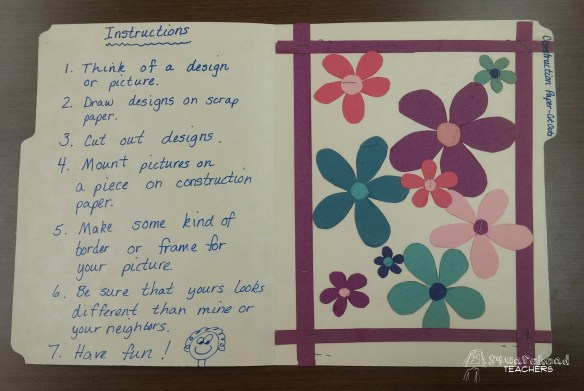
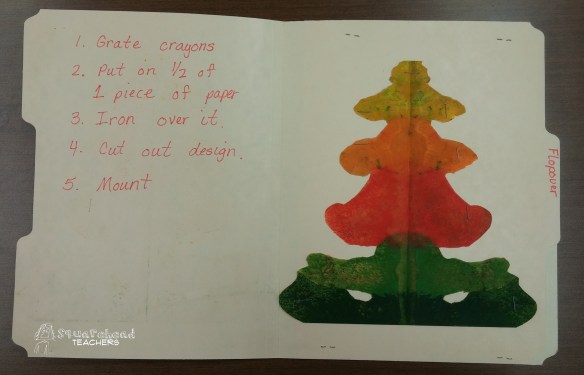
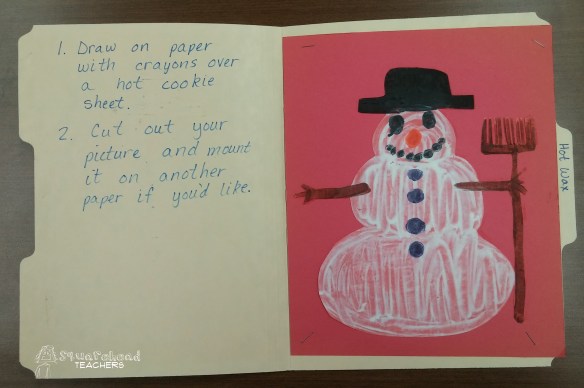
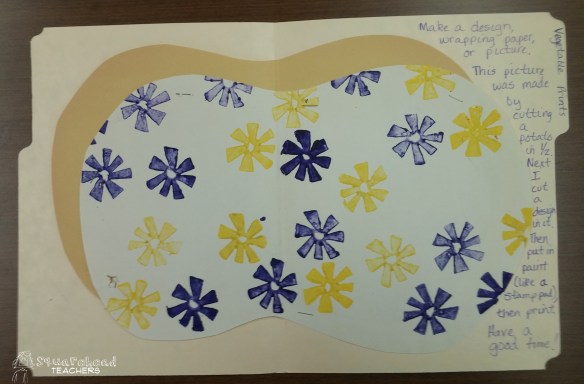
Another gem I found in my mom’s old teaching files were these art center folders. I realize that teachers nowadays don’t have time for an art center every day (or can’t use some of the tools needed for these projects), but they’re interesting ideas that you could use as springboards for projects during art or at home with kids. I only have the photos; I don’t have more detailed directions than what’s in the photo.

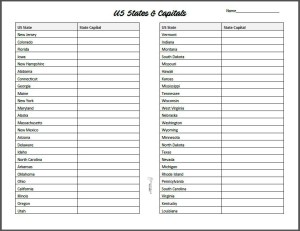 After you teach your kids the states and capitals (using the “Fifty Nifty States” song!?), you’re going to need a quiz. Or a practice page to make sure your kids can spell everything correctly. Either way, it’s pretty handy! The printable has two versions of the page to give students (one with the states listed and one with the capitals listed) and an answer key.
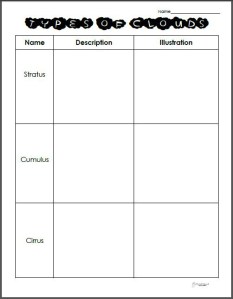 Learning about clouds in elementary school is always fun. At minimum, it’s an excuse to go outside! Here’s my really simple graphic organizer to teach the science basics of clouds. There’s a space for some words about each type and an illustration. You can also glue cotton balls in that section instead. Shape/pull the cotton ball to match each type.
 CHIP stands for “current homework and important papers.”
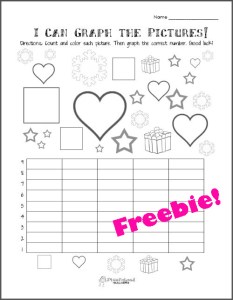 I recently found this worksheet I made forever ago. It worked well with basic graphing. . Have the kids color and count each shape. Then create a graph based on the number of times each shape appears. It has worked well to start with a page like this where the graph structure is there and they just have to fill in the grid. Once we get good at this kind, I start having the kids make the graph structure themselves. Sometimes I just cover the bottom half of the paper before I run copies. Then the students have to make the entire graph themselves. Easy-peasy!
 Whenever we have a family gathering (like Fourth of July that’s coming up!), I like to have something for the kids to do. Whether it’s a craft, new game, something to color or an educational page worth a candy, I don’t feel prepared unless I have something planned in case they don’t find something to entertain themselves. Check out this page. It’s super simple: just color the fireworks based on if they’re even or odd.
 This year, I conducted “interviews” with my second grade class (ages 8-9). I gave them 5 simple questions to respond to. The questions were: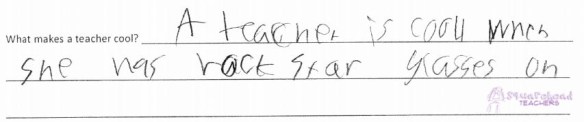






 A friend of mine plays patriotic songs in her classroom all year long. After all, appreciation for your country shouldn’t just happen on holidays. Whether it’s during clean up time, line up time or as a reward, her kids LOVE LOVE LOVE hearing these songs! Most of the kids have even learned the words too! How great would it be if the rising generation could regain the fire of patriotism of the past?!
 (Adult supervision recommended)
 (Adult supervision recommended)
 (Adult supervision recommended)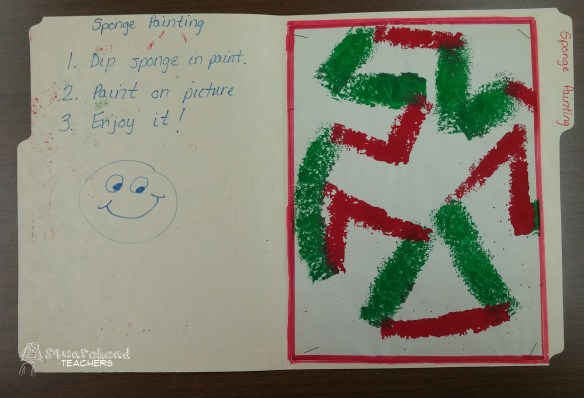
 Squarehead Teachers