Adjectives Activity Collection

adjectives activityI love adjectives. They’re one of my favorite parts of language arts to teach. But you can’t spend forever on them (or on anything these days), so you’ve got to find an effective activity to teach adjectives without taking too much precious time (to prepare or do in class). Here’s one idea:

As a class, choose something to describe (cats are a good place to start). Discuss what cats look, smell, sound, taste and feel like. (Your kids will get a kick out of “what do cats taste like?”) Then choose a second thing to describe (we chose a hamburger). After discussing how adjectives describe something in a variety of ways, it’s time to let your students try one on their own.

This packet (Adjectives activity PDF) has a picture of something for kids to describe. Let them color in the picture so they can use color words in their description. Then students write down as many adjectives (look, taste, smell, sound, and feel) as they can about the picture. Then they use the blank lines to write sentences about the picture using the adjectives they brainstormed. I have my students circle the adjectives in the sentence. Sometimes I let a few students put their picture under the document camera and read one of their sentences to the class. There are multiple pages in the packet, so once you’ve done this activity as a whole group, you can use the rest as seat work activities to reinforce the concept.

Keep browsing my blog for more fun free worksheets and activities for elementary school kids! Thanks for stopping by!

ABC Fitness Activities for Kids

ABCs fitness activities stickerKids need physical fitness incorporated into their everyday activities. I recently saw an idea to come up with a physical activity for each letter of the alphabet. For older kids, it might be fun to have them help you come up with ideas. Then when you need a quick break or an activity idea, look to your list and start checking them off. Soon you’ll have completed 26 + different physical activities! Here are some ideas to get you started:

Alphabet Exercises

– Act like a cat

– Bend at the knees, bike ride, balance beam (or walk on a curb)

– Chair pose, crab walk

– Dance, duck walk

– Elephant steps

F – Fly like a bird

– Gallop

H – Hugs, hop on one foot

– Itsy bitsy steps

J – Jump, jump squats

K – Kick

L – Leg lifts, leap frog

M – March

N – Noisy steps

O – Open and shut arms

P – Pop up, push ups

Q -Quiet hops, quick steps

R – Run, race, relay race

S -Side steps, shoot hoops, shuttle run

T – Turns, throw a ball

U – Under momma’s legs

V – Vacuum, V sits

W – Wiggles, wall sits

X – “X” jumping jacks

Y – Yoga (downward dog)

Z – Zig zag steps


Fair Isn’t Equal (7 Classroom Tips)

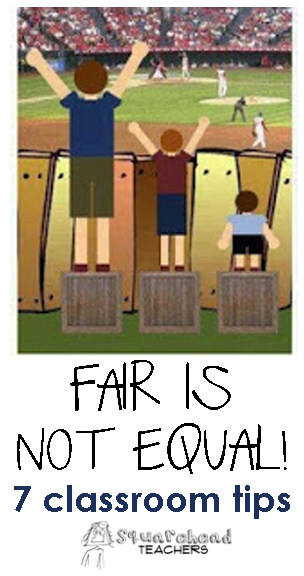
Fair is not equalHere are some excerpts from an article by Dr. Richard Curwin of David Yellin College describes how “fair” in a classroom doesn’t mean equal. He gives seven valuable tips for teachers. Click here for the original article.

There are two skills that separate great teachers from good ones. I explained that the first skill is the ability to reframe student behavior, to see it in new ways. Today I want to discuss the second skill: knowing how to treat students fairly by not treating them the same.

If you ask students what are the most important qualities they like in teachers, one of the universally top-mentioned is fairness. Teachers and schools strive to be fair and build programs and polices based on this value.

But what is fair? Many define it as treating everyone the same, but I would argue that doing so is the most unfair way to treat students. Students are not the same. They have different motivations for their choices, different needs, different causes for misbehavior and different goals.

Here’s how to put this concept into practice (*Read the original article for more detail on applying these ideas):

1. Everyone has the same rules.

2. Consequences are flexible.

3. Equal isn’t always fair.

4. Teach the concept of fair vs. equal to your class before implementing it.

5. Follow the basic tenets of great discipline.

6. Be willing to discuss your strategy with students.

7. Be willing to discuss your strategy with parents.

Being truly fair is harder and requires more work in the short run that just treating everyone the same. In the long run, it saves time and is more effective. And when it comes to treating everyone the same, every child deserves a lot better than that.

Tape and Canvas Art Project for Kids

I LOVE this tape and canvas art project for kids. And it turns out SO COOL! Click here for the tutorial.

Metrics Chart

This gives a couple basic measurement questions for kids ( involving length and perimeter) and a chart of the Metric System. It would be a good whole class activity to create a chart like this (in math journals, on an anchor chart, etc.).

Click on picture to enlarge.

Grammatical Poetry

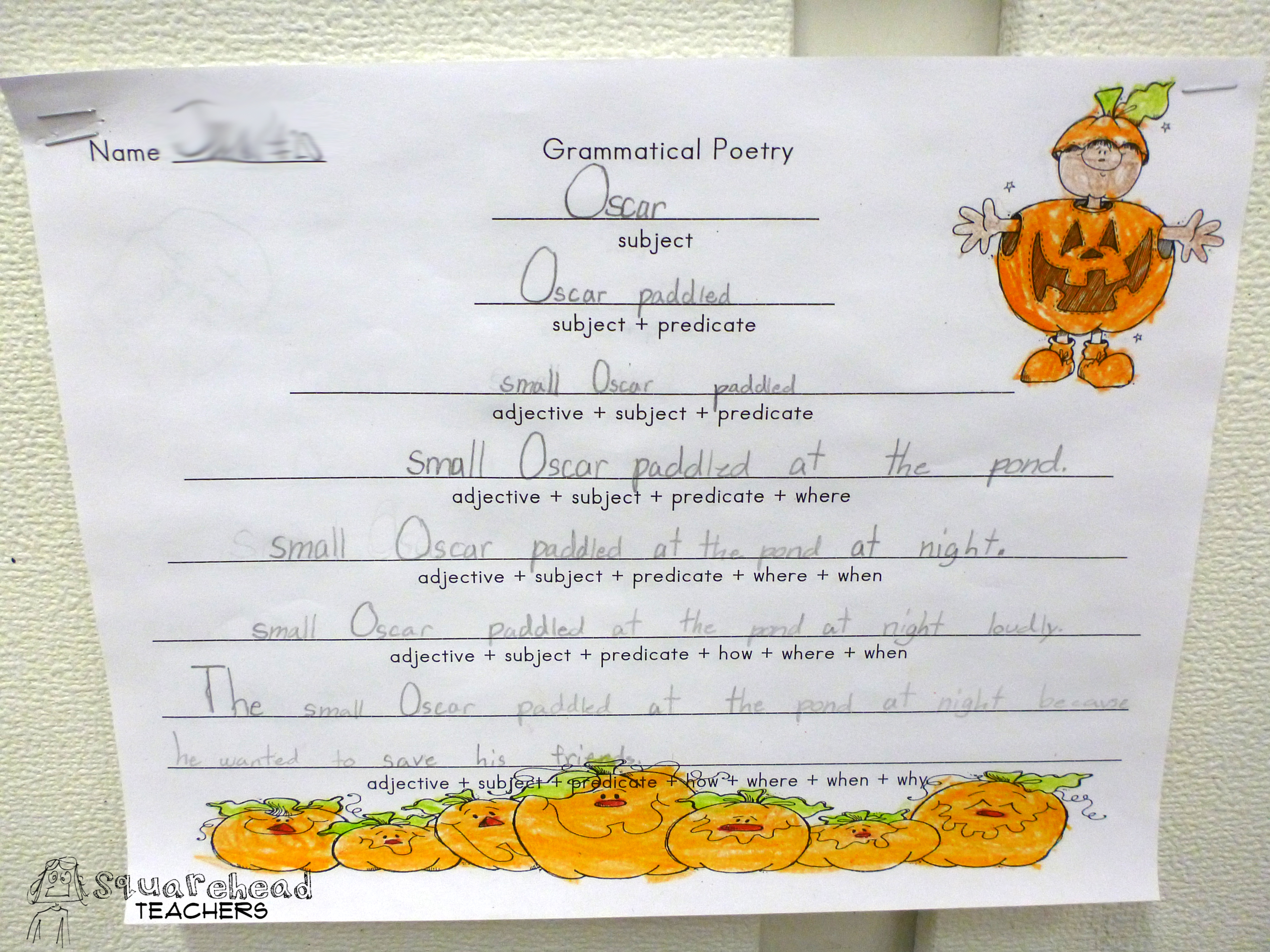
I fell in love with this idea instantly. It teaches kids the different parts of speech and lets them write poetry while they’re doing it! I made my own worksheet for you to download. Click here for the PDF: Grammatical PoetryP1030598

Make Your Own Visual Creative Writing Prompts

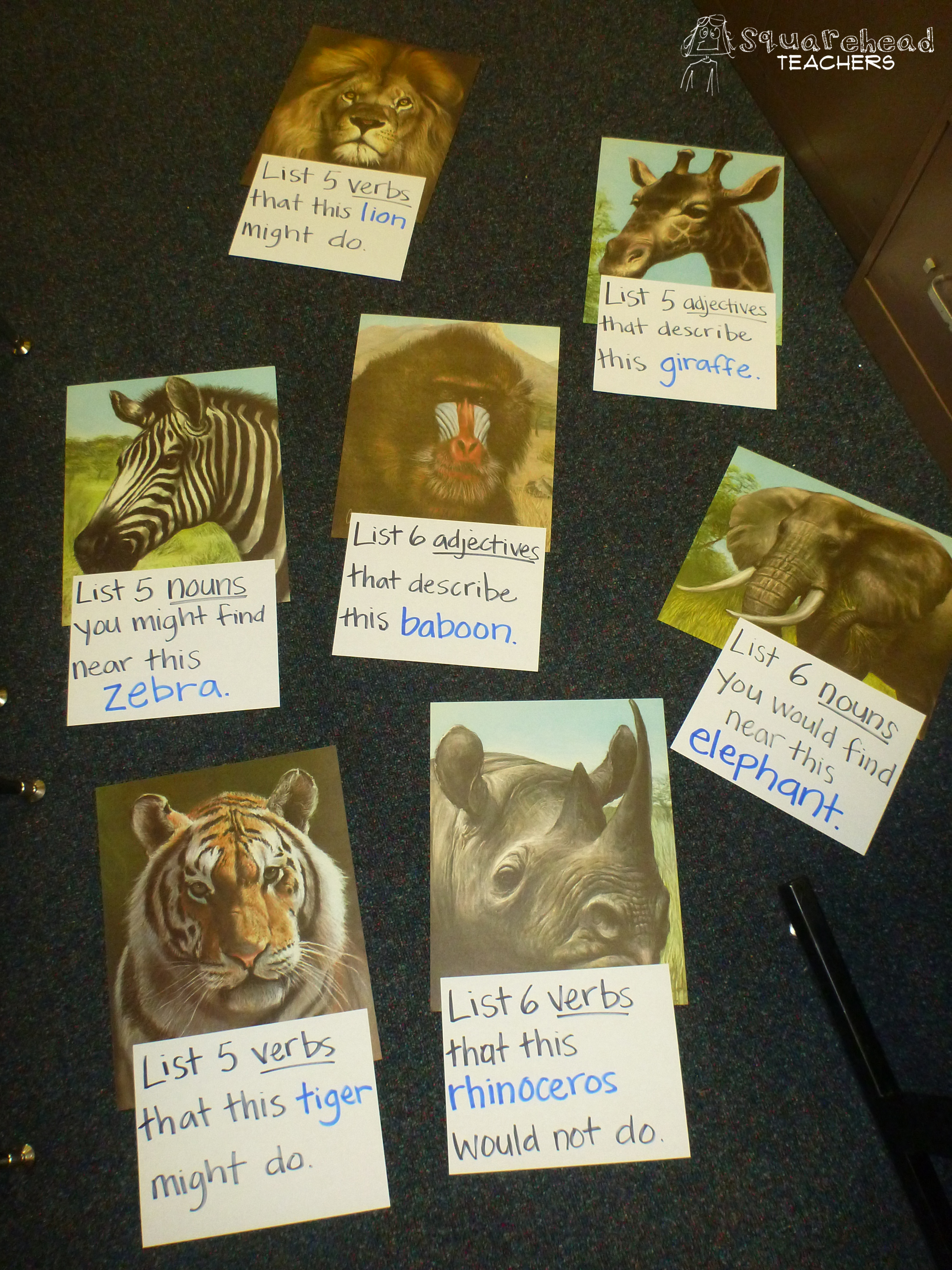
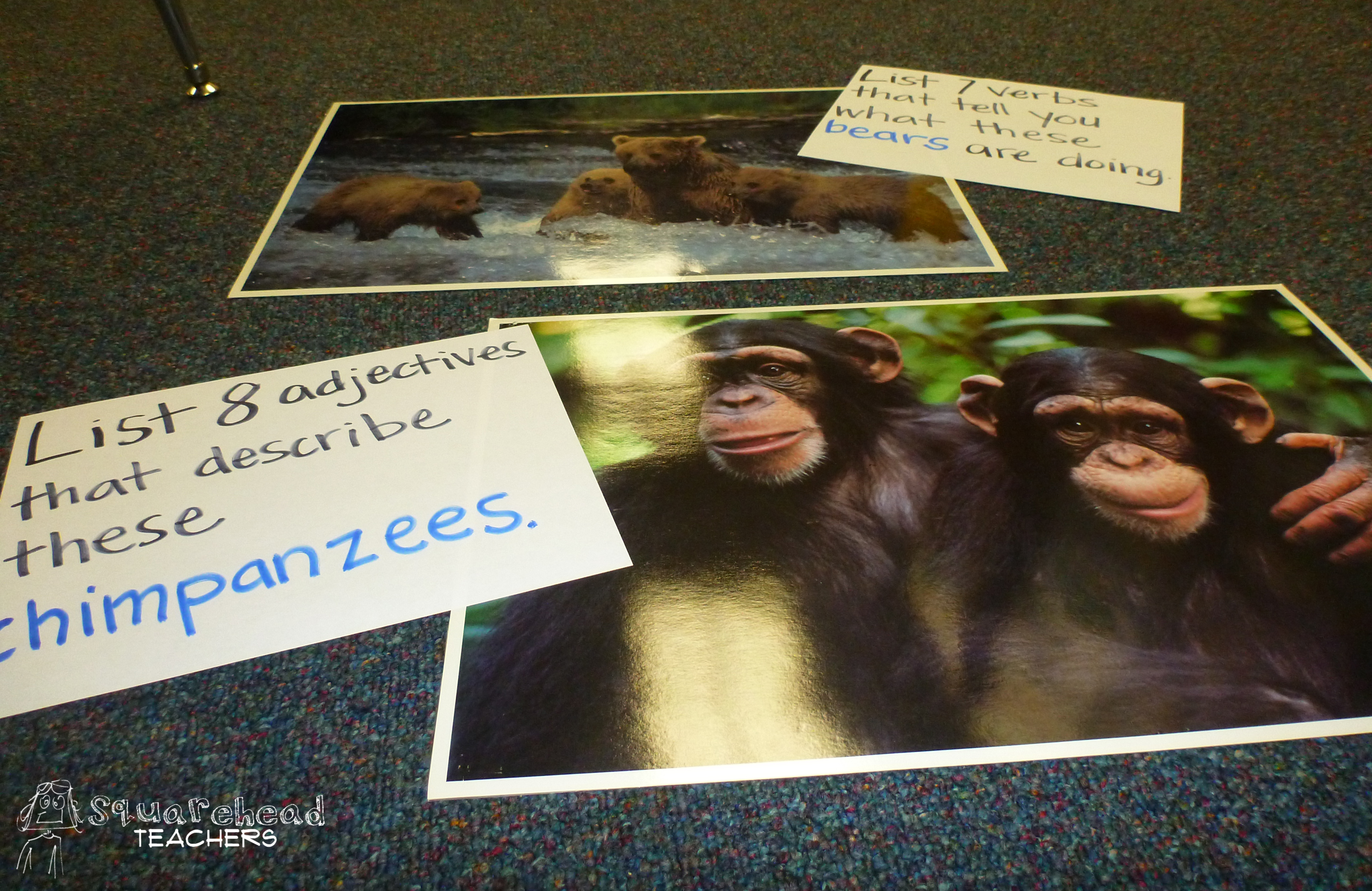
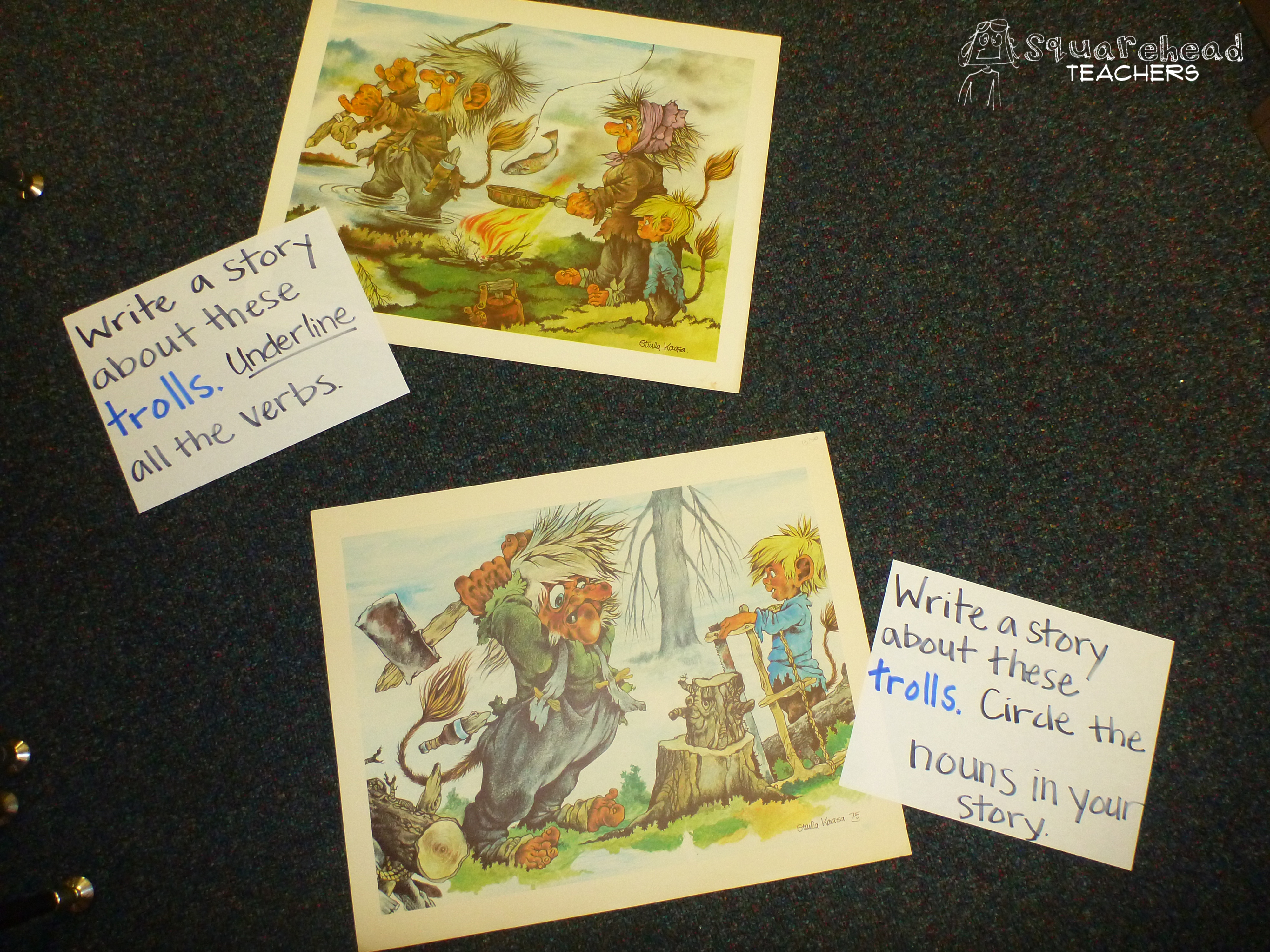
I was helping a fellow teacher go through her classroom and we found tons of interesting posters and pictures she’d collected over the years. It had been hard for her to incorporate everything into lessons, but she didn’t want to part with them. Here was our solution: use them as writing prompts! It took about 10 seconds per poster and we paper clipped each prompt to the poster so she could slap them on the board really quickly. We wrote each prompt by hand, but we could have easily just typed them. We wrote potentially new vocabulary words in a different color, so she could point it out to students if they needed help spelling, etc. These were a few of the many prompts we made:P1050833 P1050835 P1050837 P1050838

This same idea could be easily applied to a variety of ways. Use pictures of historical people, events and places to review social studies. Give a strange picture from a magazine to your child when they begin a car ride, and have them write down a certain number of nouns, verbs, or adjectives before the ride is over in order to earn a special something. But whatever you do, have fun with it!

Recycling Craft

Kids love to create things. Especially when they have a lot of random stuff to work with. One teacher brought in a bunch of recyclables (some parents had been collecting stuff for a week) and let the kids create whatever they wanted using things to be recycled. She also let the kids use googly eyes, markers, glue, etc. and limited each kid to making something that would fit in their backpack (so students could take it home). This art project was preceded by a discussion of what recycling was and how it benefited the environment. Fun fun fun!

P1050370


Click here for printable word strips to help in your discussion of recycling.