Wrinkled Hearts: Bully Prevention Lesson

Citizenship is crucial to the success of our society. But it’s not part of any standardized test, so sometimes it’s easy to skip over it. I absolutely loved this lesson plan by Character Education Partnership. This lesson, called “Wrinkle on my Heart,” teaches about empathy, taking responsibility for mistakes when they happen and learning from them, and thinking before you speak/act. It’s very simple, but effective, especially when the teacher posts the wrinkled heart somewhere in the classroom as a reminder. Check it out:

Wrinkle on My Heart

Salt Brook Elementary School

Overview

Engage students in a discussion of the power of their words.

Lesson Objectives

Students will learn about empathy.
Students will learn to take responsibility for their mistakes when they happen and to learn from them.
Students will learn to think before they speak and act.

Materials Needed

Red construction paper heart
Black marker

Procedures

Sit with the children and tell them the red construction paper heart represents the heart of a 5th grader (or another grade level). Ask, “How does it look?” Tell them to notice that it is a nice, big, red, happy heart. Say,” When you’re in 5th grade, many things happen each day – some good, some not-so-good. These not-so-good things can really hurt our heart.” Ask the students what someone could say or do to hurt their hearts. As a child gives an example of what could hurt a heart, put one fold in the heart.

Hurtful answers may include: Tease them, call them names, hit them, gossip about them behind their back, ditch them, tell secrets about them

Continue until you have folded the heart up. Then ask the children, “What have our hurtful words and actions done to our classmate’s heart?” Answers typically include destroyed it and broken it. Ask how students think this person feels. Discuss.

Ask students, “Is there anything we can say or do to fix this heart?” As children give an answer unfold one crease in the heart.

Helpful answers may include: Apologize, say something nice, give a compliment, invite them over to play or eat lunch with you, listen to them, talk to them, be a friend to them.

After the heart has unfolded, ask the children, “How did we do? Did we fix this heart?” Usually you’ll hear a yes and then “Well, no, because it’s still kind of wrinkled.” Allow them to discuss this.
Ask how this person feels now. Lead their discussion to the idea that although we have repaired the heart, the scars are still there. Even when we say we’re sorry, people still remember the hurtful things we did. Ask, “Is it ok for people to do this?” Discuss with them that we all make mistakes and sometimes say or do something hurtful that we didn’t mean. Ask, “What can we do to try to prevent saying or doing something hurtful to someone else?” Lead the discussion to the idea that we can think before we speak.

Write on the heart: No one has the right to put a wrinkle on someone else’s heart. Hang the heart in the classroom, therapy room, or send home as a visual reminder to children.

Teachers can review the lesson with students as needed by prompting them to look at the heart displayed in the classroom.

Assessment

Teachers can assess the activity through application of character education principles.

Credit

Erika Ledder, School Counselor, Salt Brook Elementary School
– – – – – – – – – – – – – – – – – – – – – – – – – – – – – – – – – – –
Here are some ideas to help keep this lesson alive in your classroom:
Still looking for more ideas like this? Here’s another idea.

ABC Fitness Activities for Kids

ABCs fitness activities stickerKids need physical fitness incorporated into their everyday activities. I recently saw an idea to come up with a physical activity for each letter of the alphabet. For older kids, it might be fun to have them help you come up with ideas. Then when you need a quick break or an activity idea, look to your list and start checking them off. Soon you’ll have completed 26 + different physical activities! Here are some ideas to get you started:

Alphabet Exercises

– Act like a cat

– Bend at the knees, bike ride, balance beam (or walk on a curb)

– Chair pose, crab walk

– Dance, duck walk

– Elephant steps

F – Fly like a bird

– Gallop

H – Hugs, hop on one foot

– Itsy bitsy steps

J – Jump, jump squats

K – Kick

L – Leg lifts, leap frog

M – March

N – Noisy steps

O – Open and shut arms

P – Pop up, push ups

Q -Quiet hops, quick steps

R – Run, race, relay race

S -Side steps, shoot hoops, shuttle run

T – Turns, throw a ball

U – Under momma’s legs

V – Vacuum, V sits

W – Wiggles, wall sits

X – “X” jumping jacks

Y – Yoga (downward dog)

Z – Zig zag steps


Tape and Canvas Art Project for Kids

I LOVE this tape and canvas art project for kids. And it turns out SO COOL! Click here for the tutorial.

Fiction vs. Nonfiction Anchor Chart

This language arts anchor chart seems so easy, yet so effective in displaying the differences between fiction and nonfiction. The teacher even included a picture of fiction vs. nonfiction to help younger learners the two. It could be a good assignment to have each student create a personal anchor chart like this, especially using pictures from old magazines, etc.

P1050903

Metrics Chart

This gives a couple basic measurement questions for kids ( involving length and perimeter) and a chart of the Metric System. It would be a good whole class activity to create a chart like this (in math journals, on an anchor chart, etc.).

Click on picture to enlarge.

Grammatical Poetry

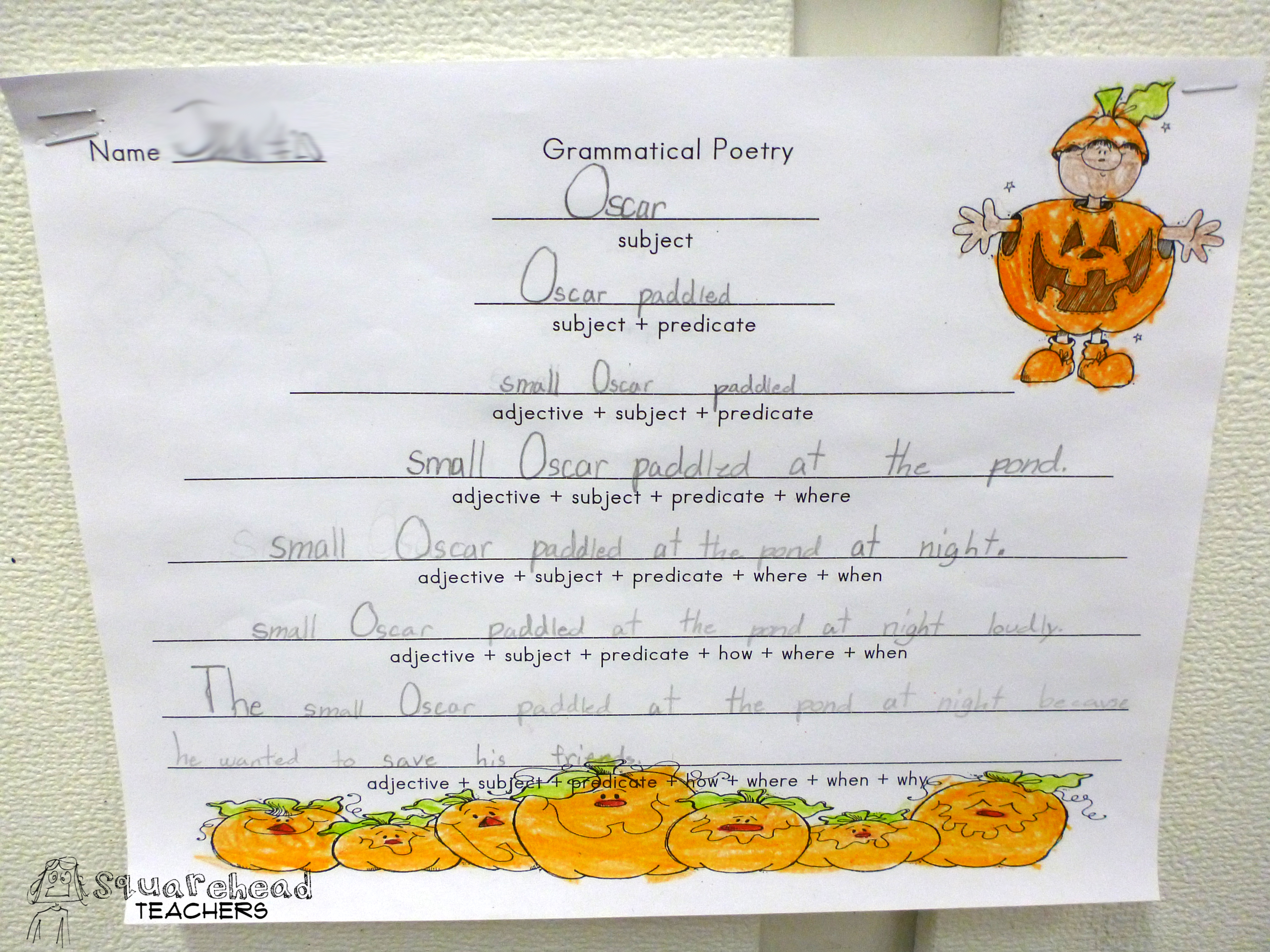
I fell in love with this idea instantly. It teaches kids the different parts of speech and lets them write poetry while they’re doing it! I made my own worksheet for you to download. Click here for the PDF: Grammatical PoetryP1030598

Make Your Own Visual Creative Writing Prompts

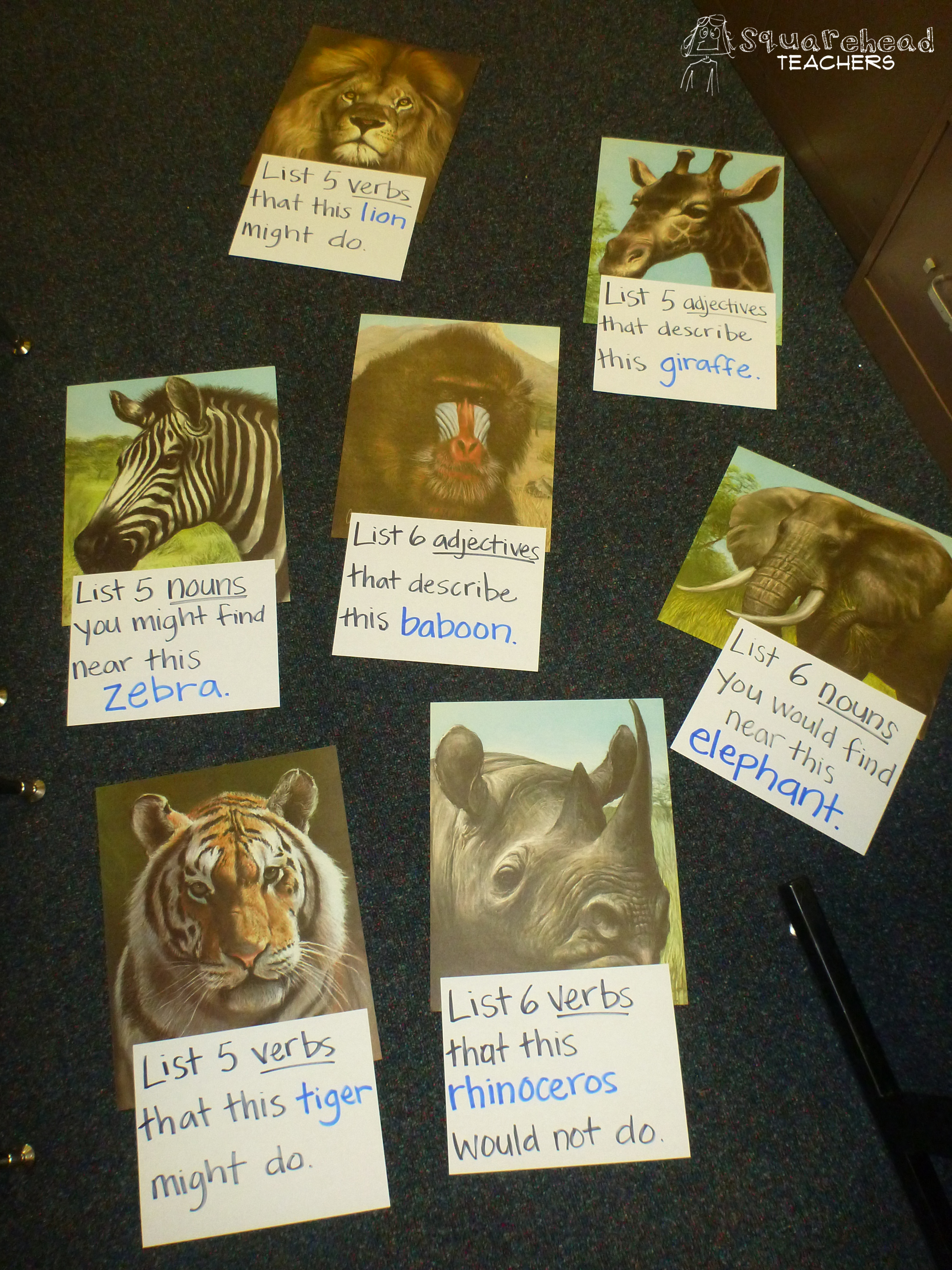
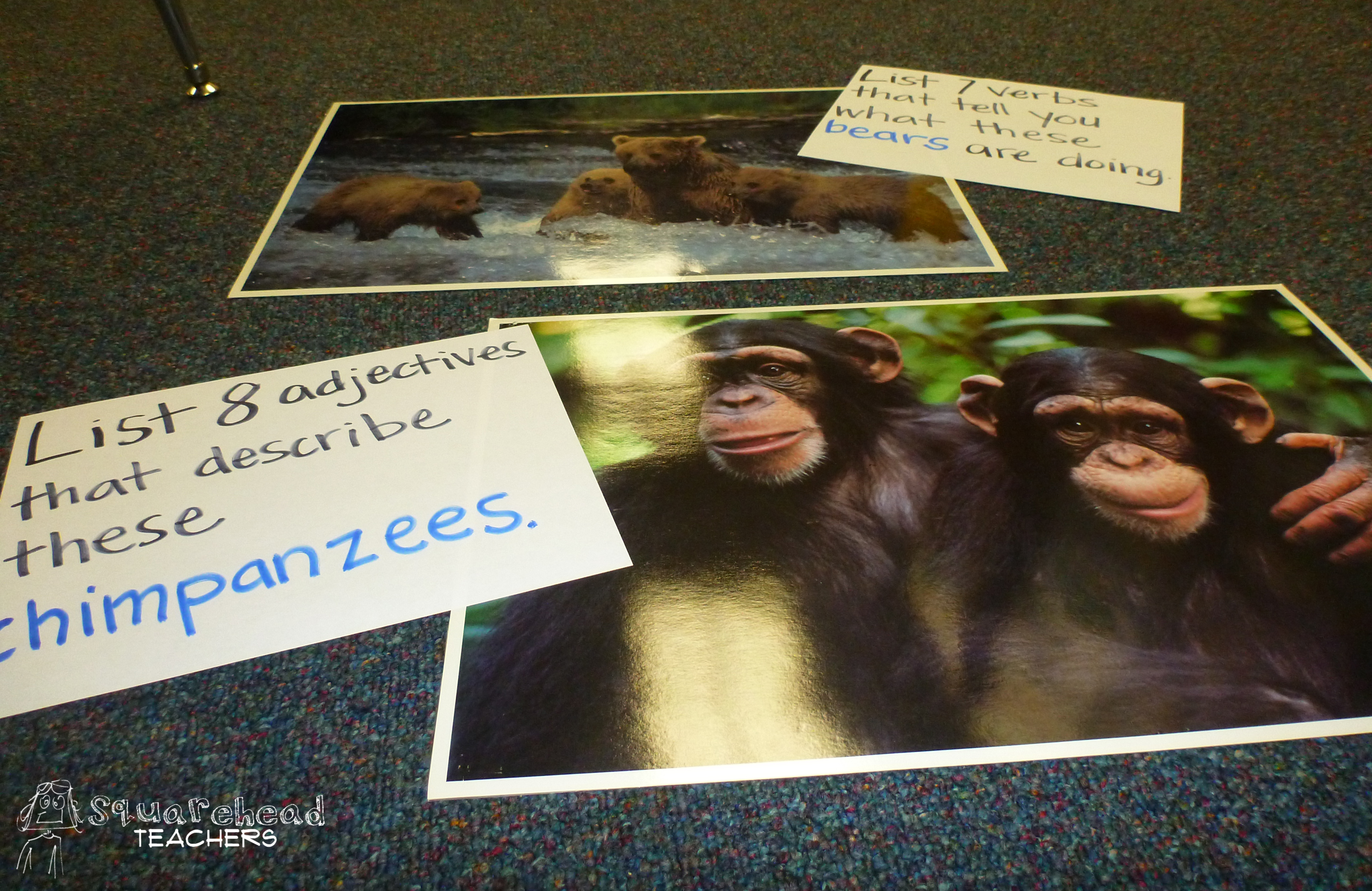
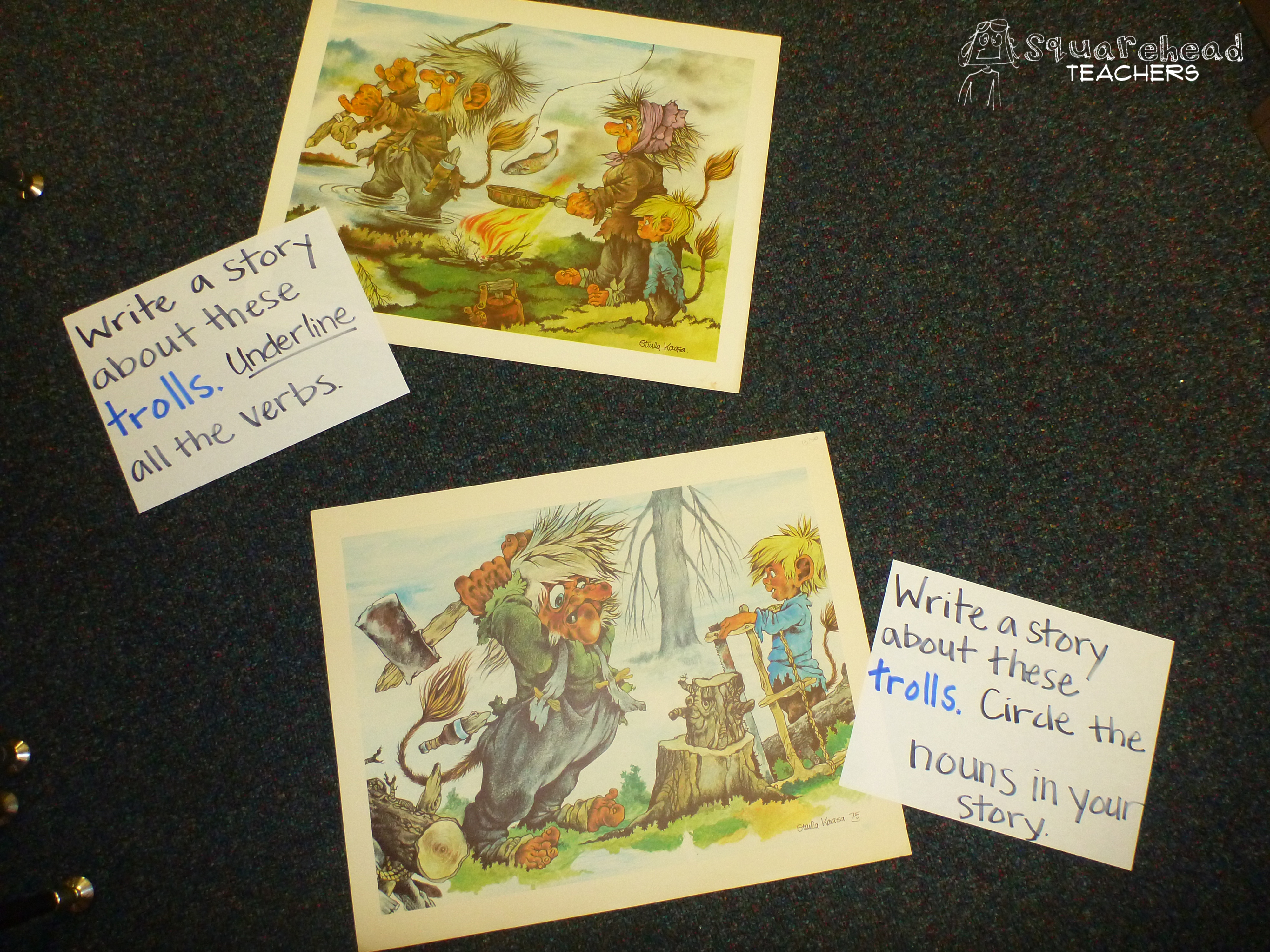
I was helping a fellow teacher go through her classroom and we found tons of interesting posters and pictures she’d collected over the years. It had been hard for her to incorporate everything into lessons, but she didn’t want to part with them. Here was our solution: use them as writing prompts! It took about 10 seconds per poster and we paper clipped each prompt to the poster so she could slap them on the board really quickly. We wrote each prompt by hand, but we could have easily just typed them. We wrote potentially new vocabulary words in a different color, so she could point it out to students if they needed help spelling, etc. These were a few of the many prompts we made:P1050833 P1050835 P1050837 P1050838

This same idea could be easily applied to a variety of ways. Use pictures of historical people, events and places to review social studies. Give a strange picture from a magazine to your child when they begin a car ride, and have them write down a certain number of nouns, verbs, or adjectives before the ride is over in order to earn a special something. But whatever you do, have fun with it!

Recycling Craft

Kids love to create things. Especially when they have a lot of random stuff to work with. One teacher brought in a bunch of recyclables (some parents had been collecting stuff for a week) and let the kids create whatever they wanted using things to be recycled. She also let the kids use googly eyes, markers, glue, etc. and limited each kid to making something that would fit in their backpack (so students could take it home). This art project was preceded by a discussion of what recycling was and how it benefited the environment. Fun fun fun!

P1050370


Click here for printable word strips to help in your discussion of recycling.