Simple Organizational Improvements For Your Classroom

1. Use multiple bins to collect work your students submit to you. This way, they’re already sorted and easier for you to grade! I use stackable paper trays to save space.P1030356


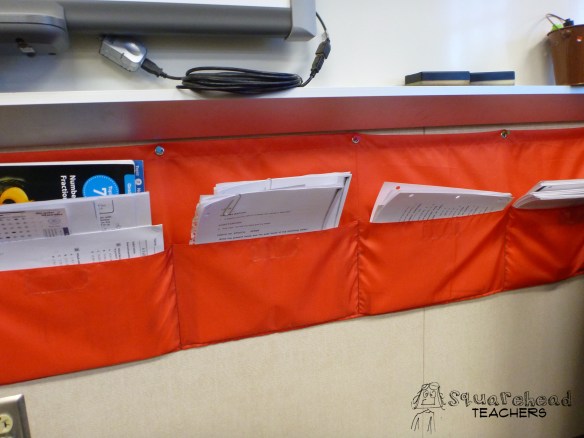
2. Place fabric pockets in the area where you teach from most. Then you can store commonly used papers, forms or reference materials for you to grab at a moments noticeP1030590.


3. I don’t know about you, but sharpening pencils is the bane of my existence! Designate two containers for pencil storage (one of broken pencils that need sharpened  and one for freshly sharpened pencils for kids to grab). I used to have one student be the pencil sharpener for the week.P1030599


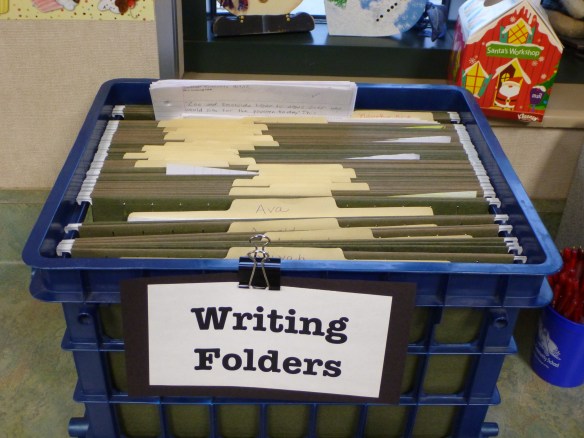
4.Collect important writing samples or projects in a bin. Give each student a file folder and collect important paperwork throughout the year. Then “all” you have to do at parent teacher conferences is grab the bin and hand over the work samples to proud parents.P1030699
 

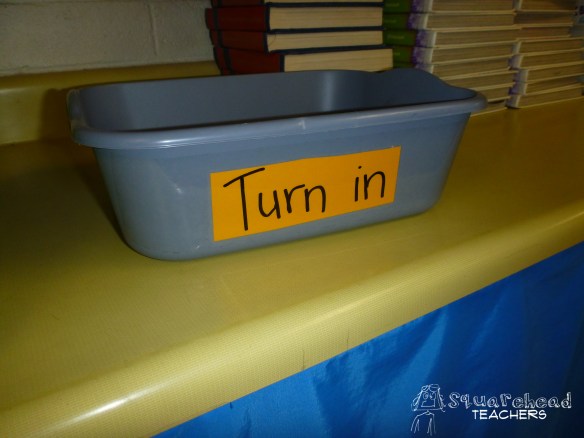
5. This next idea is PURE GENIUS! I learned this trick from my mentor teacher during student teaching (way back in the day). Designate a tote or box for a super secret purpose: a secret recycle bin! Students don’t work as hard when they know their teacher isn’t going to look at their paper. So use this bin to collect papers you don’t need to look at, but still want kids to work hard on. At the end of the day when all the students are gone, you can recycle the paperwork and keep your students’ desks clutter free! The picture above is from a lower grade classroom that doesn’t have any turn in bins. So this teacher just calls the secret bin the “turn in bin.”P1050972
 

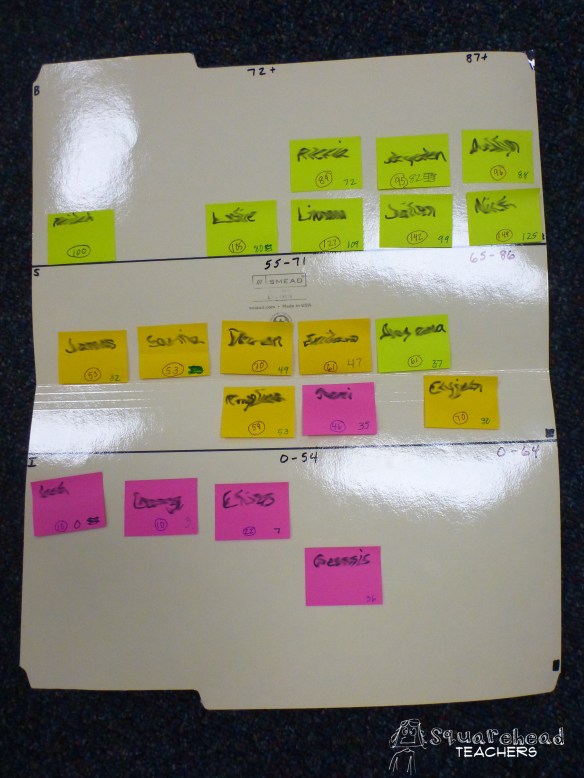
6. Track your students’ reading progress with a laminated file folder. Divide it into sections using whatever lingo your district or state uses. The photo above uses benchmark, strategic, intensive to indicate at, slightly below and way below grade level. Use sharpie to designate areas of the folder according to words per minute, etc. Then give each student a sticky tab according to where they are at the beginning of the year. This allows you to see who’s made significant progress throughout the year. For example, this teacher used green to indicate at grade level, yellow for slightly below, and pink for way below grade level. She writes the words per minute (or whatever you’re tracking) on the sticky tab as you assess the students throughout the year. When you’re not using the folder, fold it up and keep it away from curious student eyes. P1050973
Food for Thought

Quote 13 Quote 12 Quote 11

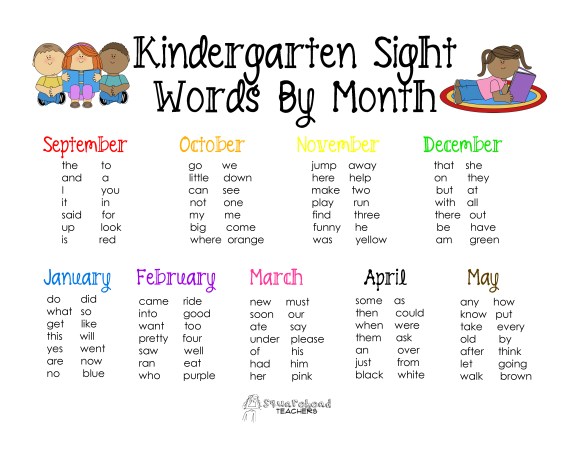
Kindergarten Sight Words List (Updated)

Here’s my list of kindergarten sight words. They’re organized by month of the school year, and each month includes a color word to focus on. This would also be a great list of words to start working on with your preschooler if you’re looking to get a jump on literacy!

Click here for the free printable PDF: Kinder Sight Words by Month

kindergarten sight words by month

Like what you see? Tell your friends about this blog and check out my TPT store!

Visit my store button

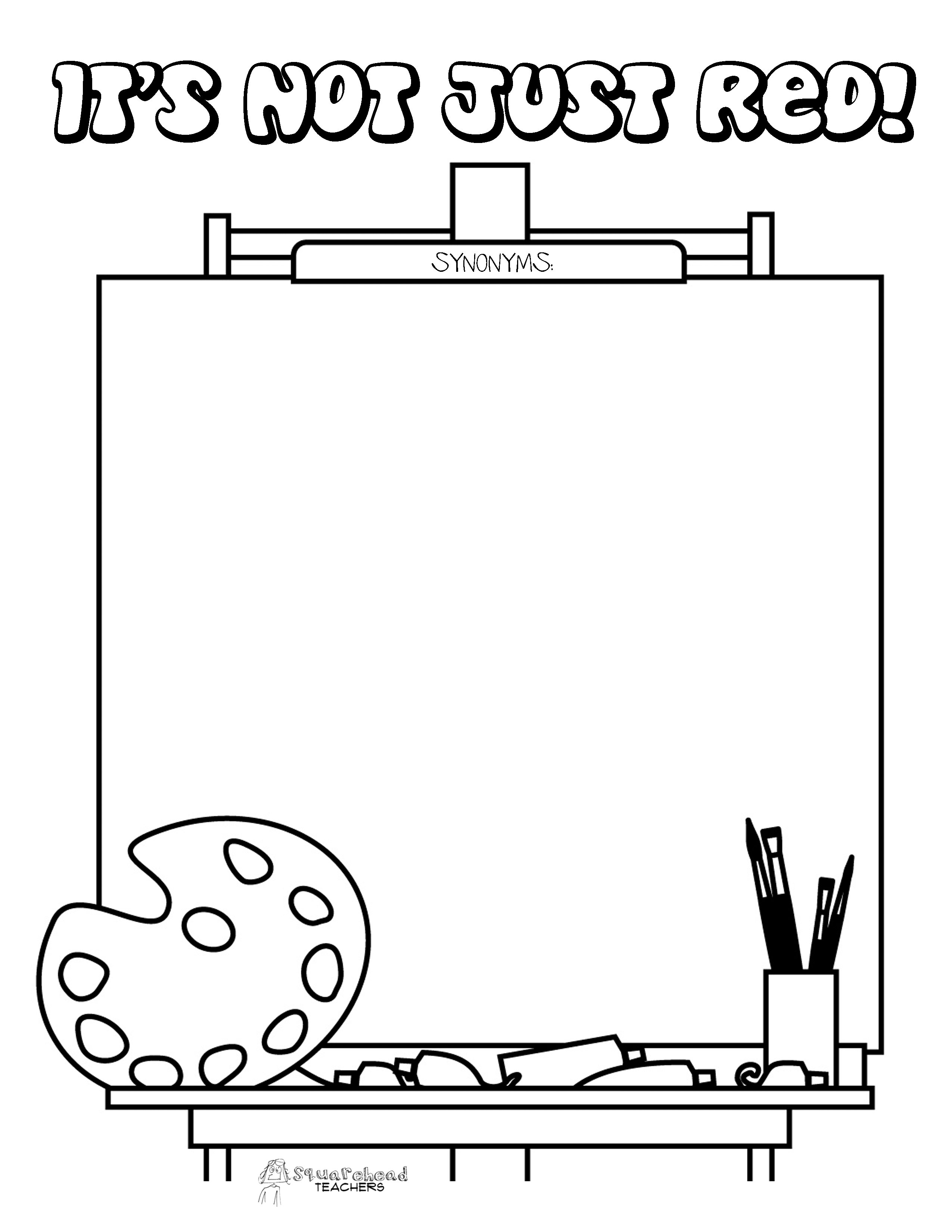
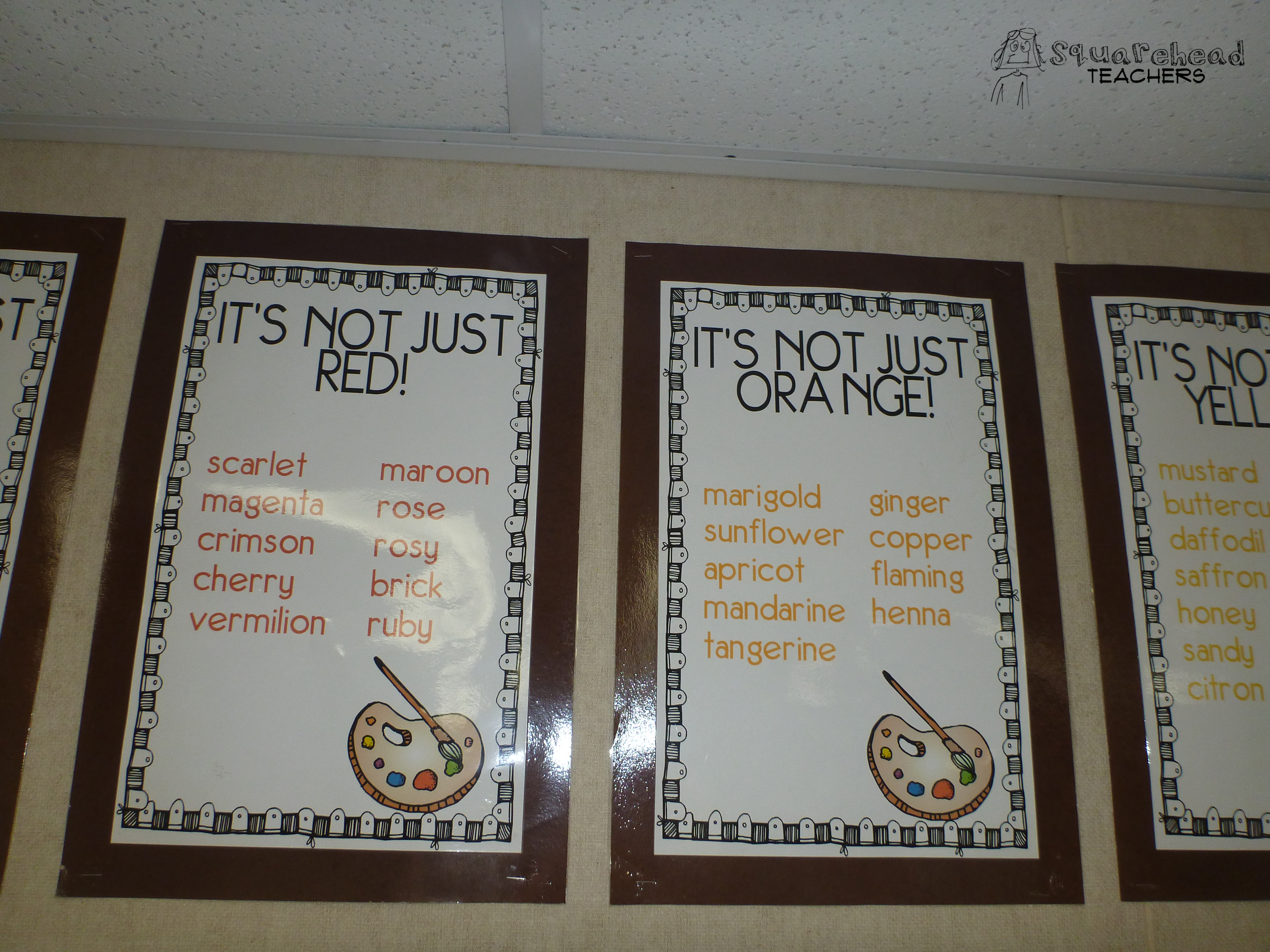
It’s Not Just “Red”… It’s “Vermilion!” (Synonyms Group Activity)

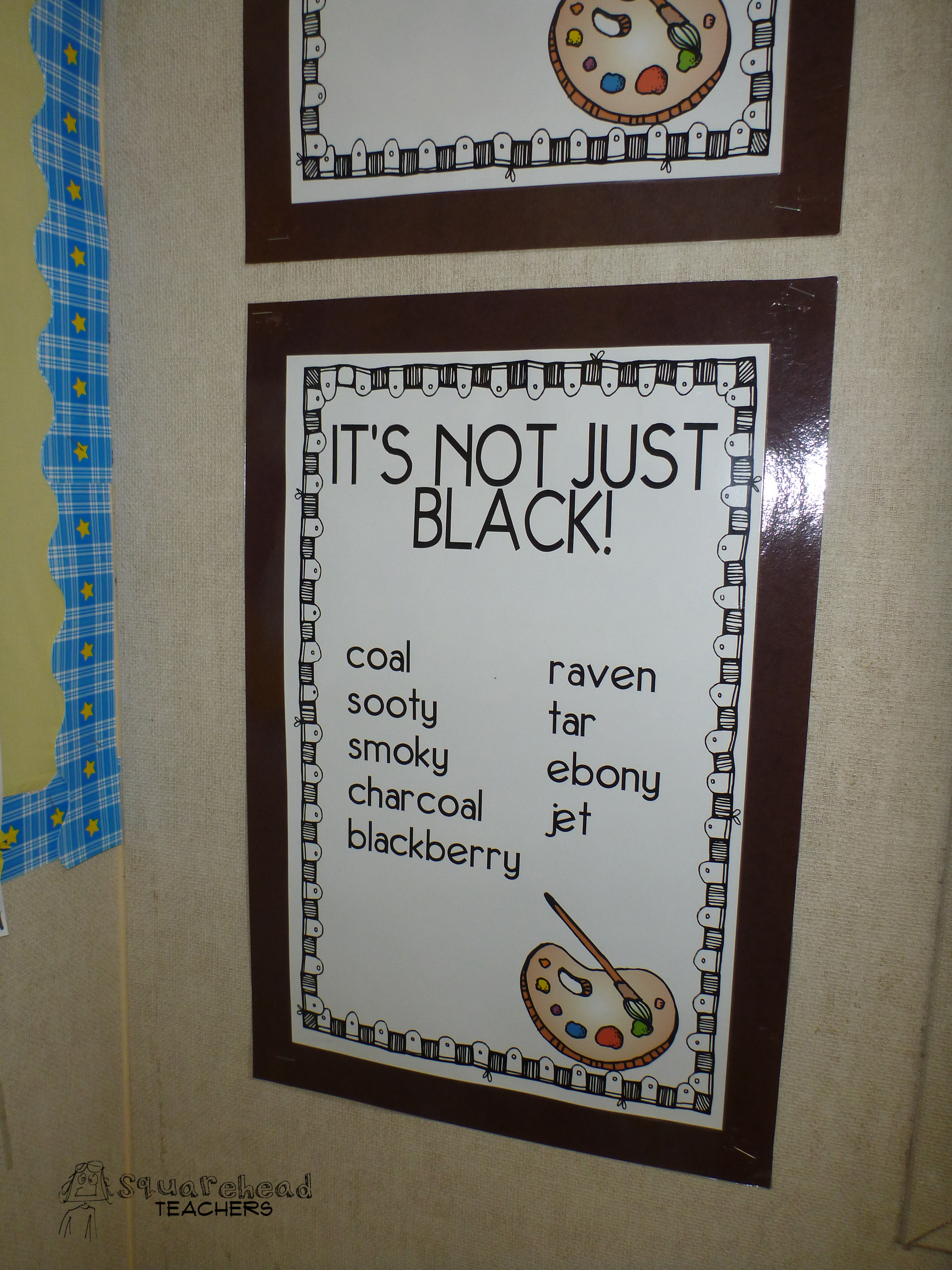
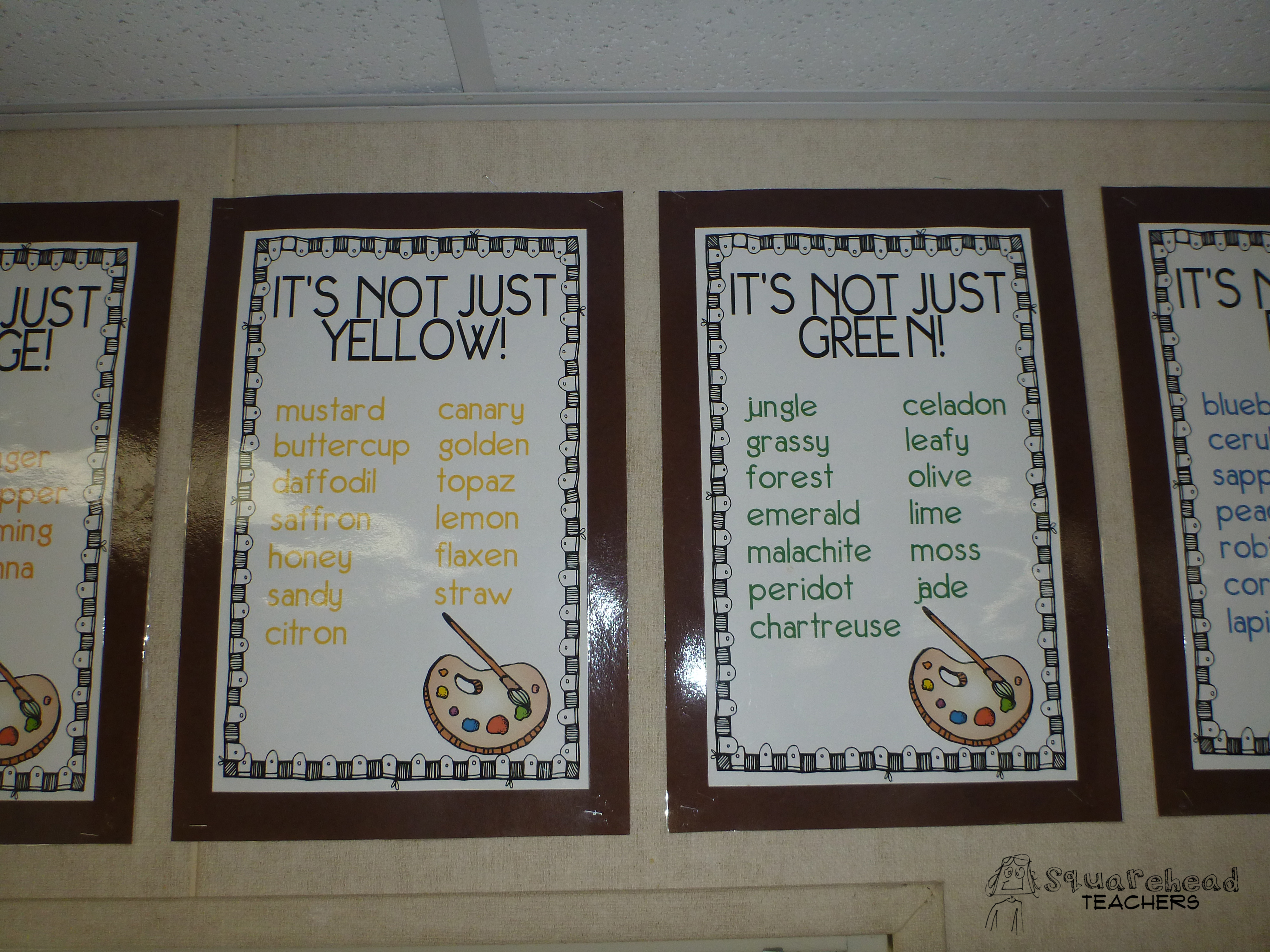
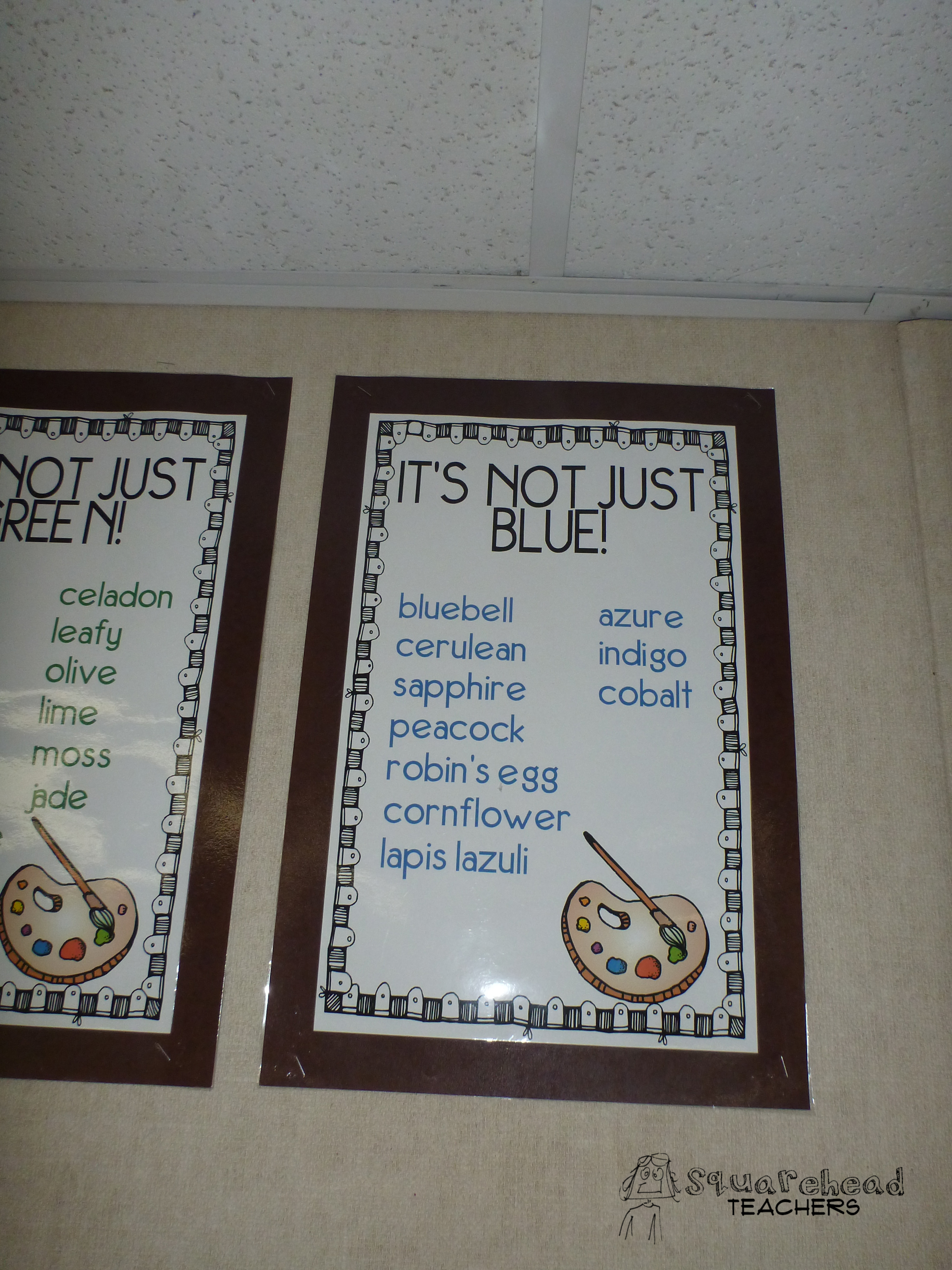
synonyms- redTeaching kids to use “good words” in their writing is hard. It’s not always easy to find a good synonym for “red” but this activity should help broaden their diction horizons. Divide your class into 10 groups. Pass out one color synonym sheet and a thesaurus to each group. Instruct each group to find as many synonyms for their color as possible. Then have them draw a border around their sheet using the color they searched. Post these somewhere in the room for a few days so students can browse the synonyms.

Click here for the PDF: synonyms- color collection

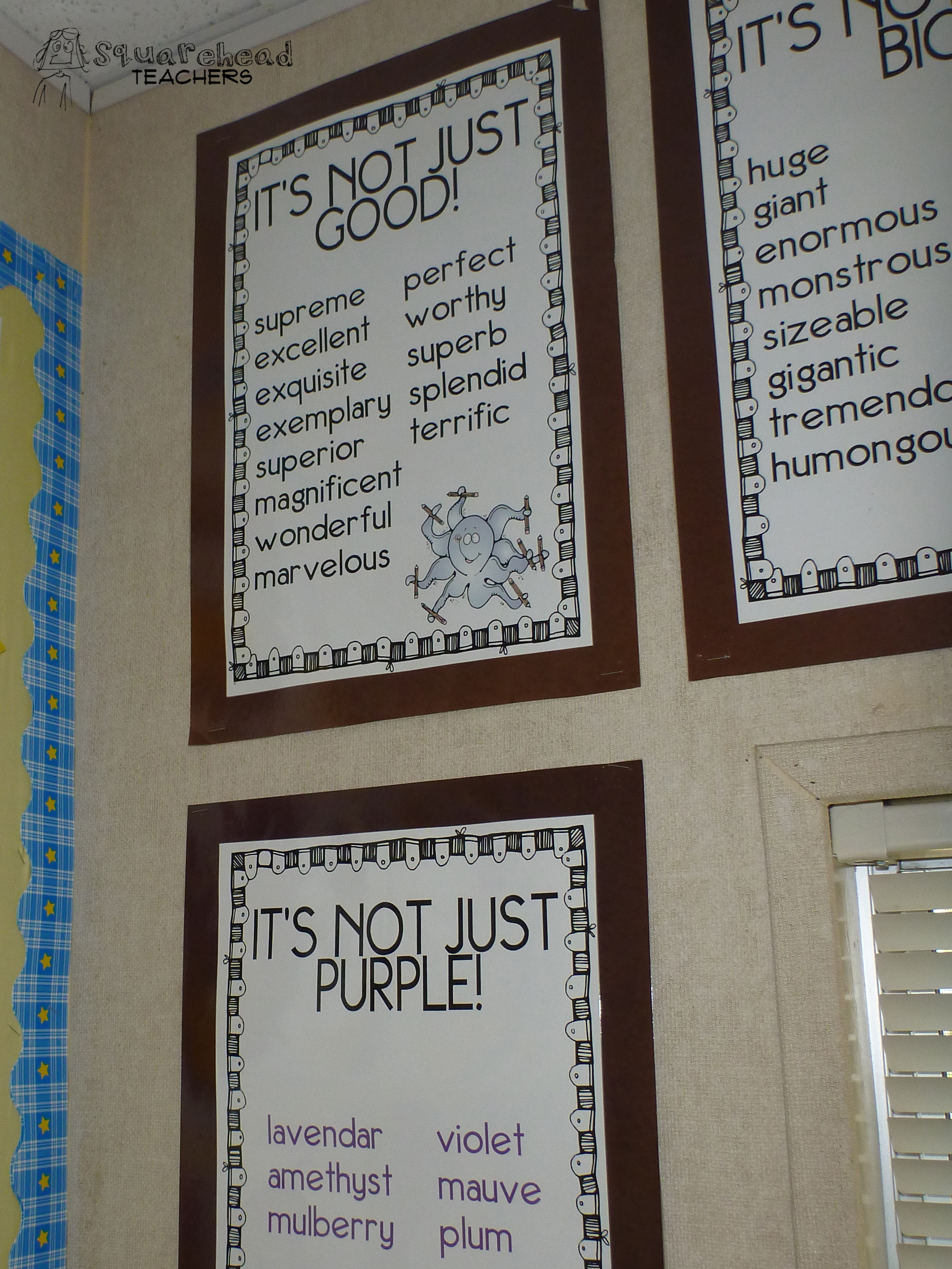
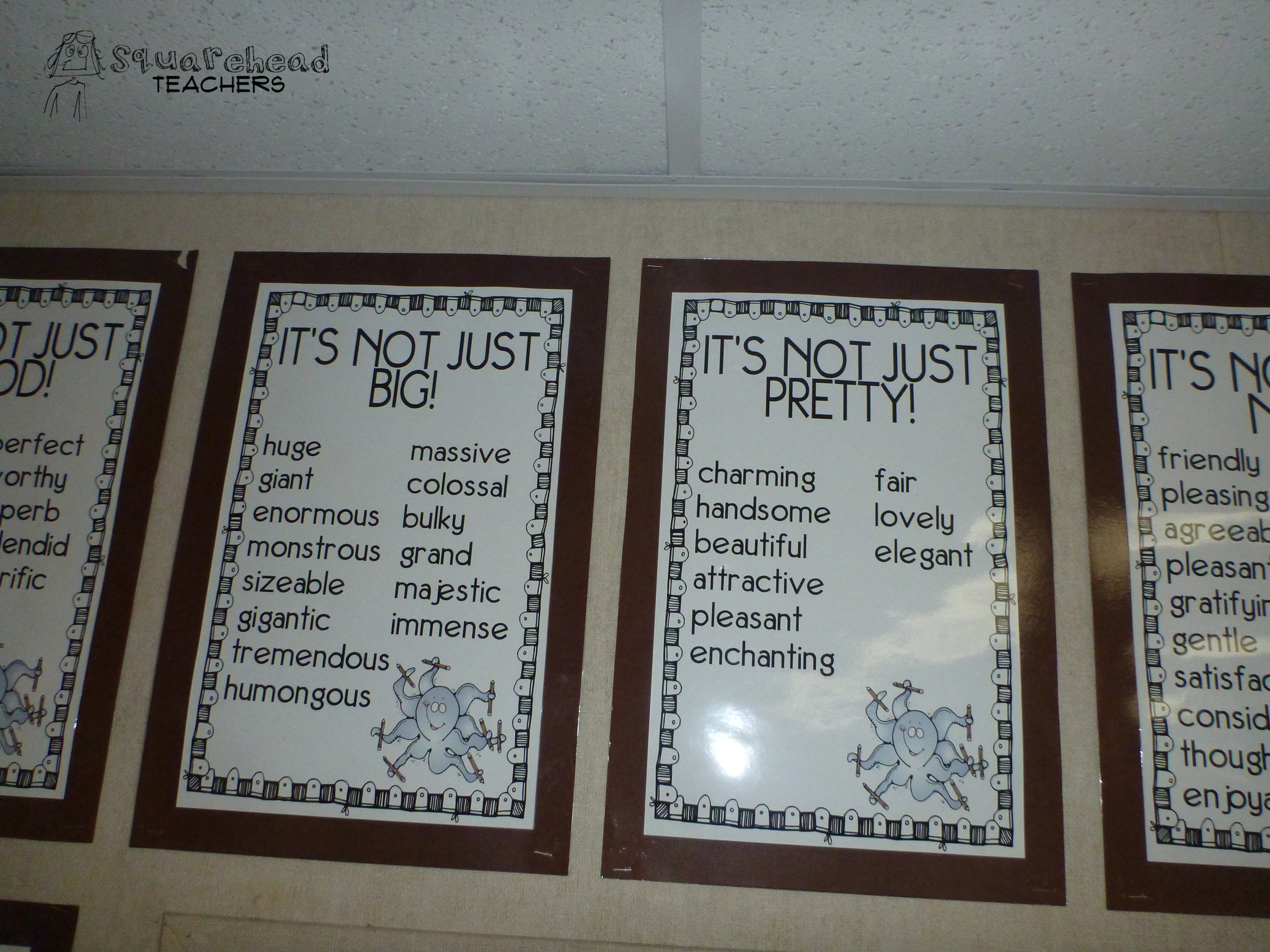
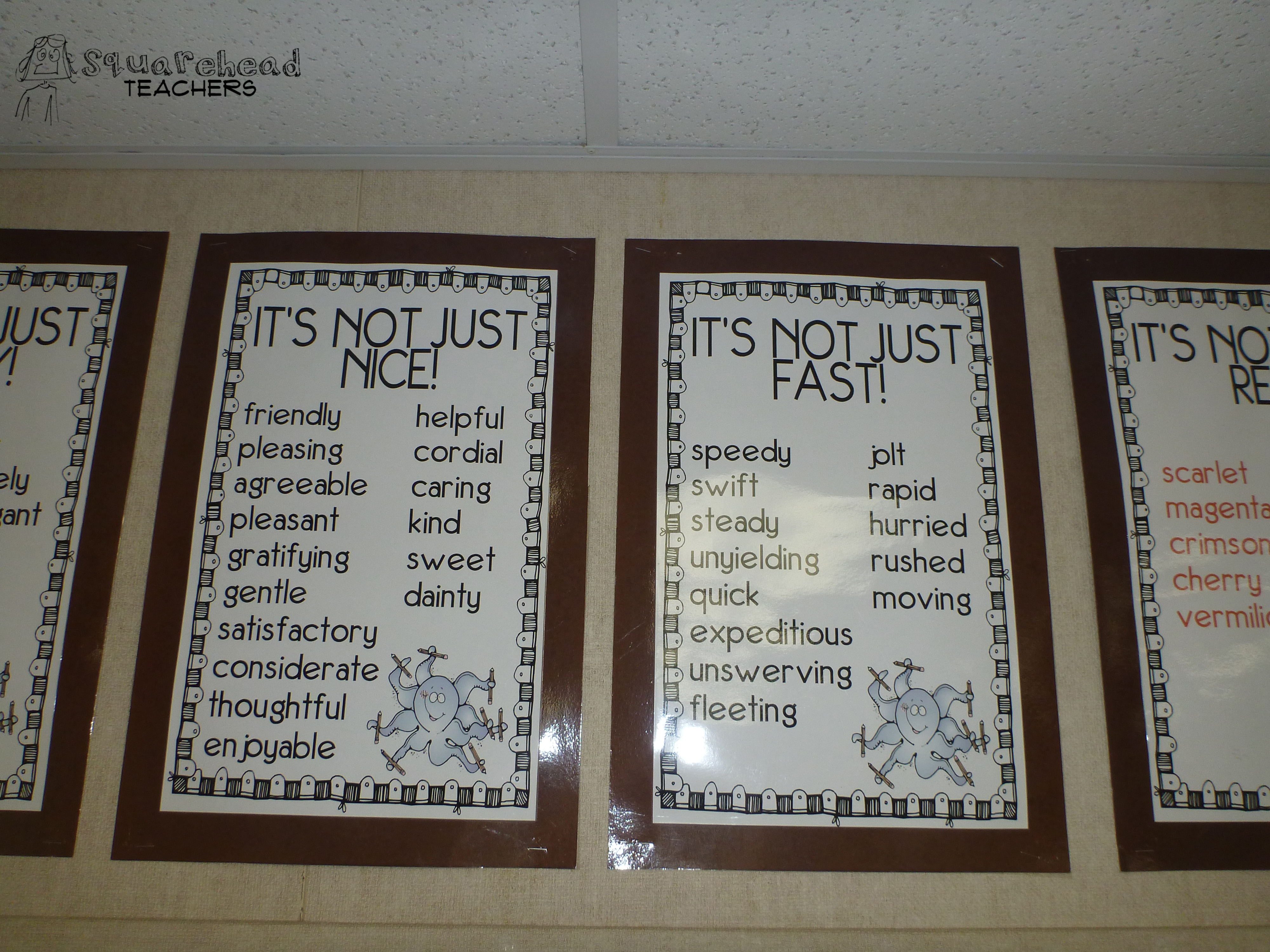
This same idea can be done with common nouns and adjectives such as “big,” “said,” “like,” “fast,” etc. Here are some photos of this idea being used in a classroom…

P1030364 P1030363 P1030362 P1030361 P1030360 P1030359 P1030358

Golfing Review Game

I recently saw this picture on Pinterest. I couldn’t follow the link very far, because I wasn’t a member of acvitityconnection.com, but I was inspired. Here’s my idea:

Set up: Make a box like this, with varying sized holes in the front. Smaller holes are worth more points. Then set it up in your classroom, with masking tape line on the ground, denoting where students should stand before they putt.

Game play: Group students for the review. Ask a review question, and have each team write down their answer. At the same time, have all groups reveal their answer. Any team who gets the answer right, gets to send 1 person to putt once to try to earn points. At the end of the game, the team with the most points wins!

I’ve tried numerous games like this with my 6h graders and they loved them! It disguised reviewing for the end of the year tests so the kids had a blast and we got through tons of math and science review questions!

Using Graphic Organizers to Sort Characteristics

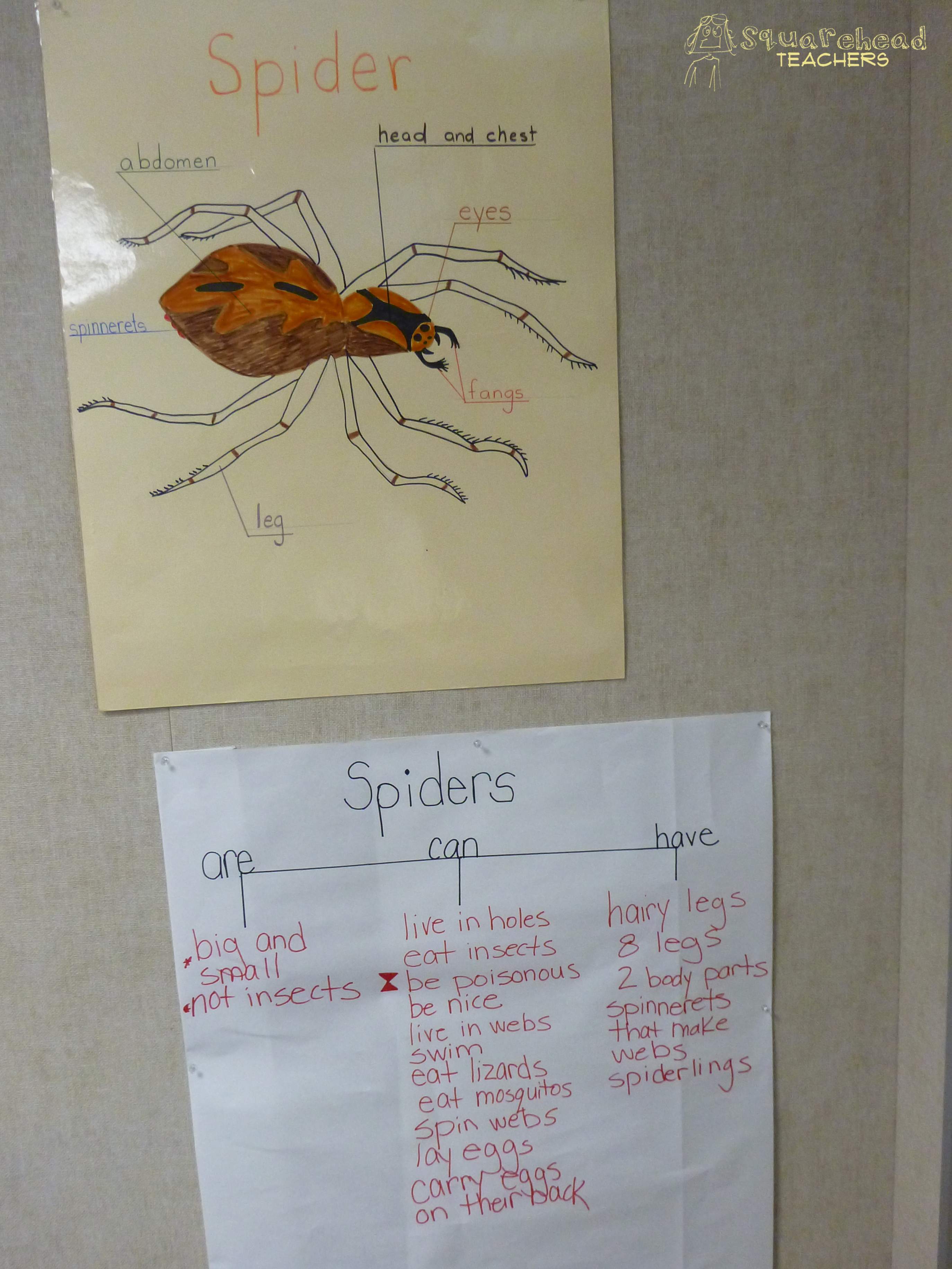
I don’t know about you, but I love using graphic organizers. I’m a visual learner, so maybe that’s why. But anyway, this anchor chart I saw in an elementary school classroom seemed to be an effective way to study animals (spiders, in this case). It focuses on characteristics, sorted according to 3 verbs: are, can and have. It’s a very basic idea, but works well because students can just finish the sentence “Spiders have…” or “Spiders can…” to help them sort out and analyze characteristics. This same idea could be used for a variety of topics, simply by changing the 3 verbs used.

P1030326

Addition and Subtraction Key Words Posters

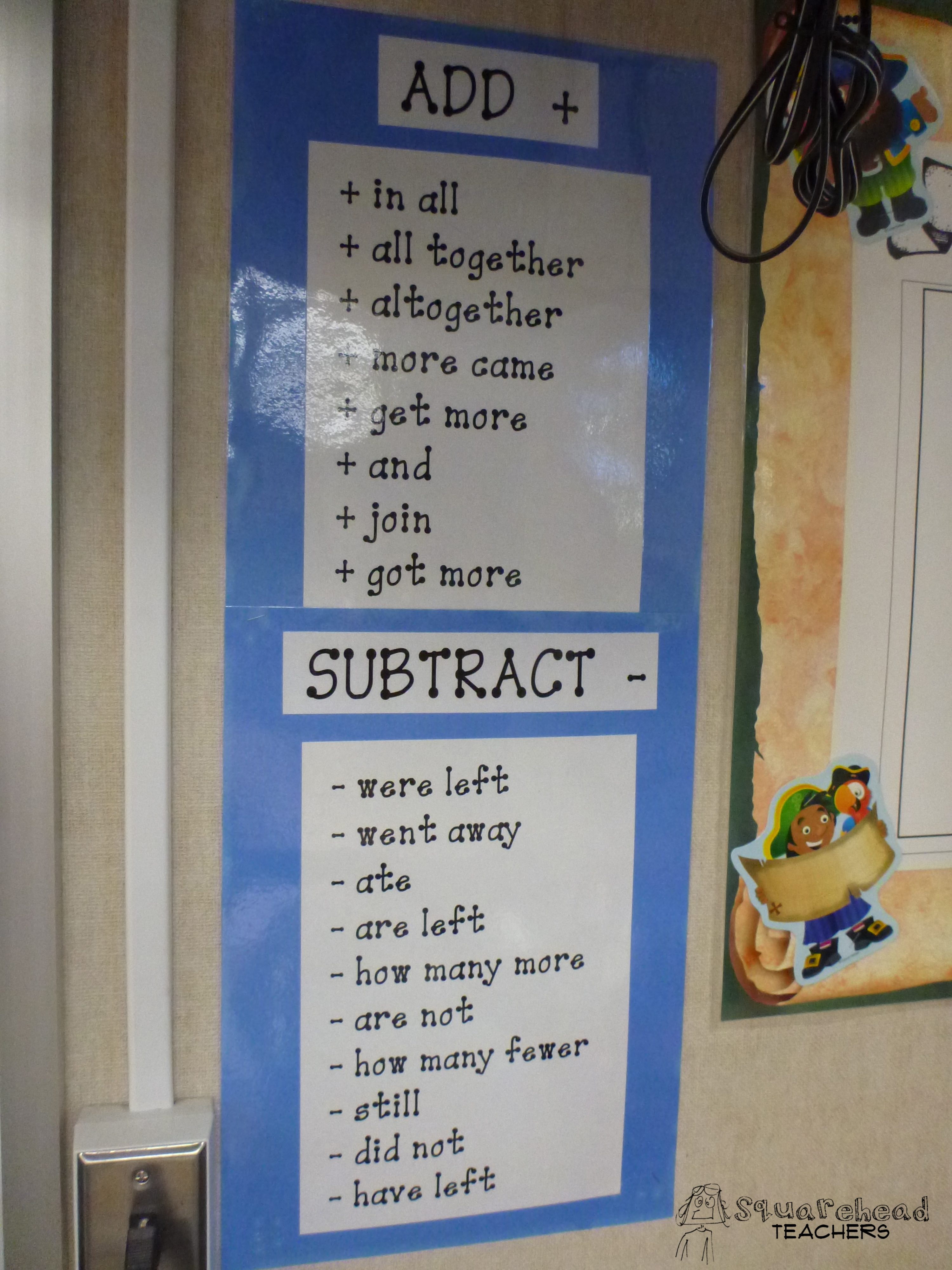
I recently saw this in a lower grade classroom. It seemed like a good math poster to have up for use when discussing whether a word problem requires addition or subtraction.

P1030683

So I decided to make my own free math posters for you to use in your elementary school classroom! Enjoy!

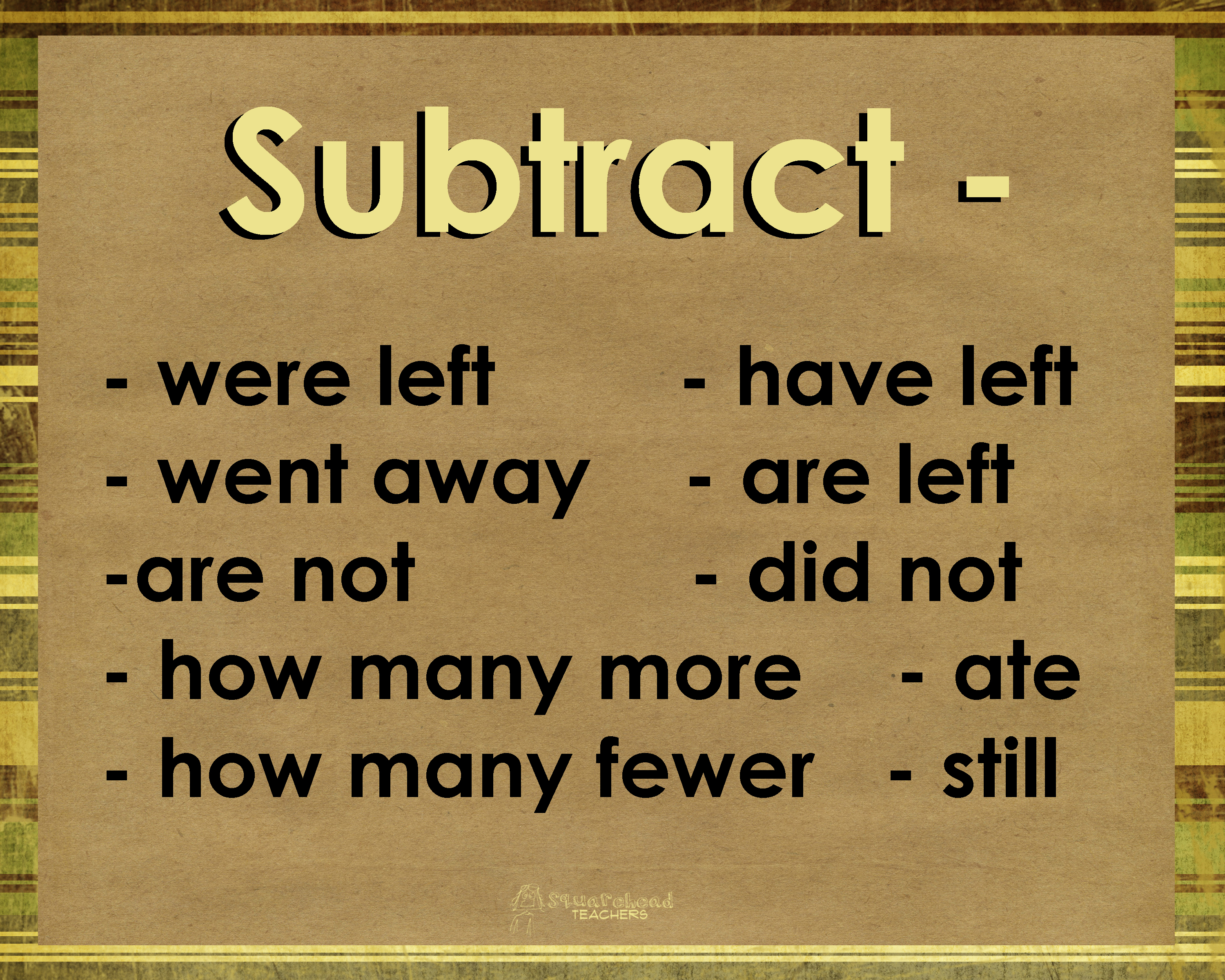
Math key words poster- add Math key words poster- subtract

Desk Fairy Printables (Free!)

desk fairy stickerI don’t know about you, but I definitely don’t have the funding for even half of what’s in those teaching materials catalogues. But I saw this idea and wanted one for my classroom, so I just made my own (and I’m sharing it with you)! First print the poster (regular size printer paper) and put it up on your wall. Then print off and copy the desk fairy notes (color or black and white) and be ready to pass them out as you catch kids with clean desks. You could assign one student to be the desk fairy as their classroom job or just have pass out notes while kids are out of the classroom. Some teachers let their students turn in a desk fairy notes for a prize, special privilege or as an entry in a classroom drawing. Let me know if you try this. I’d love to hear how it works in your classroom!

PDFs here: Desk Fairy Poster       Desk fairy notes- bw        Desk fairy notes- color