Father’s Day Card Tutorial

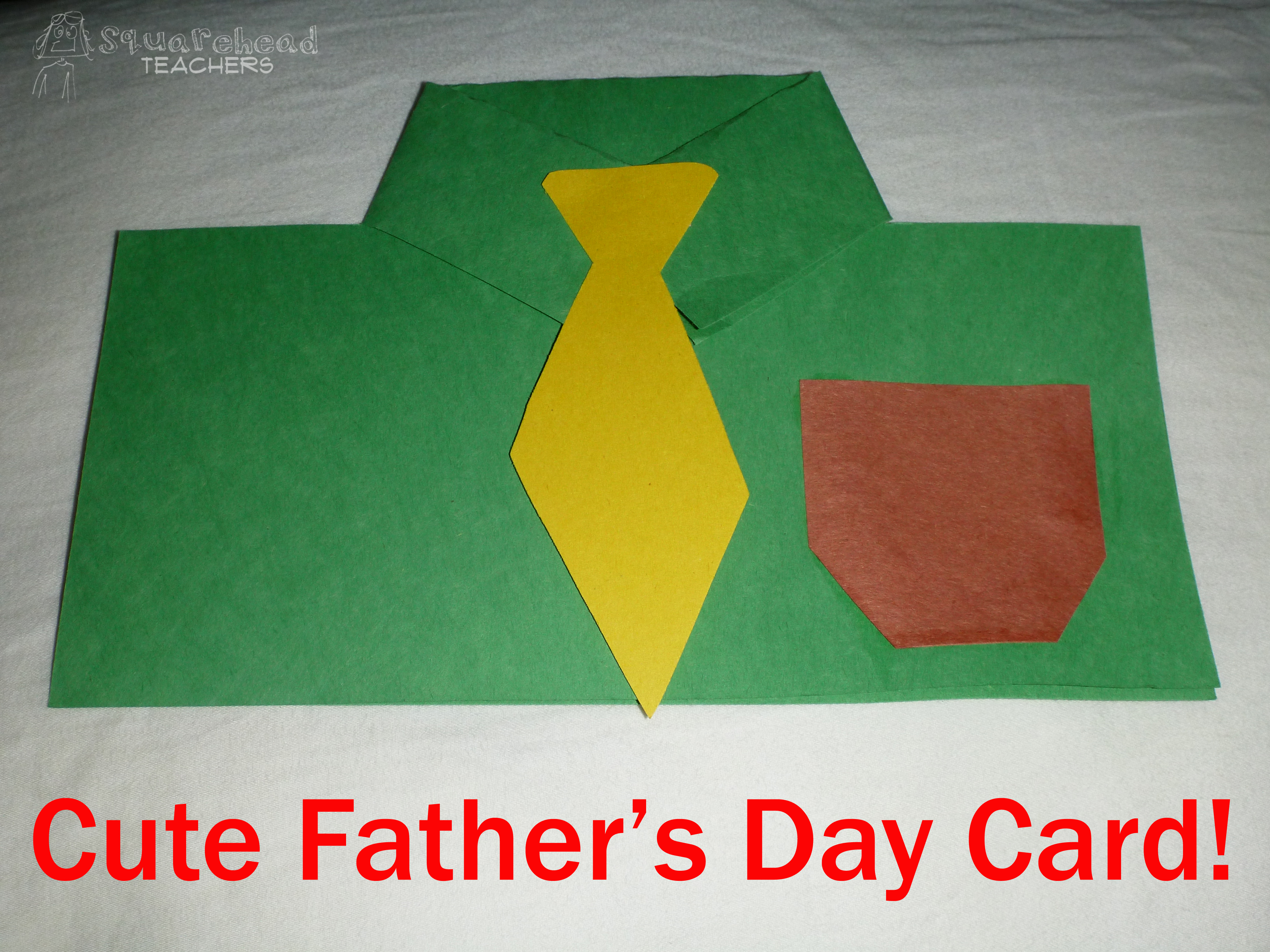
P1050324 This is hands down the cutest Father’s Day card… and it’s so easy, you’ll flip. In this tutorial, I used regular construction paper (9″ x 12″), but if you prefer more space to write inside the card, use the double size 11″ X 17″ paper. You need 1 piece for the shirt (green paper in the photos) and some small scraps for a tie and pocket (yellow and brown in the photos). You’ll also need scissors and glue (Elmer’s bottled glue or glue stick). I’ve seen really cute ones with decorated ties or ties cut out of fabric also. But whatever you do, make sure Dad knows you love him. That’s the point of Father’s Day after all. So without further ado, here’s the tutorial:
P1050326


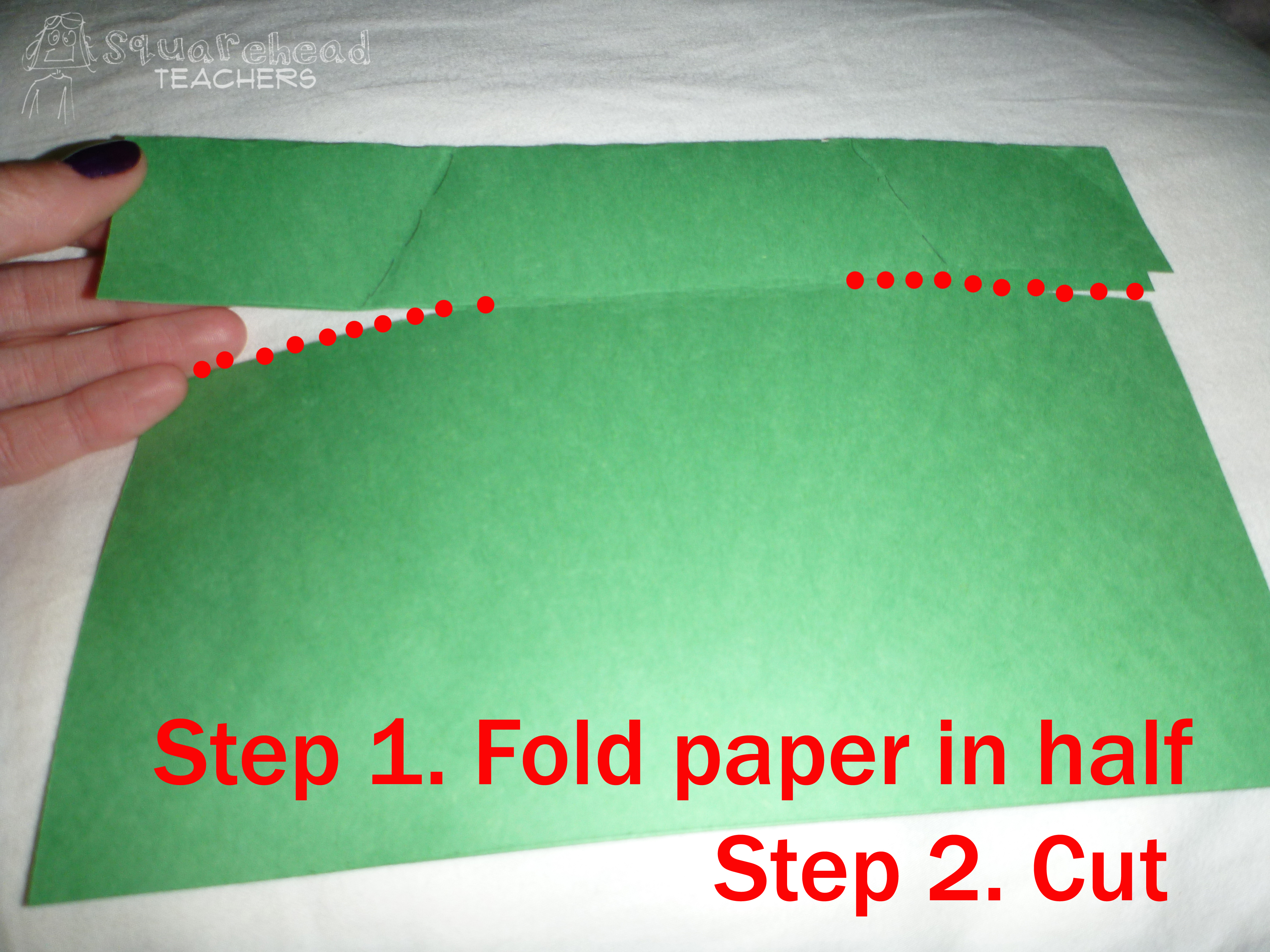
Fold your construction paper in half (“hamburger style” as kids always say). Then make 2 cuts in it about 1.5 or 2 inches below the fold.  Don’t cut all the way across; leave the middle 1/3 of the width of the paper untouched.P1050325
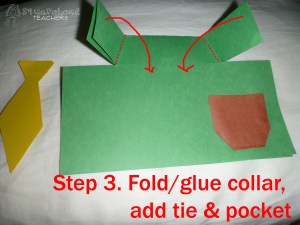
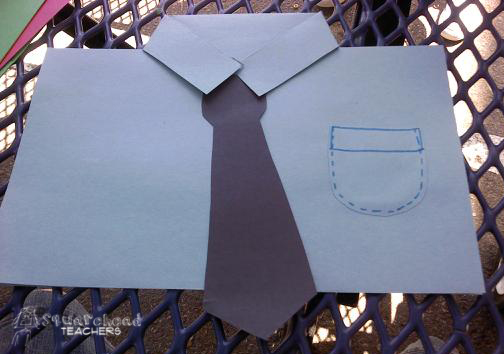
Fold the newly created tabs diagonally towards the bottom (open edged of paper). They should meet or overlap a little bit. If it looks like a mens’ shirt collar, you’re on the right track.  Then decorate it! Add a tie, pocket, buttons, pens, pen protector… whatever describes your card recipient.
P1050327


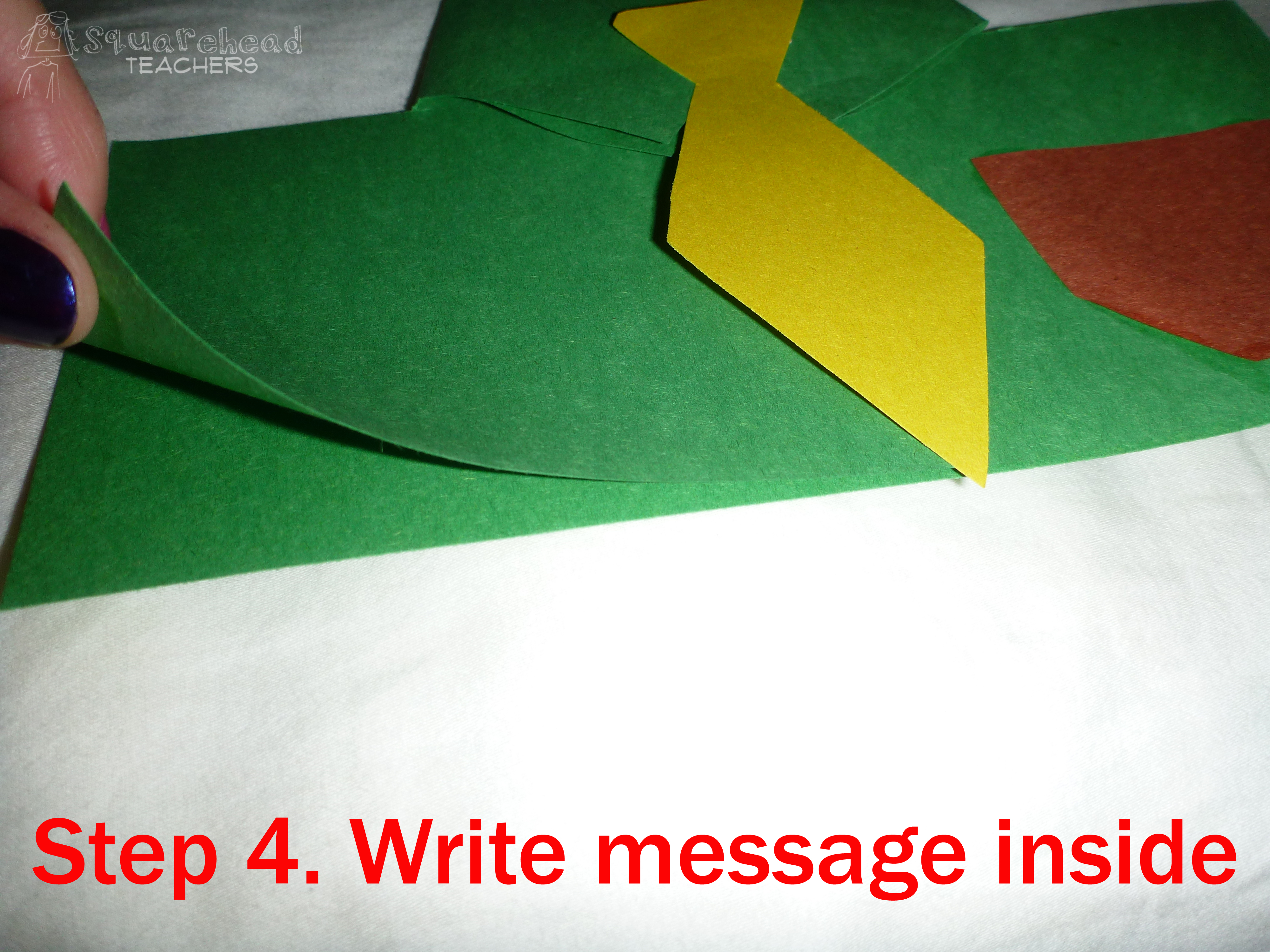
After the glue dries, gently open the card from the bottom and write your message. Be gentle with the collar area, since it’s the most fragile part of the card.
Fathers Day card

Here are some ideas for a more educational twist on this craft:

  • Write a poem about Dad and glue it inside the card
  • Write about your favorite memory about you and Dad
  • Write 10 reasons you love Dad
  • Rewrite the lyrics to a famous song. Sing about how cool Dad is.
  • Write the ABCs of Dad (A… always kisses me goodnight, B… best baseball coach ever, etc.)

Persuasive Writing Prompts for Elementary School Kids

persuasive writing prompts for elementary school kidsLower Elementary Grades

1.  Persuasive Letter

Your school cafeteria is going to serve ice cream for dessert. The students get to pick whether it’s chocolate, vanilla or strawberry. Write a letter telling the school board what flavor you want and why they should choose it.

2.  Persuasive Prompt

You want your friend to come over and spend the night, but your parents don’t want to let you because it is a school night. Make a convincing argument to your parents that they should let your friend come over tonight.

3.  Three Choices Prompt

You are going on a vacation and you can only have one kind of toy or activity for the whole trip. Your choices are dolls/action figures, books, or coloring pages. Which would you choose? Explain why.

Upper Elementary Grades

4.  Persuasive Letter

Your state is going to give an award to the best elementary school teacher. Your principal is trying to decide which teacher will be nominated from your school. Write a letter to the principal recommending a teacher for nomination and explaining why that teacher should be chosen.

5.  Persuasive Prompt

Because of budget cuts in the school district, your school is considering dropping one of the following classes from the curriculum: music, P.E., or art. Write a letter either explaining which one the school board should cut or which ones they should not cut and give reasons why or why not. If you think none of these classes should be cut, offer an alternative.

6.  Three Choices Prompt

The city has an empty lot and they’re trying to figure out what to put in it. The three choices are a Boys and Girls Club recreation center, an indoor water park, or a skate park. Which do you think they should choose and why would you choose it?

30 Fun Writing Prompts for Kids

30 fun writing prompts for kids1. Imagine you had a hundred dollars, but you couldn’t keep it. You had to give it away to a person or charity. Who would you give it to? What would you want them to do with it?

2. Describe one time when you were brave.

3. If you could cook any meal for your family, what would you cook? Describe the meal and tell how you would make it.

4. Imagine you woke up and saw a dinosaur in your backyard. Write a story telling what you see and do.

5. Imagine you opened your own restaurant. Tell the name of your restaurant. Explain what the restaurant looks like, who works there, and what you serve.

6. Describe your favorite character from a book, a movie, or television.

7. Write a story titled, “My Journey on a Pirate Ship.” You and your friends can star in the story.

8. If you could have any animal for a pet, what would it be? Describe the pet and how you would take care of it.

9. Do you have any brothers or sisters? If you do, tell what they’re like. If not, tell whether or not you would like to have a brother or sister.

10. If you could have lunch with any famous person who would it be? What would you talk about with this person?

11. Write a story titled, “The Bat Who Couldn’t Fly.”

12. Imagine you were a wonderful painter and your parents would let you paint anything you wanted on your bedroom walls. What would you paint? Use lots of details to describe your artwork.

13. Describe the oldest person you know.

14. Describe the youngest person you know.

15. Do you think a monkey would make a good pet? Explain why or why not.

16. How old were you four years ago? Describe some things you can do now that you could not do then.

17. Imagine you worked at a football stadium. What would your job be? (examples: quarterback, cheerleader, coach, referee, ticket seller) Describe what you would do while you were on the job.

18. What do you like best about your home?

19. If you could be on any game show, what would it be? Describe what happens when you’re on the show.

20. Describe your favorite season (fall, spring, summer, or winter). Tell what kinds of things you like to do during that season.

21. Write a story titled, “The Baby Dragon.”

22. Describe several ways a person your age can earn money.

23. Would you want to visit the moon? Why or why not?

24. If you could spend an afternoon with one member of your extended family, who would it be? Tell why you chose this person and tell what you do together.

25. Which superpower would you most like to have– invisibility, super strength, or the ability to fly? Describe what kids of things you would do with your powers.

26. Think of a time when you’ve won something. Tell what you won and how you won it.

27. Invent a new kind of sandwich. Describe what is on it and how you would make it.

28. Describe one thing you’re really good at.

29. Imagine you were twenty feet tall. Describe what life would be like.

30. If you were a doctor, what kind of doctor would you be? (examples: children’s doctor, veterinarian, eye doctor, dentist) Tell what your job would be like.

Expository Writing Prompts for Kids

expos. writing prompts for kidsWhat is expository writing? Expository writing is used to present reasons and explanation about a topic in a step-by-step process. The expository essay should contain a main idea (thesis), supporting details (with transitions) and a conclusion in a logical fashion. Be sure to check your work for grammatical correctness as well! Happy writing!

For Elementary School Kids

  • Explain how you play your favorite game.
  • Explain whether you like or don’t like staying with a baby sitter.
  • Explain/describe the smile of your mother.
  • How do you feel when you visit your grandparents?
  • What is the best thing about your brother/sister?
  • Explain the best thing about your most favorite person/pet in the world.

For Middle School Kids

  • What are the good things and bad things about living in your town? Explain with logical reasons and examples.
  • What does the phrase, “There are two sides to a coin” mean to you?
  • Explain your feelings and thoughts when someone picks on you or your friends.
  • Do you think families are important? Explain with valid reasons and examples.
  • Is it important to be honest?
  • Explain how will you strive to be a role-model for your younger siblings as well as peers.

Classroom Journal Tips

Keeping journals is a great way to help students keep new information recorded and stored in a neat and useful way. Many teachers give their students notebooks for each core subject and expect students to maintain their own journal to use for note taking during lessons and future reference. I love this idea! I’ve done it with my own classes. But if you’re going to do journals, do them the smart way. Here’s what I mean:

1. Choose a specific color for the subject. Get that same color journal for each student. If you can’t find an entire class set of 1 color, try 2 colors that are easy to remember. So when your student says “Wait! Which one is our science journal?” You can tell them what color notebook to look for. Also make sure the notebooks are clearly labeled with the student’s name, classroom number and what subject the journal is for. Tell students at the beginning of the year that the journal is only for that subject, not for drawing, writing notes to a friend, etc.

P1030237

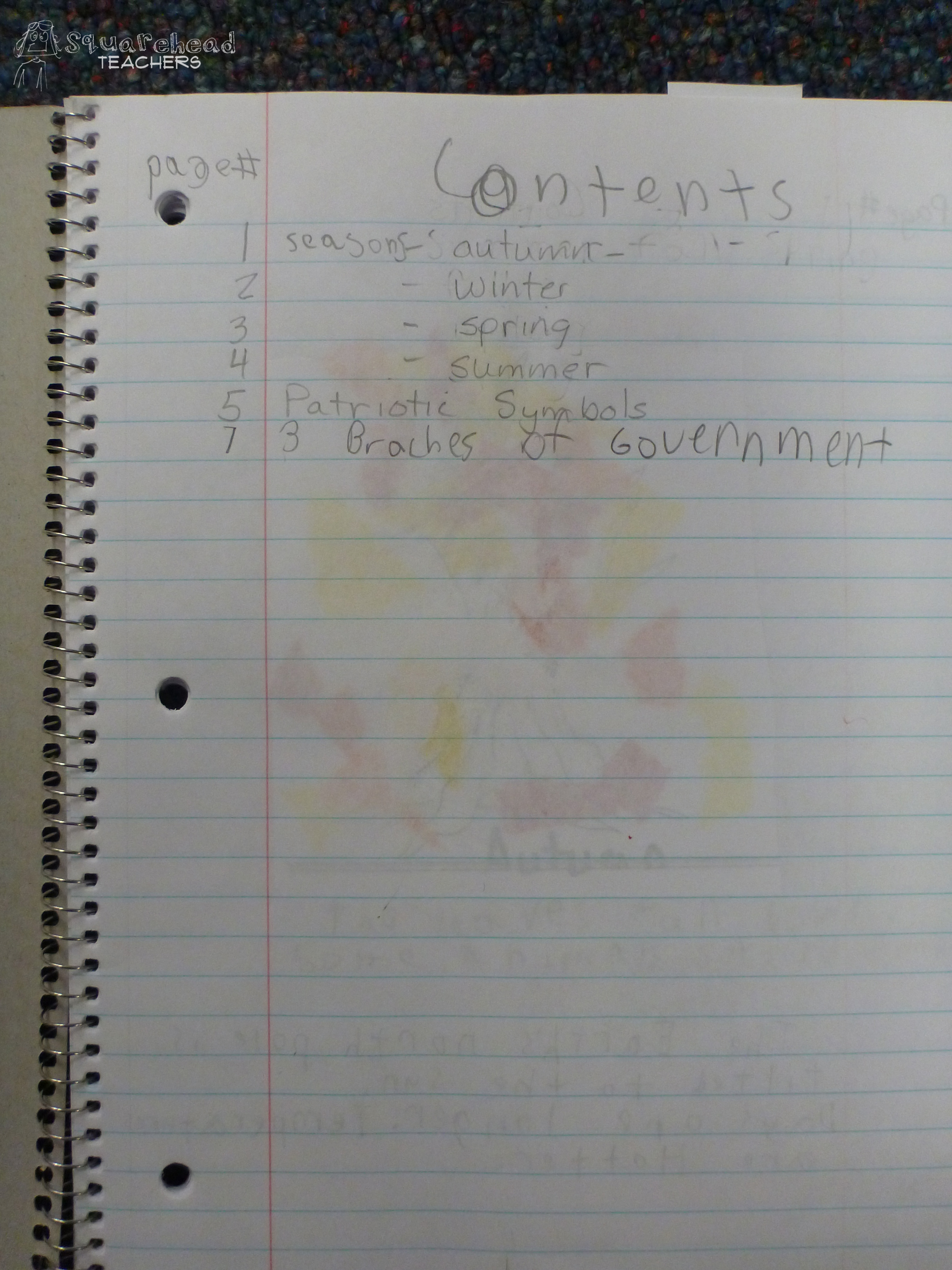
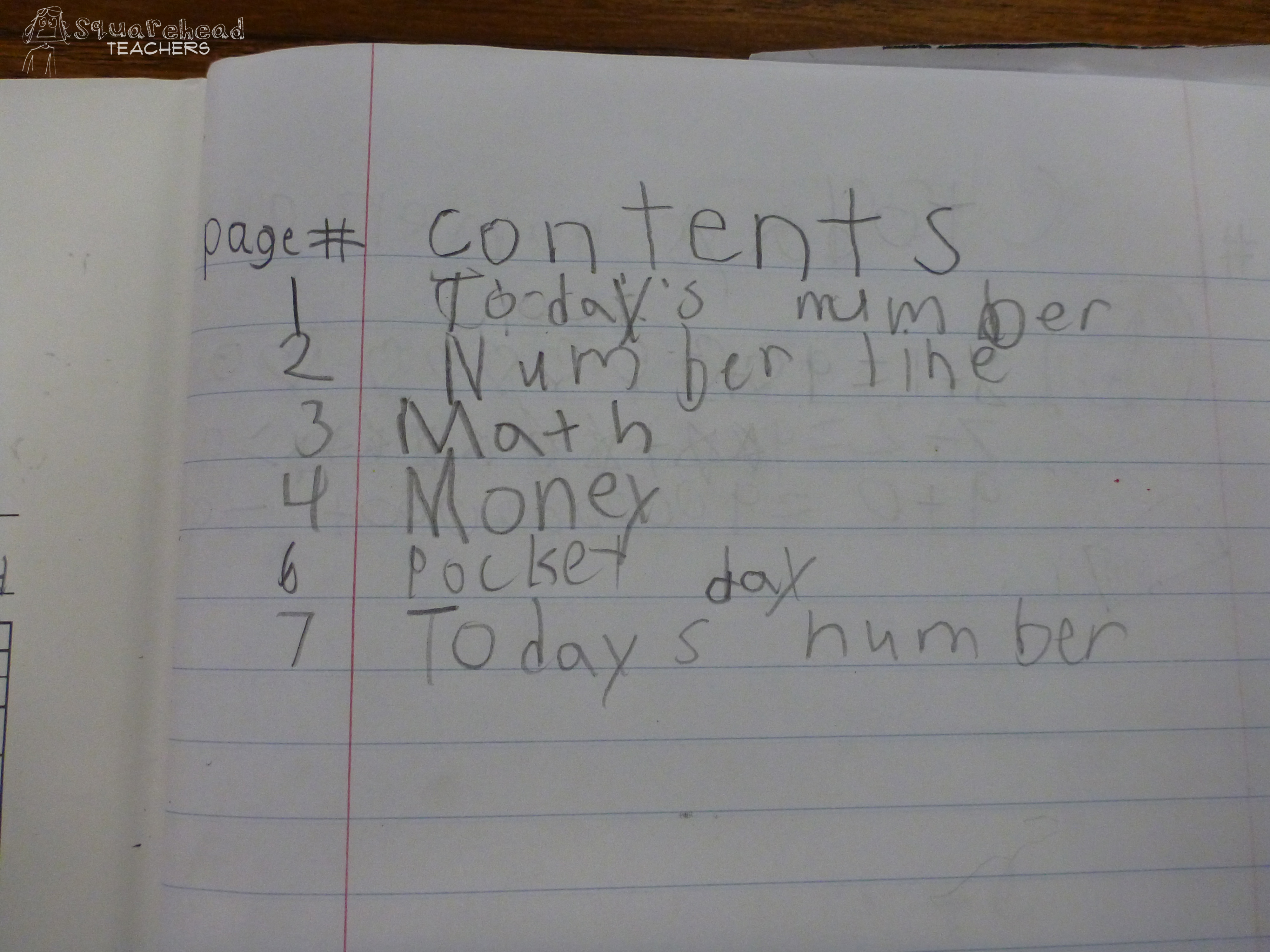
2. Use the first sheet (front/back) for the table of contents. Each time you have students start a new journal entry/topic, have them add it to the table of contents. Then, when they’re looking for their notes on a certain topic, they’ll be able to fins it easily. This also means your students need to add page numbers as they go. I have conflicting thoughts about writing in all the page numbers in the beginning. PRO- you don’t have to worry about it each time you start a new set of notes. CON- if your kids tear out pages, they can get confused when there’s no page 16.

P1030238

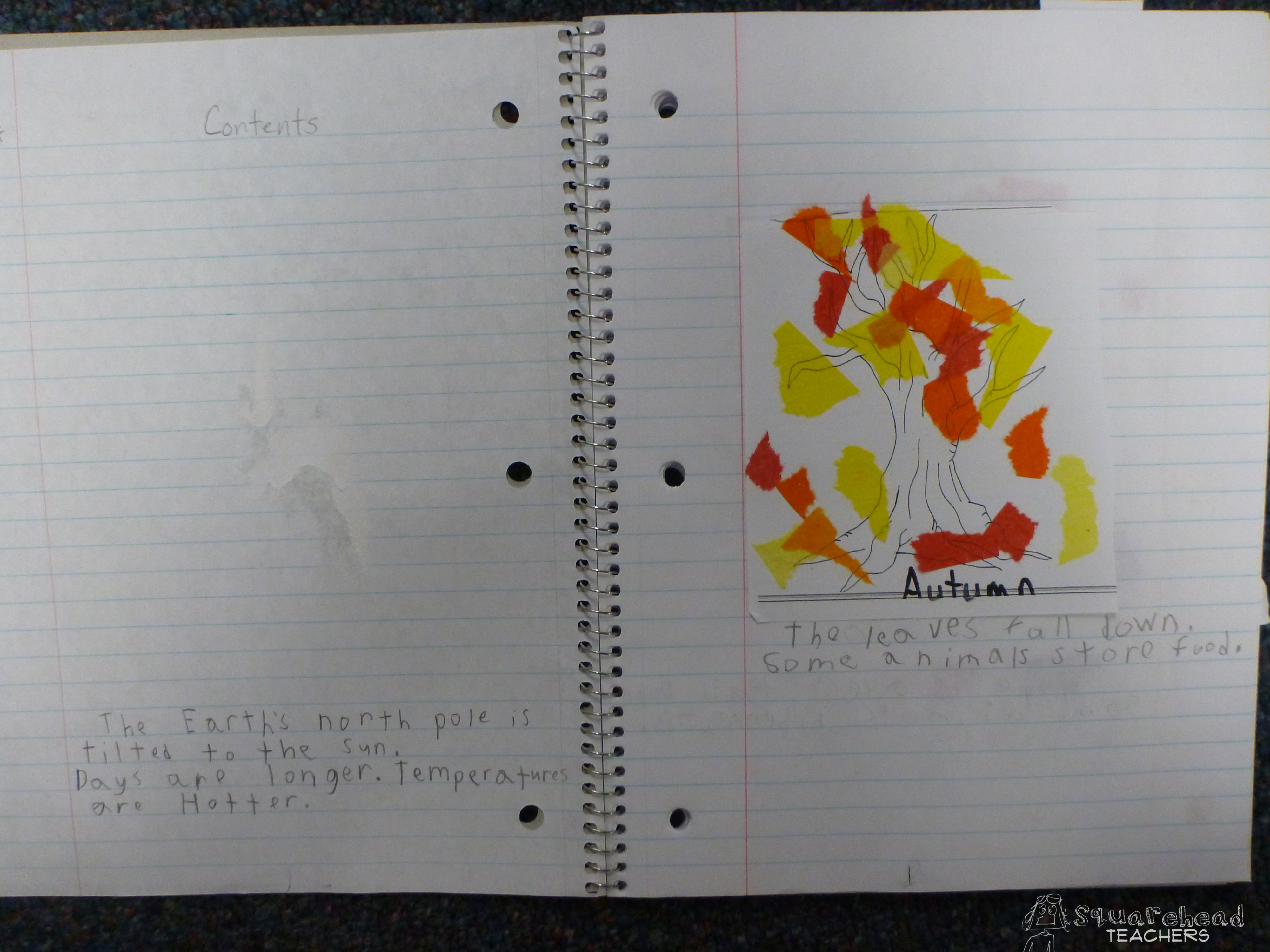
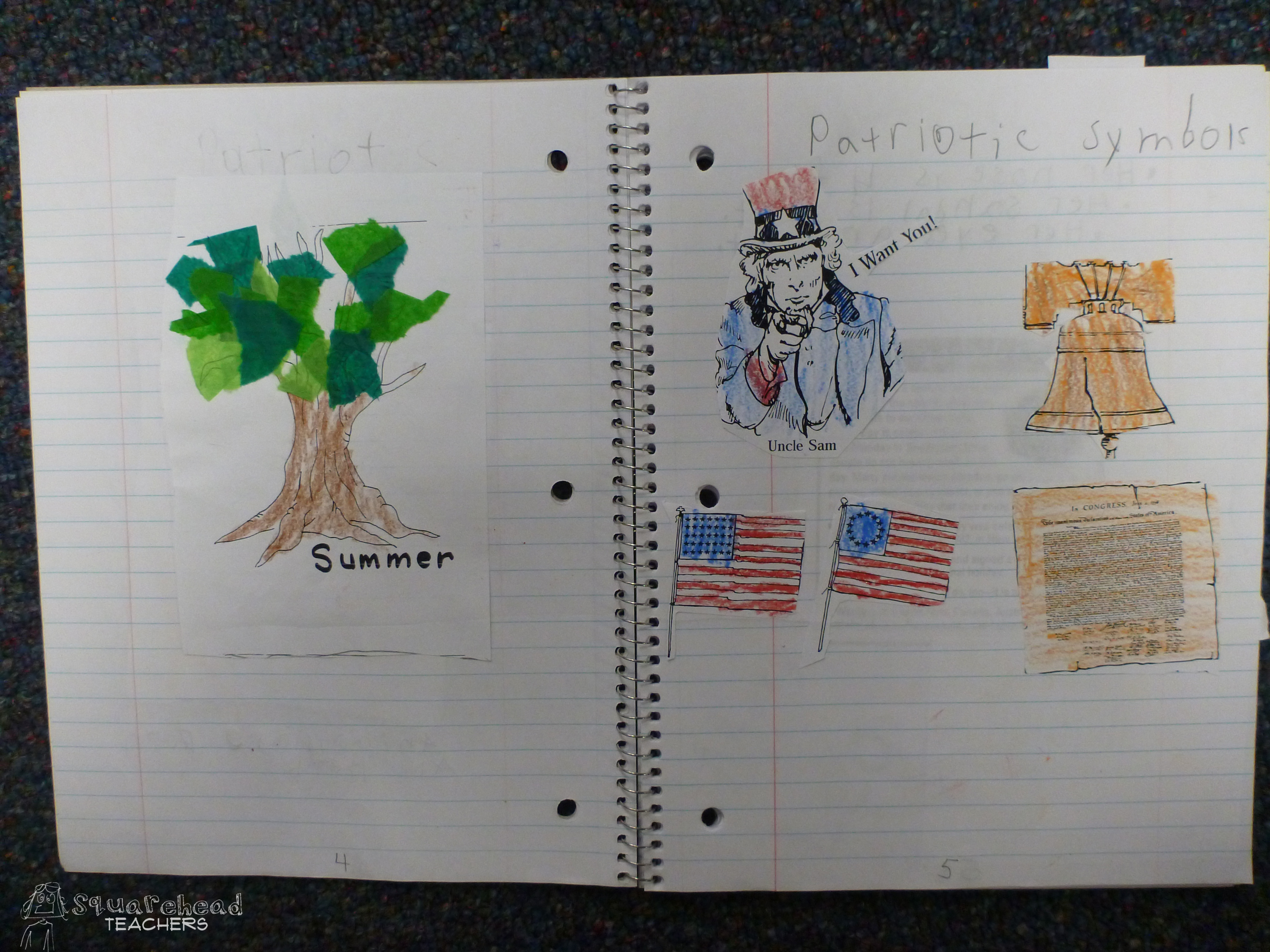
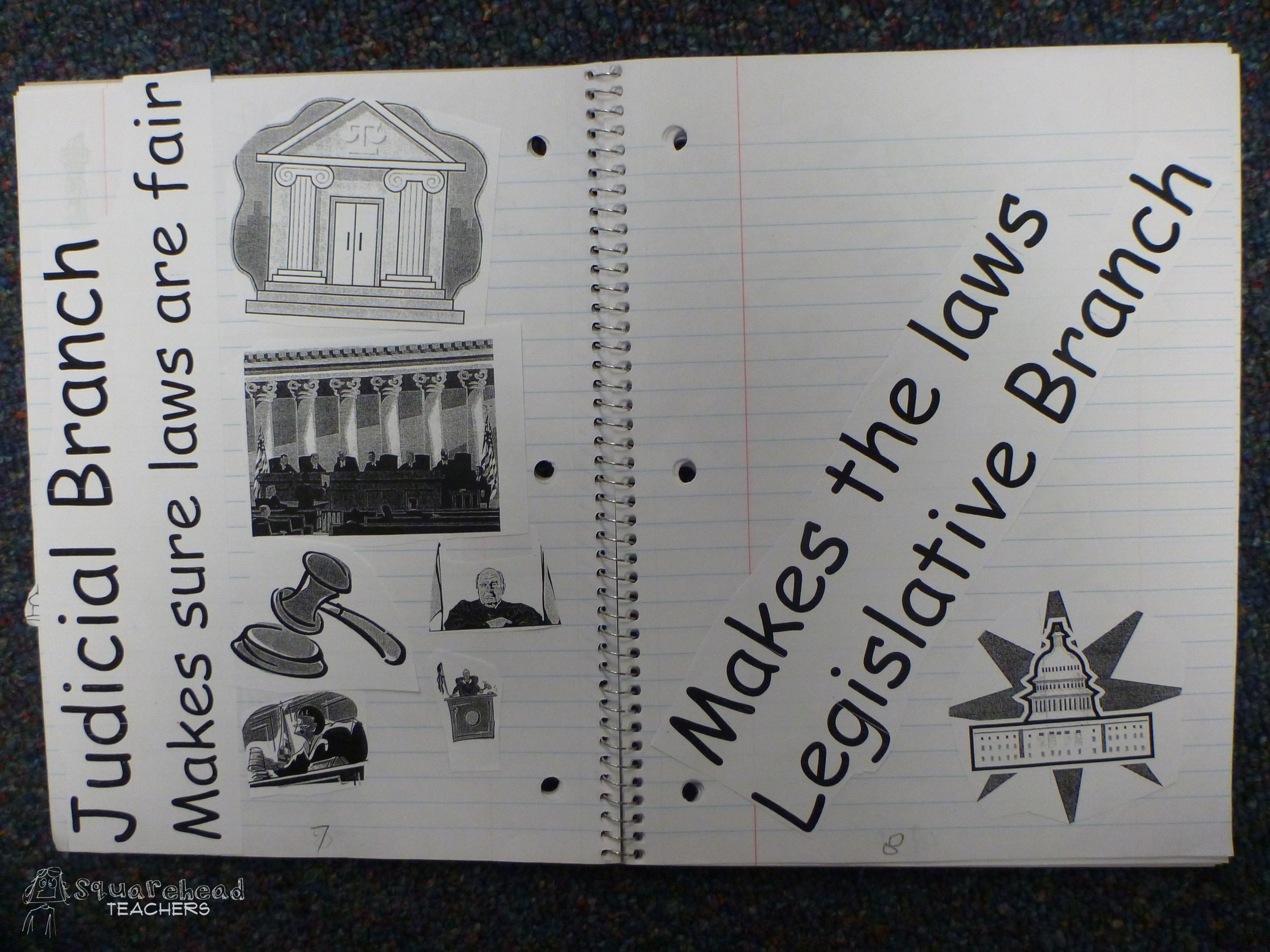
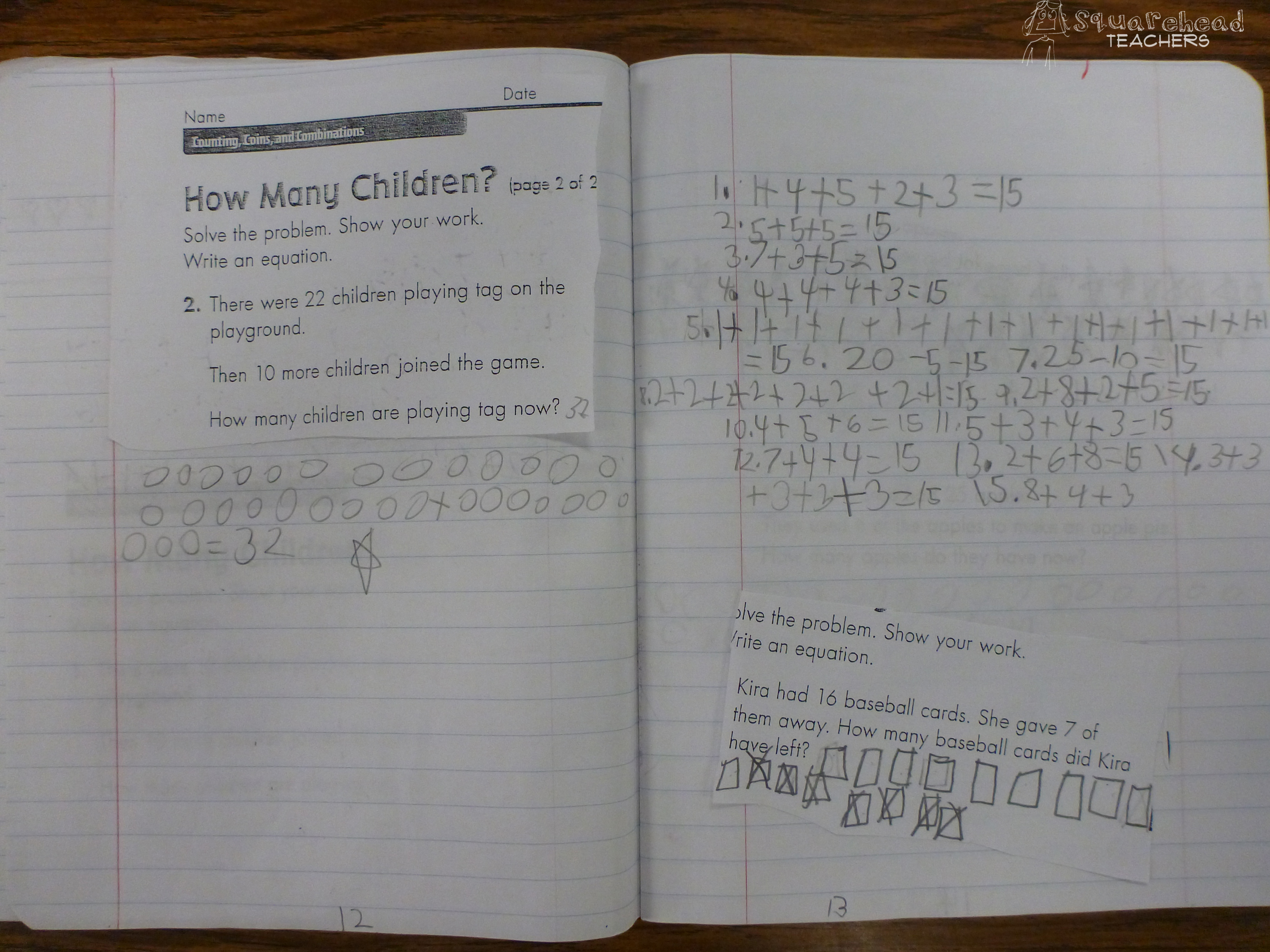
3. Do projects directly in the journal… or have them glued in when kids finish the project. This way, you can refer back to projects/assignments you’ve done when you need to review for a test, etc.

P1030239 P1030240 P1030241

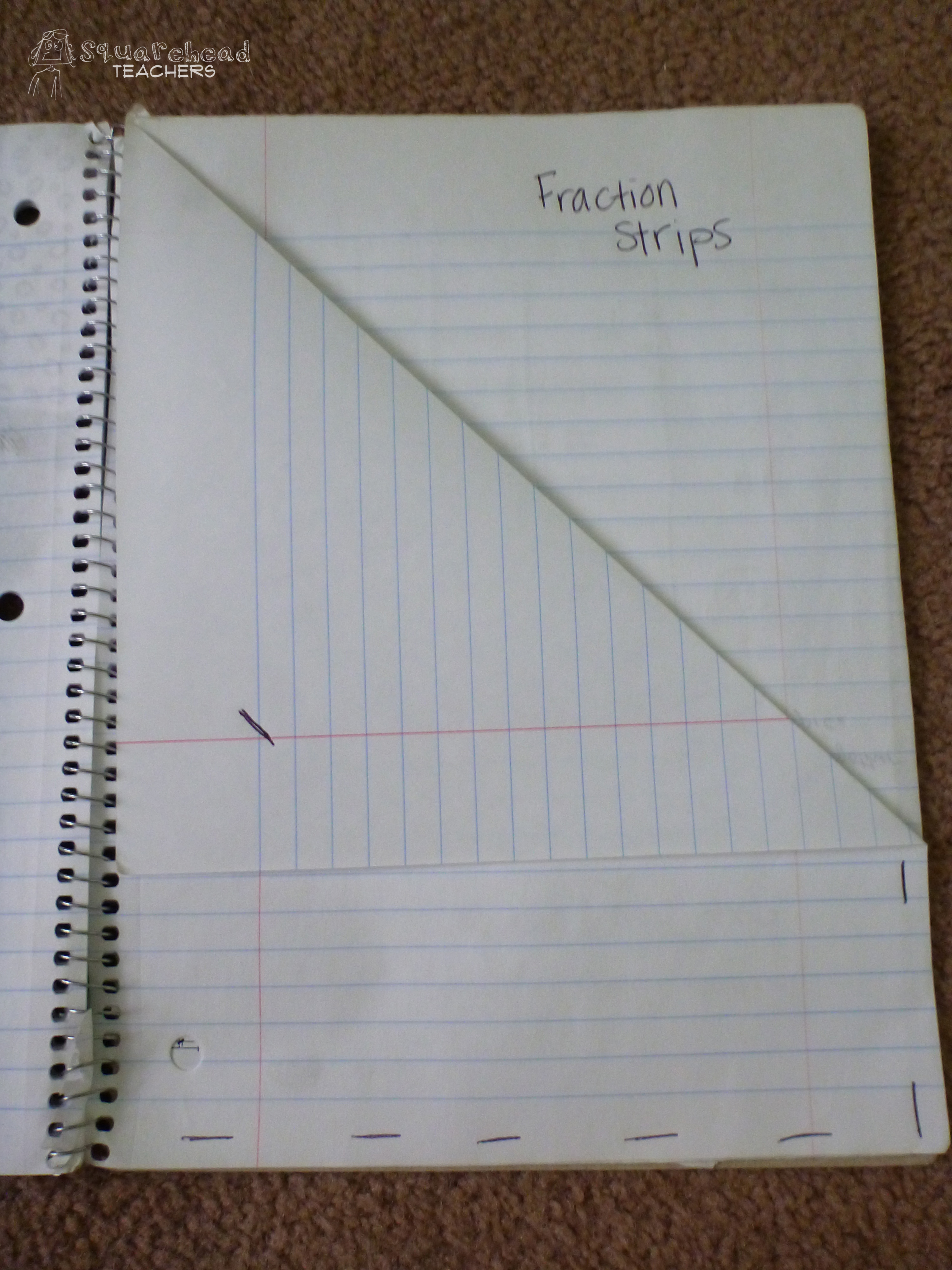
4. Pockets are awesome. Sometimes you want students to keep a project, but you don’t want it glued down. So pockets do the trick. Fold down one corner of a sheet and staple it to the page behind it. Label the pocket, so kids will know what goes in the pocket. Some teachers like the triangle cut off, but I sometimes just have them staple it down to save time (I walk around with the stapler, since it just seems to work out better when I do it). Make sure you have the folded triangle on the outside, or sometimes things get stick inside the pocket. Cut or staple the triangle piece, it’s up to you…

P1050168

If you have to combine 2 subjects into one notebook, you’ll have to figure out a way to keep the subjects straight. Some teachers have the kids start one subject on one side, have them flip the book over and start from the back on the second subject. This way, there are 2 front covers and no back cover. My only caution with this is to make sure your kids understand how this flipping ordeal works and that they open to the right part of the book each time you start a lesson.

I also make a sample journal as the students make theirs. This way, I can model exactly how I want theirs to look, and the struggling kids can just copy me each time.

Oooh! One more thought. Sometimes, for really important things, I give students a quarter sheet of colored paper and ask them to write main ideas on it before gluing it to the page. This way, you’ve got the effect of highlighting without the mess of the marker. And everyone’s looks the same. For my 6th grade math journals, I did this with things like formulas. This way, I could always say “the formula you need is on a bright orange square in your journal. Go find it in your notes.”

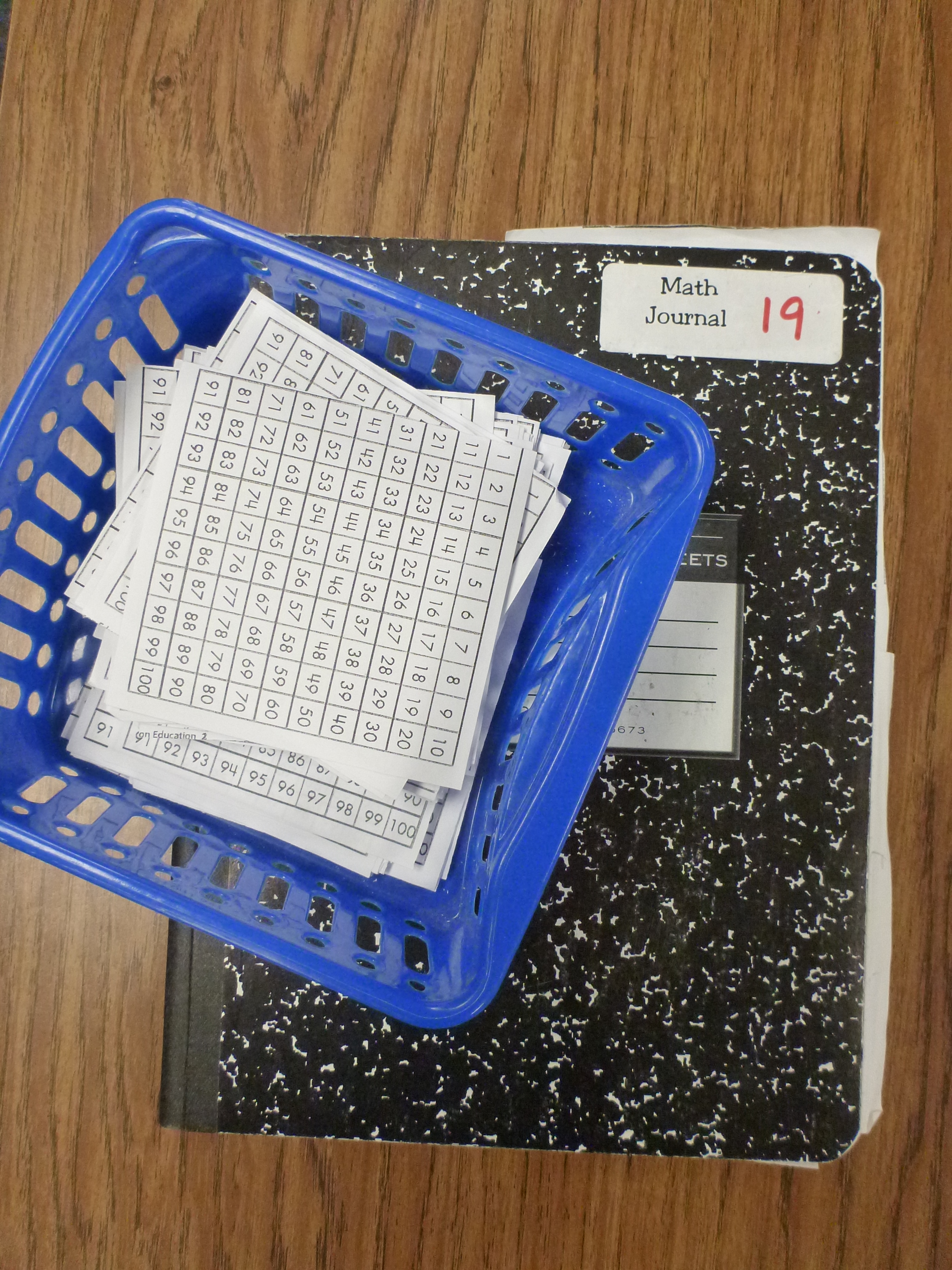
One teacher I discussed this with keeps lots of extra copies of a hundreds chart handy so she can use them in math journals.

P1030236

P1030233

P1030235 P1030234

Click here for more free math stuff!


Flower Paragraph Planner/Graphic Organizer

Flower Paragraph Planner sticker

Here’s a paragraph writing planner that will help your students understand the parts of a paragraph. After they fill in the flower side, have them write their rough draft paragraph using the provided lines. Often I find lots of cute graphic organizers for kids, but kids don’t quite understand how to go from the cute picture to a paragraph of sentences. So this one’s very simple: plan and then write downs the ideas on the flower (from the top to the bottom) and they’ll have a complete paragraph. Click here for the PDF: Flower Paragraph Planner Enjoy!

How to Have a Fun Vacation

Whenever one of my kids gets back from a vacation, they always want to talk about it. The other day, I used this opportunity to write about what makes a fun vacation. This free writing project worked out well since it allowed everyone to be creative and share vacation stories through their writing. Some kids took this further and made entire essays about a specific vacation and dedicated a whole paragraph to each idea if what made the vacation fun. How to have a fun vacation

Keeping Track of Students’ Writing Progress

keep track of student writing


One of the most important parts of school is teaching kids to monitor their own progress. Here’s one way to help kids keep track of their own writing progress. We made a giant pencil with different sections (one for each step of the writing process) and laminated it. Then we added velcro strips down the side and to little tags that had each student’s classroom number on it. When kids finish one step of the process, they move their number tag down to the next step. This also helps kids know when they can get up from their seats… I’ve also seen charts where kids move a numbered popsicle stick from pocket to pocket to indicate progress through the writing steps. How have you helped your students keep track of their writing progress?