
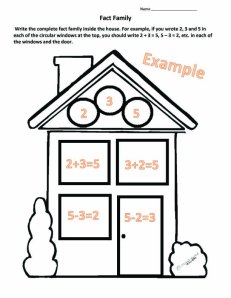
 I saw this idea somewhere and fell in love with it! This little house is home to a “fact family.” You could use this for addition/subtraction or for multiplication/division. I’ve made a full page version and a half page version. Sometimes having to complete a half sheet (rather than a full sheet) seems less intimidating to kids even if it’s got the same thing on it. I’ve included a page to use as an example of how to complete the graphic organizer.
Click here for the free printables:
Fact Family graphic organizer – double
Fact Family graphic organizer – full page
Fact Family graphic organizer- example
 The Utah 1st grade Science Standard 2 Indicator 2 reads, “Observe the sun at different times during the day and report observations to peers. Observe and chart the moon when it is visible during the day.” This idea is in most state science cores in one form or another. You can use my sun observation graphic organizer to help students keep track of what they observe.
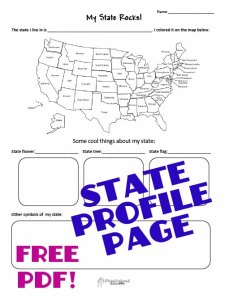 Arizona Social Studies Strand 3 (Civics/Government) includes a study of the state. For example, in first grade, concept 1/PO 6 says “
 This craft made me laugh out loud when I saw the picture. Naturally, I had to share it with you. This bunny hat craft is very simple so children as young as preschool could make it with help. There’s even a nice tutorial at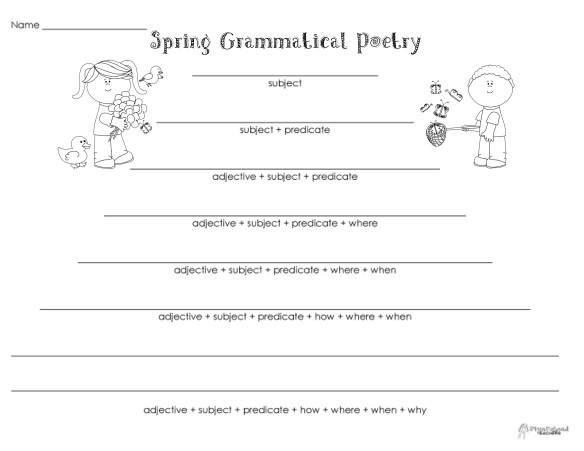
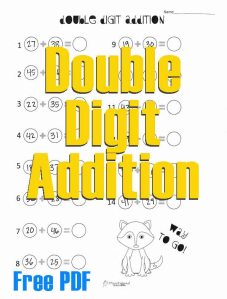 Here’s the last of my series of 3 worksheets for double digit addition. This worksheet is appropriate for lower grades.
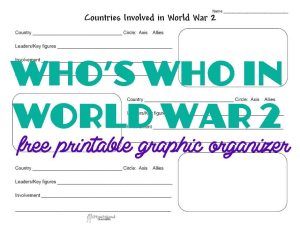 World War 2 confuses me. There are so many players, and so many battles and strategic moves, that it’s easy to get them all jumbled up. I’m trying new things to help keep all the facts straight. Have your kids fill out this social studies graphic organizer and draw each country’s flag in the box. This might help them visualize the “teams” involved.
 It’s official. I love using graphic organizers for teaching social studies. This time, I’m having my students teach each other about the causes of World War 2. Each kid will teach 3 other students. They can use their entire sheet for the first person they teach. When they teach the second person, they have to fold the paper so they can’t see the words, but they can use their drawings. For the final person, they can’t use their paper at all.
 Squarehead Teachers