Dyslexia: What Teachers (& Parents) Need To Know (Part 2)

This is part 2 in a series about Dyslexia. The author, Robin, is a mother of 4 boys, 2 of whom have dyslexia.  She has been taking her sons to private tutoring and researching as much as she can about dyslexia for the past 7 years.dyslexia series- sticker 2
What does Dyslexia look like?

Do you have a child struggling to read?  It might be Dyslexia.  It’s not just reversal of letters as most people think.  Dyslexia manifests itself in a variety of ways.  It has been estimated that one in five children of average or higher intelligence have this common learning difference.  Look at this list of symptoms.  If you have a child who exhibits a few of them, maybe it’s time to be tested.

* difficulty reading unfamiliar words

* slow, sound by sound reading

* headaches when reading

* words moving, shifting, or blurring on the page

* difficulty with handwriting

* unable to write alphabet in order or alphabetize

* reverses or flips letters or numbers

* writes from right to left or backwards

* unable to determine dexterity –  tries to use both hands

* difficulty of eyes following text on a line

* fixating on one word or area of text for longer than normal

* spells phonetically, often eliminating vowels (HND for hand)

* poor organizational skills – messy desk or backpack, forgets homework

* loses concentration and attention quickly

* makes many errors while reading

* re-reads text often

* mispronounces larger words – amblience for ambulance, pasketti for spaghetti

* has difficulty recalling a list of items when given the list verbally

* has difficulty remembering names or objects

* forgets or doesn’t follow instructions

* slower than most kids to complete work or tasks

* difficulty learning math facts, days of the week, months of the year

* lack of coordination, clumsy or bumps into things

* difficulty remembering left from right

* is very artistic, musically inclines, or athletic (right brained)

* seems to zone out

* learns best by hands-on activities

* knows material but doesn’t test well

* difficulty copying print

* writes in an upward or downward slant

* might be extremely orderly or line things up even if it’s not organized

* time management problems

* difficulty with large or fine motor skills

* difficulty telling time on a traditional face clock

* learning to type is difficult

It was a list similar to this one that helped me determine why my son was struggling to read and succeed in school.  His teacher had previously told me that she thought he was just lazy.  Look over the list and you’ll find that you too might recognize multiple symptoms in your struggling reader.  If you are a teacher, ask parents to look at this list.  Maybe they will recognize some of the symptoms that you don’t encounter at school.  If so, refer the child for testing.
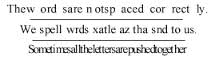
distortion 2 swirl distortion

Stay tuned for more in our Dyslexia series (symptoms, tips & tricks for parents and teachers)!

DISCLAIMER: The medical information in this article is merely information – not advice. If you need medical advice, you should consult a doctor or other appropriate medical professional.
Dyslexia: What Teachers (& Parents) Need To Know (Part 1)

dyslexia series- sticker 1

I don’t know very much about Dyslexia, and as a teacher, I should. So I’ve asked my friend, Robin, for help.  Robin is a mother of 4 boys, 2 of whom have dyslexia.  She has been taking her sons to private tutoring and researching as much as she can about dyslexia for the past 7 years.

As a Mom, nothing hurts more than to see your child struggling at school.  As my first child entered Kindergarten, I had such high hopes for him.  I would send him off each day with visions of him making new friends, learning about the world, and learning how to read.  Unfortunately, that was not the reality for him.  He struggled to complete his work before he could go outside for recess.  He struggled to read.  He complained of headaches when it was time for homework.  And he even has a bit of trouble socializing with other kids.  As time went on, reading became more and more difficult for him until I finally realized that it was my right as a parent to ask to have him tested.  ADHD was my first thought since he would tap his pencil on the table and stood with one knee on his chair during homework time.  I was wrong.  He has dyslexia.

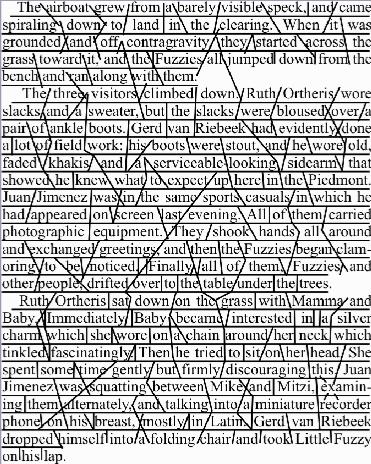
Dyslexia manifests itself in so many different ways in different children.  The only shared trait among dyslexics is that they all struggle to read at levels far below those of typical children of the same age.  For him, the biggest challenge is his processing speed.  For others, it might be the reversal of letters or numbers.  Many years later, and after thousands of dollars in private tutoring, I know that it is possible to learn to read with dyslexia.  It takes dedicated teachers who are willing to be patient and specialize a program to help these children.

visual connections

Dyslexia, particularly in relation to processing speed, prevents students from moving information from the frontal cortex where learning occurs, to the storage area in the brain which allows them to recall words upon sight (like so many reading programs teach).  For someone with dyslexia, a systematic multi-sensory kinesthetic approach is necessary.  The rules of the English language MUST be taught so that a reader can decode a word every time he sees the word.  This allows for only a small portion of the millions of words in our language to be put to memory – hence, sight words.  Although dyslexia is a neurological difference, it does not affect intelligence.  In fact, many kids with dyslexia test at average or higher than average intelligence.  Einstein had dyslexia.

The biggest problem I see as a parent of a child with dyslexia is lack of training and knowledge among our schools.  So many teachers do not know how to teach a student with dyslexia so these children are simply put in special ed and given more time to be taught to read in a method that is not conducive to the way that a dyslexic learns to read.  There are so many programs which are fairly inexpensive for teacher’s to use that are very effective.  Discover Intensive Phonics by Reading Horizons is one of them.  S.P.I.R.E. is another that is used by the private tutor I take my son to.  It is a bit more expensive but still much less costly than many of the programs already being used in schools and special ed classes.  There are also many kinesthetic approaches that are helpful for dyslexic students to train their brains to recognize words.

rivers distortion

My suggestion for teachers and administrators is to become more educated about dyslexia.   Here are just a few facts that might impress education professionals of the importance of learning more. It is estimated that 70-80% of children with poor reading skills are dyslexic, many of whom are undiagnosed.  One in every five students overall has dyslexia.  Less than one third of students with reading disabilities are receiving school services to address those disabilities.

Find out where the local chapter of the International Dyslexia Association meets in your area and attend their monthly meetings.  They often have specialists visit to teach methods of helping these struggling children.  Become more informed as a teacher so you can help keep these kids from falling through the cracks.  You never know, some day it may one of your own children or grandchildren.

Just for fun, click here to see one graphic designer’s take on dyslexia.

Stay tuned for more in our Dyslexia series (symptoms, tips & tricks for parents and teachers)!

DISCLAIMER: The medical information in this article is merely information – not advice. If you need medical advice, you should consult a doctor or other appropriate medical professional.
Thanksgiving Graphing Page (Kindergarten, First Grade)

I Can Graph the Pictures- Thanksgiving 1 STICKER

Another fun free Thanksgiving graphing worksheet for kindergartener and first graders. Use the Thanksgiving pictures to help make a bar graph of the data. Click here for the PDF: I Can Graph the Pictures- Thanksgiving 1  Woo hoo!

Thanksgiving Turkey Craft (Pre-K, Kinder, 1st Grade)

I absolutely loves this easy Thanksgiving turkey craft. It’s very simple, but it turns out pretty ADORABLE! Click here for the tutorial over at Happy Home Fairy.

Thanksgiving Crafts for Kids

I love kids Thanksgiving crafts! They’re all ADORABLE! Turkeys, pumpkins, pilgrims, they’re all fun and easy to make and just brighten the room! These would be great for your school class or your kids at home.

Thanksgiving Hand Wreath

Toilet Paper Roll Turkey

Framed Hand Print Turkey

Coffee Filter Turkey

Falling for Sight Words

falling for sight words sticker

I haven’t done much with sight words on this blog so far, so I thought I’d take advantage of the fun Autumn leaves and make a fall themed sight words worksheet for kindergarten or preschool. I suggest having the student color the word “yellow” with a yellow crayon and “orange” with an orange crayon, etc.  This way, they can still do the activity even if they haven’t mastered color words yet. This is a great activity for fine motor skills to color in the irregular-shaped leaves.  Enjoy!

Click here for the free printable page: Falling for Sight Words

Veteran’s Day Coloring Pages & Activities for Kids

Veterans Day Coloring Page STICKERFirst let me say thank you to all those Veterans (and their families) out there who have sacrificed so much for our America. Thank you!!!

Here are 2 free printable coloring pages (source) for you to use as you remember this special day.  Click here for the Veteran’s Day coloring pages: Veterans Day Coloring Page I   and  Veterans Day Coloring Page II  Here are some images that might be helpful for your class (to see the uniforms of each branch): detail on uniforms,  All Branches- dress uniforms 

.Last year’s post included a comprehension worksheet detailing the history and significance of Veteran’s Day so be sure to check that out too! Looking for more Veteran’s Day fun? Here’s a cool website for kids (published by Veteran’s Affairs) called VA Kids. It’s got activities, facts and games for kids K-5th.  Kids Connect also has a great page about Veteran’s Day.  Enjoy!

Thankful Words (Thanksgiving Activity)

Thankful words sticker

Why not sneak some word sorting and alphabetizinginto your November fast-finisher activities? This fun Thanksgiving printable activity includes some alphabetizing, sorting and drawing centered around Thanksgiving words. Click here for the free PDF: Thankful words